
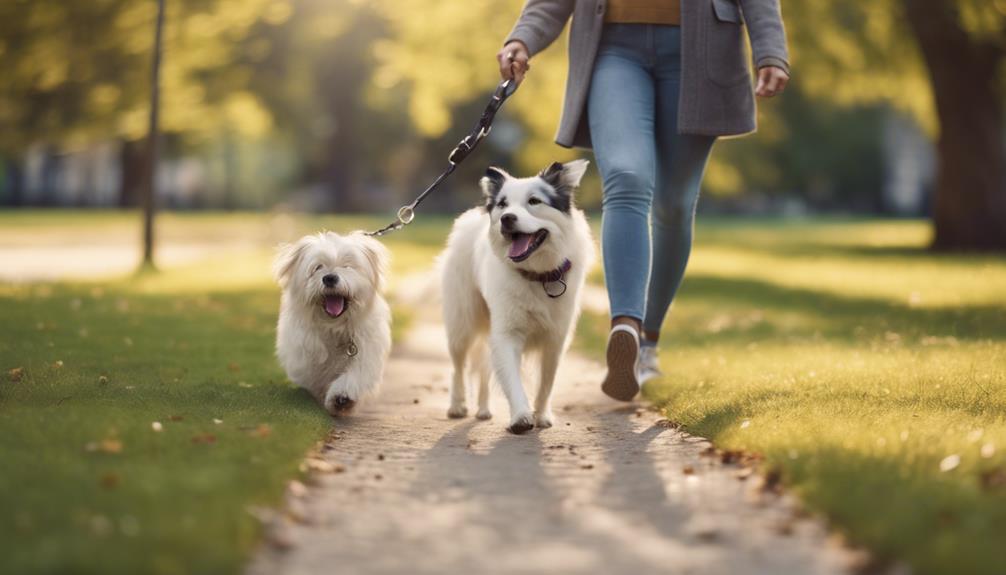
Effective Leash Training Using Positive Reinforcement Techniques
- Advertisement -
When it comes to effective leash training, you can harness the power of positive reinforcement, a technique that rewards desired behaviors rather than punishing undesired ones. By consistently rewarding good behavior with treats, toys, or verbal praise, you create a clear understanding of what’s expected from your dog. Immediate rewards help your dog associate desired behavior with consequences, leading to effective learning and improved behavior. Consistency and timing are vital when teaching your dog to walk on a leash. By setting up for success, using the right equipment, and gradually increasing expectations, you’ll be on your way to a stress-free and enjoyable leash training experience. You can also explore Effective Leash Training Using Positive Reinforcement Techniques.
Key Takeaways
- Immediate rewards help dogs associate desired behavior with consequences, leading to effective learning and improved leash training.
- Consistency and timing are crucial when teaching the dog to walk on a leash, using a consistent verbal cue and a well-fitting collar or harness.
- Start with short, manageable goals and gradually increase the length and difficulty of walks, using positive reinforcement techniques like treats and praise.
- Managing distractions is crucial during leash training, using positive reinforcement techniques to teach the puppy to ignore distractions and focus on the walk.
- Avoid common mistakes like pulling back on the leash, inconsistent rewards, and yanking dogs back, as they can hinder training and create negative associations.
Principles of Positive Reinforcement
When leash training, it’s crucial to understand the principles of positive reinforcement. This approach rewards good behavior, rather than punishing bad behavior. By doing so, you’ll encourage your dog to exhibit desired actions, leading to effective leash training.
Positive reinforcement works by consistently rewarding good behavior with treats, toys, or verbal praise. The American Veterinary Society of Animal Behavior (AVSAB) position statement provides scientific evidence supporting the use of positive reinforcement in dog training. For an in-depth guide, you can explore more on Mastering Positive Reinforcement Training for Dogs. This creates a clear understanding of what’s expected and helps build good habits. Initially, reward your dog frequently, but gradually increase the time between rewards to help them learn.
When stopping forward motion, be clear and matter-of-fact about the consequences of their actions. Use a command like “Let’s Go” to signal the start of a training session. This sets the tone for a successful walk.
To achieve effective leash training, patience and consistency are key. Remain calm and composed, even when faced with challenges. Using an appropriate collar, halter, or harness is also necessary for successful training. By following these principles, you can stop leash pulling and enjoy a more enjoyable walk with your dog.
Setting Up for Leash Training Success
To set your puppy up for leash training success, start by selecting the right collar, halter, or harness. A buckle or martingale collar is usually the best choice for puppies. Consistency is key in positive reinforcement training. Choose a consistent verbal cue, such as “walk” or “leash,” and use it every time you put on the leash. This helps your puppy understand what’s expected of them. By using the right equipment and setting clear expectations, you can gradually increase your puppy’s proficiency in leash walking.
Appropriate Collar Choice
When choosing a collar for leash training, prioritize your dog’s comfort and security. Buckle or martingale collars are good options as they provide a comfortable and secure fit. Avoid choke collars, which can cause discomfort or injury.
A well-fitting collar or harness is essential for clear communication and preventing pulling. Consider adding reflective leash add-ons for nighttime walks. The type of walking you’ll be doing with your dog should also influence your choice. For puppies that pull excessively, a harness is a good option as it distributes the force across their chest and shoulders, not their neck.
Regardless of the type you choose, ensure it’s comfortable and well-fitting to build trust and confidence between you and your puppy. A good collar choice sets you up for successful leash training using positive reinforcement techniques.
Gradual Expectation Increase
When leash training your puppy, establish clear criteria to help them understand what’s expected and build confidence. Start with short, manageable goals and gradually increase the length and difficulty of walks. Use positive reinforcement techniques like treats and praise to associate loose-leash walking with good behavior. Consistency is key to helping the dog understand what behavior is being reinforced, increasing the likelihood of that behavior happening again.
Keep the leash at a 3-foot slack during training sessions to allow your puppy to learn without feeling constricted. As they become more proficient, you can gradually increase the leash length. Provide regular breaks for your puppy to sniff and explore their environment to stay engaged and focused. Gradually increase the length of walks without breaks to set your puppy up for leash training success.
Remember to focus on what the puppy should do, rather than what they should stop doing, and consistently reward good behavior to create a clear understanding of what’s expected.
Training Sessions and Managing Distractions
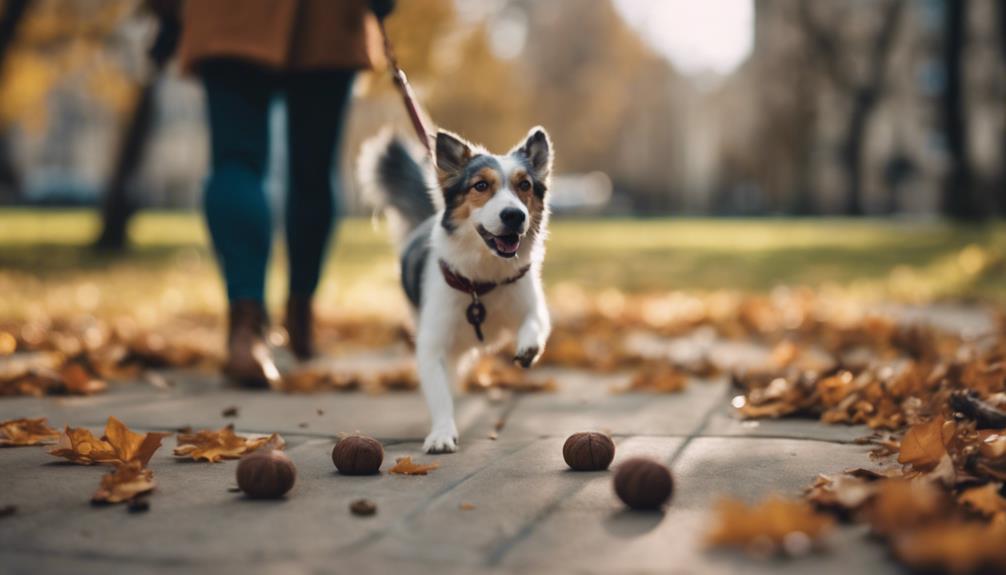
To effectively leash train your puppy, structure your training sessions to accommodate their short attention span and susceptibility to distractions. Start with short sessions, 10 minutes or less, to keep them engaged and motivated. This approach helps maintain their focus and prevents overwhelm.
As you progress, you can gradually increase the session length based on the puppy’s interest and focus. This builds their endurance and attention span, enabling them to walk on a leash for longer periods. However, remember that puppies can’t be expected to perform loose leash walking for extended periods without breaks. Provide regular breaks to allow them to sniff and explore, keeping them engaged and motivated.
Managing distractions is crucial during leash training. Research published in the Journal of Veterinary Behavior specifically examines the effects of positive reinforcement on leash-walking behavior in shelter dogs, providing empirical support for these techniques. Use positive reinforcement techniques to teach your puppy to ignore distractions and focus on the desired leash behavior. For stubborn cases, consider Unleashing the Secrets of Leash Training Stubborn Dogs. By incorporating short sessions and regular breaks, you can help your puppy develop the skills and endurance needed to walk on a leash, even in the presence of distractions. Be mindful of your puppy’s needs and limitations to create a positive and effective leash training experience.
Advanced Training and Avoiding Mistakes
To ensure successful advanced leash training, set your puppy up for success and avoid common mistakes. Aim for an 80% success rate by starting in locations with minimal distractions and gradually increasing complexity. Consistently reward good behavior to create a clear understanding of what’s expected. A study in Applied Animal Behaviour Science compares the effectiveness of positive reinforcement versus other training methods, highlighting its advantages. Use a mix of rewards to reinforce desired behavior, such as walking calmly on a loose leash.
As you progress, establish consistent criteria for rewards and stopping forward motion. Give rewards in real time to reinforce desired behavior. Only use food rewards when your puppy is hungry and motivated. Avoid training sessions when your puppy is full of energy; instead, provide alternative exercises beforehand to ensure a focused session.
Marker Training and Reinforcement Techniques
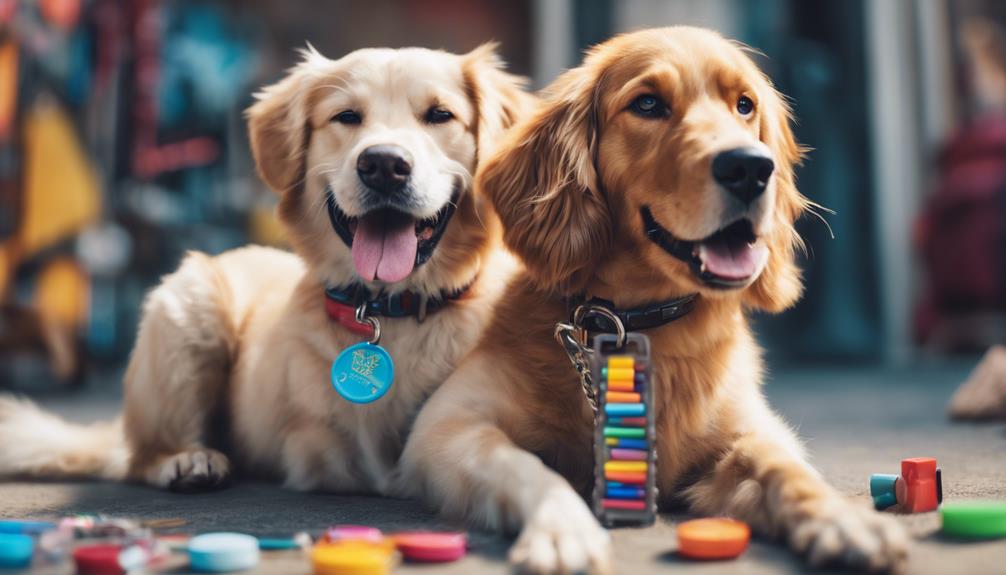
Marker Training and Reinforcement Techniques for Advanced Leash Training
To achieve successful advanced leash training, you need to master marker training and reinforcement techniques. Positive reinforcement is key in this process. Using a clicker or a marker word, you can identify and reward desired behavior. Remember, rewards should be a surprise for good behavior, not a bribe.
Crate training and a consistent environment also contribute to a well-behaved puppy that is more receptive to leash training. Learn the Crate Training Basics Every Dog Owner Should Know. A regular sleep schedule, for instance, promotes better behavior.
The timing of rewards is crucial. You must reward your puppy immediately, within seconds of the desired behavior. This creates a strong association between the behavior and the reward. Delayed rewards can confuse your puppy, leading to incorrect associations.
When your puppy exhibits good walking behavior, mark it with a click or a word and immediately reward them. This helps your puppy understand what behavior you’re looking for and reinforces it. Consistency in rewards and verbal cues is also essential. Ensure all family members are using the same cues and rewards to avoid confusing your puppy. Posting a list of cues can help maintain consistency.
Consistency and Timing Are Essential
When teaching your dog to walk on a leash, consistency and timing are crucial. Immediate rewards are essential, as delayed rewards can confuse your dog. Consistent rewards help your dog understand what behavior is being reinforced, increasing the likelihood of repeating that behavior.
Timing is critical, as it helps your dog connect the reward with the desired action. By consistently rewarding your dog at the exact moment they exhibit good behavior, you’ll see faster progress and a stronger link between the action and the reward.
Consistent Reward Timing
Consistent reward timing is crucial for successful leash training and crate training. When your dog exhibits the desired behavior, provide a reward within seconds. This immediate association helps your dog understand what behavior earned the reward. Delayed rewards can confuse your dog, making them associate the reward with the wrong action.
Consistency in reward timing is essential for building trust and positive associations. Immediate rewards help your dog learn faster and more effectively. Inconsistent reward timing can hinder the training process. To ensure efficient learning, maintain consistent reward timing across all training sessions and environments.
This consistency enables your dog to understand the desired behavior in various contexts, making positive reinforcement training more effective. By providing rewards in real-time, you reinforce desired behaviors and facilitate a smoother training process. Remember, consistent reward timing is key to successful training.
Immediate Reward Benefits
Immediate rewards play a crucial role in leash training. When you reward your pet immediately after the desired behavior, they learn to associate the action with the consequence. This leads to effective learning and improved behavior.
Delayed rewards can confuse your pet, making them associate the reward with the wrong action. Crate training, which provides a safe space for dogs, can aid in reducing anxiety and promoting good behavior. Introducing the crate gradually and supervising the training process helps build positive associations and trust.
- Advertisement -
Immediate rewards help your pet understand what behavior you’re looking for. Using a clicker or marker word to mark desired behavior and reinforce it with rewards is an effective technique.
Immediate rewards offer several benefits:
- Clear association: Your pet links the desired behavior to the reward.
- Reduced confusion: Delayed rewards can confuse your pet, making them associate the reward with the wrong action.
- Faster learning: Immediate rewards lead to faster learning and improved leash training.
- Increased motivation: Rewards given in real-time motivate your pet to continue exhibiting the desired behavior.
- Consistency: Consistency in rewards and verbal cues helps your pet understand what is expected, leading to more effective leash training.
Positive Reinforcement in Action
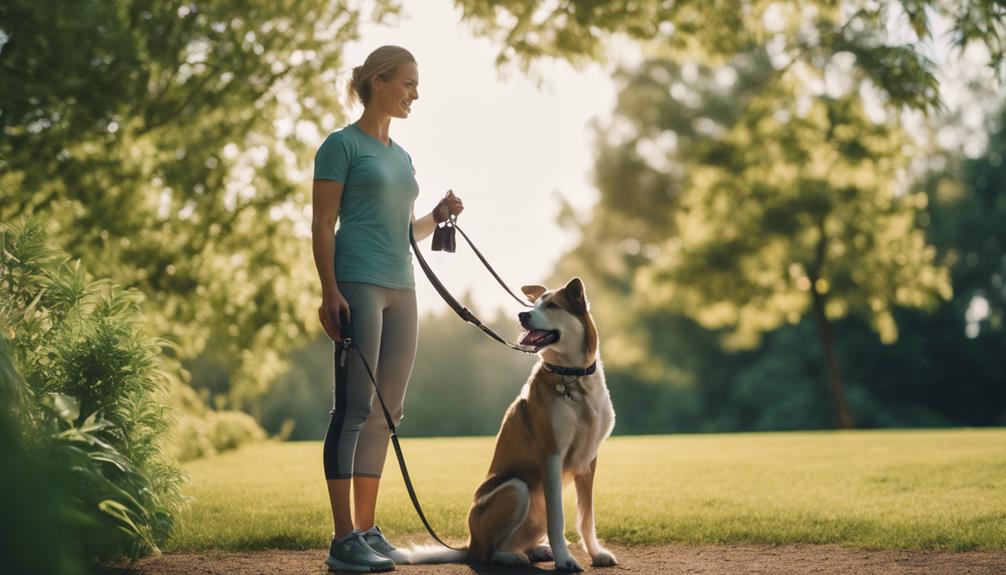
When putting positive reinforcement into practice, immediacy and consistency are key. Reward your dog with treats, praise, and affection the moment they exhibit loose-leash walking. This immediate association strengthens the bond between behavior and reward, encouraging repetition.
Consistency is crucial in positive reinforcement training. Reward good behavior every time it occurs, making it easier for your dog to learn and grow.
During training sessions, introduce distractions gradually, such as people, dogs, and noises, to simulate real-world situations. This helps your dog generalize the behavior and adapt to new environments.
A clicker or marker word can be a valuable tool in positive reinforcement training. It allows you to mark the exact moment your dog exhibits the desired behavior, making it clear what they’re being rewarded for. This precision helps your dog understand what behavior is being reinforced, leading to more effective learning.
Maintain consistency in rewards and timing throughout training sessions. Positive reinforcement is an effective way to teach loose-leash walking. With patience and persistence, you’ll be enjoying walks with your dog soon.
Avoiding Common Leash Training Mistakes
Avoiding common leash training mistakes is crucial for successful training. Be aware of the following mistakes to ensure you’re on the right track:
Pulling back on the leash is a critical mistake, as it triggers the oppositional reflex, causing the dog to pull harder. Instead, focus on rewarding good behavior, as this approach communicates what’s expected.
Inconsistent rewards and verbal cues confuse dogs and hinder training. Consistency is key in positive reinforcement techniques.
Yanking the dog back towards you when it pulls on the leash can cause injury and create negative associations. Avoid this mistake at all costs.
Failing to use a buckle or martingale collar hinders the puppy’s ability to associate the feeling of the leash with good behavior.
Gradually increasing the length of training sessions based on the puppy’s interest and focus is essential. Failing to do so can lead to disengagement and boredom.
Making Leash Training a Fun Experience
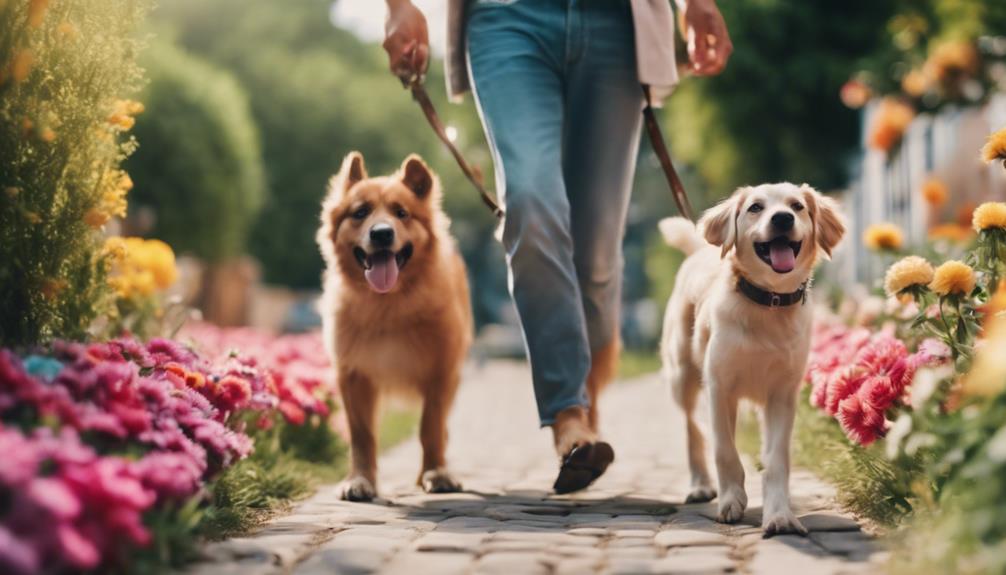
Making leash training a fun experience is crucial for your dog’s development and your bond. To achieve this, incorporate positive reinforcement techniques to encourage good behaviors and create a positive association with the leash. Crate training, for example, can help reduce anxiety, which is essential for a stress-free leash training experience.
Keep training sessions short and engaging, aiming for 10-15 minute sessions. This allows your dog to focus and absorb the information. Start with short walks while your dog is on a leash, rewarding them with treats and praise for standing still or walking beside you. Gradually increase the duration and distance of your walks, introducing new environments and distractions to simulate real-life scenarios.
A well-designed training environment is vital for successful leash training. Choose quiet areas with minimal distractions, allowing your dog to focus on you and the leash. As your dog becomes more comfortable, you can gradually introduce more challenging environments, such as parks or busy streets.
Frequently Asked Questions
How to Use Positive Reinforcement to Train Your Dog?
To train your dog using positive reinforcement, follow these steps:
Start by using reward markers, such as clickers or verbal cues, to mark good behavior. Immediately reward your dog with treats after marking the behavior. Consistency is key, so use the same rewards and leash cues every time. This helps your dog understand what you expect from them.
Keep training sessions short and fun to avoid overwhelming your dog. A calm owner is essential for effective training, so try to remain calm and patient. With consistent rewards and clear cues, you’ll be able to enjoy walks with your well-behaved dog soon.
Why Is Positive Reinforcement More Effective Dog Training?
Positive reinforcement is a more effective dog training approach because it leverages reward systems to encourage desired behaviors. By focusing on behavior modification through conditioning methods, you reduce fear and anxiety, creating a conducive learning environment. This approach is supported by training psychology and learning theories, as it builds trust and strengthens your bond with your dog.
Reward-based training motivates your dog to learn by associating desired behaviors with positive outcomes. This approach is more effective than punishment-based training, which can create fear and anxiety, leading to mistrust and resistance to learning. By using positive reinforcement, you can create a calm and focused learning environment that fosters trust and encourages your dog to learn.
Additionally, positive reinforcement training is based on scientific principles of learning and behavior. By understanding how dogs learn and respond to rewards, you can develop effective training strategies that promote desired behaviors and reduce undesired ones. This approach is also flexible and adaptable, allowing you to adjust your training methods to meet the unique needs and personality of your dog.
Is Leash Pressure Positive Reinforcement?
Leash pressure is not a form of positive reinforcement. It can create tension and oppositional force, leading to pulling. When you use leash pressure, you’re not rewarding calm walking. Instead, you’re creating a conditioned response to resist the pressure, making walking more difficult.
Using leash cues, pressure points, gentle tugs, and subtle cues can have the opposite effect of what you intend. They can create a pulling response, making it harder to walk your dog.
To achieve better results, release tension and reward calm behavior. This approach is more effective and doesn’t rely on leash pressure. By doing so, you’ll be encouraging good walking habits and reducing pulling.
What Is Positive Reinforcement in McCann Dog Training?
In McCann’s dog training, positive reinforcement is a reward system based on reinforcement theory. It works by associating desired behaviors with positive outcomes, promoting learning and good behavior in dogs. By understanding this approach, you’ll learn how to train dogs effectively and help people build strong relationships with their pets.
Positive reinforcement focuses on rewarding good behavior rather than punishing bad behavior. This encourages dogs to repeat the desired actions, leading to faster learning and better results. The approach is based on scientific principles and has been proven to be effective in dog training.
To apply positive reinforcement, you need to identify the desired behavior, reward it consistently, and be patient with the learning process. With time and practice, you’ll be able to teach dogs new skills and improve their behavior. By mastering positive reinforcement, you’ll become a skilled dog trainer and help people develop strong bonds with their dogs.
In summary
Walking with your dog on a loose leash is a direct result of effective positive reinforcement training. By consistently rewarding desired behavior, you’ve built a strong connection with your dog, transforming daily walks into a stress-free experience.
Consistency, patience, and reward-based training are key to achieving enjoyable walks. With every step, you reinforce the idea that good behavior is rewarded, leading to a lifetime of harmonious strolls.
Remember, positive reinforcement training takes time and effort, but the payoff is well worth it. By sticking to your training plan and rewarding good behavior, you can overcome pulling and tugging, and enjoy a peaceful walk with your dog.
- Advertisement -