

Doorway Etiquette Lessons From Training My Dog
- Advertisement -
When training your dog, you’ll likely encounter challenges with doorway etiquette, including impulsive behavior, lack of focus, and difficulty generalizing skills to new environments. Establishing a daily routine that includes a calm and predictable sequence of events is vital for teaching your dog to wait at doorways. Consistency and patience are key, and rewarding good behavior with treats and praise helps your dog understand they need to give attention and obedience to get what they want. By following a step-by-step approach and practicing doorway manners in real-life situations, you’ll help your dog develop essential skills that can be applied in various contexts, and uncover more valuable lessons as you progress.
Key Takeaways
- Consistency and patience are crucial in establishing doorway etiquette, as they help dogs generalize skills across environments and develop excellent overall manners.
- Rewarding good behavior with treats and praise helps dogs understand they need to give attention and obedience to get what they want.
- Practicing doorway manners daily, even in short sessions, improves dogs’ behavior and overall walking experience, leading to a stronger canine-human bond.
- Gradually increasing duration and distractions help dogs generalize skills across environments, making them more responsive to commands in different situations.
- Establishing a routine and being patient helps dogs learn doorway etiquette, resulting in a safe, healthy, and happy relationship between dogs and humans.
The Importance of Doorway Etiquette
Teaching your dog to wait at the doorway before going for a walk is crucial for a safe and enjoyable experience. For expert advice, check out the AKC’s guide on Teaching Your Dog Door Manners. This simple habit helps improve impulse control and reduces the risk of accidents. Consistency is key, so establish a daily routine that includes a calm and predictable sequence of events.
To teach doorway manners, start by having your dog wait at the door while you put on their leash. Reward them with treats and praise when they remain calm and patient. Gradually increase the duration and distractions, but always reward good behavior. This process helps your dog understand that they need to give you their attention and obedience to get what they want – in this case, going for a walk.
Remember to be patient and consistent, as this training takes time and repetition. Aim to practice doorway manners daily, and you’ll soon see improvements in your dog’s behavior and your overall walking experience.
Generalizing Skills Across Environments
Generalizing skills across environments is crucial for your dog’s development. You may have taught your dog to wait calmly at the doorway, but they might struggle to apply this skill in other settings, such as outside on the street. To overcome this, practice doorway etiquette in various contexts to help your dog understand what’s expected of them in different situations. Learn more from the APDT’s insights on Door Manners.
Consistency and patience are essential for generalizing skills. Daily practice and rewards will help your dog develop excellent overall manners and responsiveness in real-life situations and daily activities. To achieve this, take your dog to different locations, such as parks, sidewalks, and friends’ homes, and reinforce their door manners in each new environment.
Crate training, for example, can help with travel and socialization, making it easier to take your dog on trips and to public places. Learn more about this in the Crate Training Basics Every Dog Owner Should Know. Consistency in crate training can also help with noise reduction, keeping your dog calm in loud environments.
As you generalize your dog’s skills, they’ll learn to focus and respond accordingly to requests, even in the face of distractions. This will not only improve their door manners but also enhance their ability to respond to commands in a variety of situations. By doing so, you’ll be providing your dog with the skills they need to succeed in real-life situations, making them a more well-behaved and well-adjusted companion.
The Canine-Human Bond in Action
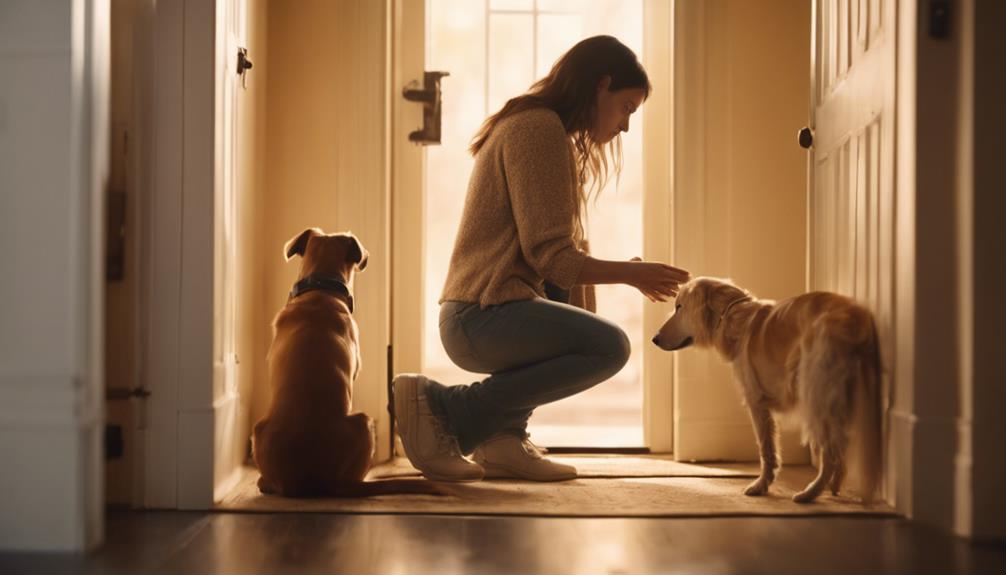
When you teach your dog doorway etiquette, you’re not only teaching them to wait politely but also strengthening the bond between you and your dog. This bond is based on a give-and-take principle, where your dog learns to give something in return for something they want. By incorporating this principle into daily practices, you reinforce a connection essential for a safe, healthy, and happy relationship. Using positive reinforcement training methods and understanding dog behavior modification techniques can further enhance this bond, leading to a more obedient and harmonious companion.
Canine-Human Connection
Teaching your dog to wait at doorways until permitted to pass through is a fundamental lesson that strengthens the canine-human bond. This behavior not only teaches your dog manners but also demonstrates the give-and-take concept that underlies the relationship between you and your pet.
Consistency is key in positive reinforcement training. Reward your dog every time they exhibit the desired behavior, such as waiting at the doorway. Use a mix of rewards like food, praise, and toys to keep your dog engaged and motivated.
A strong bond is essential for a safe, healthy, and happy relationship. Doorway etiquette lessons play a significant role in building and maintaining this bond. By practicing the give-and-take concept regularly, you can strengthen the bond between you and your dog.
The give-and-take concept is simple: dogs give something in return for something they want. By consistently practicing doorway manners, you can improve your dog’s understanding of this concept, leading to a more harmonious and responsive relationship.
Give-and-Take Principle
The give-and-take principle is essential for a strong canine-human bond. Teaching your dog to wait at doorways until permitted to pass through is a practical way to demonstrate this concept. Crate training can also help with potty training and separation anxiety, and reinforces doorway manners training. Consistency is crucial, as it provides a sense of security for the puppy and helps manage their behavior.
The give-and-take principle is based on the idea that your dog gives something, like patience, in exchange for something they want, such as permission to exit or enter a room. Doorway manners training is an effective way to reinforce this concept, requiring your dog to wait calmly before being allowed to proceed. By consistently practicing doorway manners, you can build trust, confidence, and a deeper understanding with your dog.
This training lays the foundation for a safe, healthy, and happy relationship. It’s essential to remember that consistency is key, as it helps your dog understand what is expected of them. By following these principles and consistently reinforcing the give-and-take concept, you can strengthen your bond with your dog and create a more harmonious household.
Bonding Through Practice
Practice doorway manners with your dog during daily activities like walks, park trips, or entering/exiting your home. This helps reinforce the bond and builds trust between you and your dog. Crate training, which provides a safe space and reduces anxiety, also aids in this process. Consistency and patience are key, as crate training may take up to six months for the dog to fully accept the crate.
Teach your dog to wait at doorways until permitted to walk through, demonstrating the give-and-take concept. Practice walking through doorways with your dog, rewarding them with treats and praise when they wait patiently. Take advantage of small opportunities throughout the day, such as meal times or playtime, to practice the give-and-take concept. Consistently practice doorway manners in different environments to generalize skills and strengthen the bond. Be patient and consistent in your practice, showing your dog that you’re willing to invest time and effort into your relationship.
Teaching Doorway Etiquette Step-by-Step
Teach your dog doorway etiquette by following these steps:
Start by having your dog on a leash beside you, with treats ready. Use a marker to signal when your dog does the right thing, earning a reward. Regular grooming, like brushing and nail trimming, can reduce anxiety and make training easier.
Walk towards the door and stop about five feet away. Wait for your dog to stand or sit with all four feet on the floor. Mark and reward this behavior, even if it’s just for a second or two. Gradually increase the waiting time before rewarding. This may take patience, as remaining calm at doorways can be challenging for some dogs.
Practice in 3-5 minute sessions, several times a day. This repetition will help your dog learn. Before opening the door, give your dog a verbal cue to remind them to stay calm and still.
Remember to establish a routine and be patient. With consistent practice, your dog will learn doorway etiquette and become a well-behaved companion.
Consistency and Patience Are Key
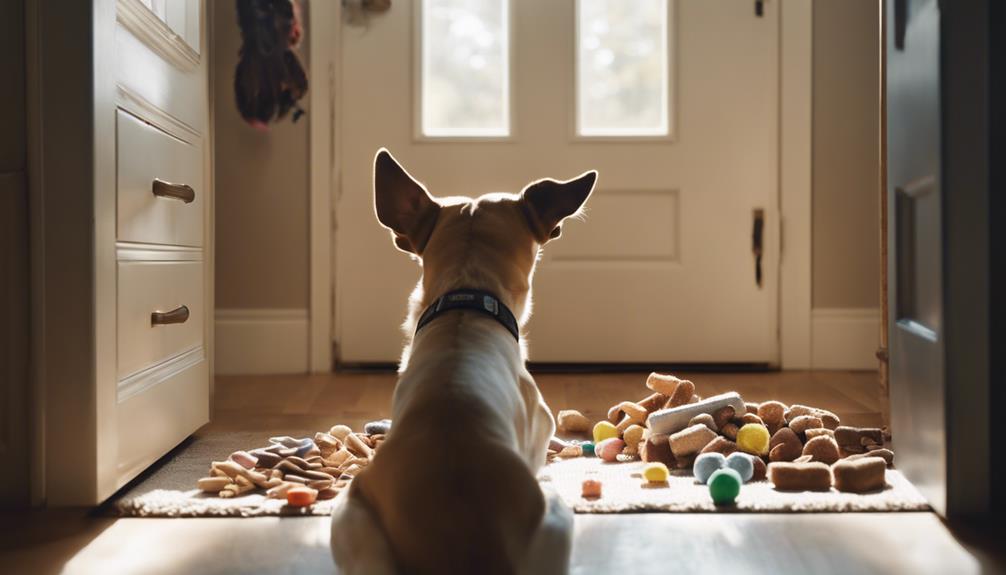
Incorporating doorway etiquette practice into your daily routine is crucial for your dog’s success. Consistency and patience are key to helping your dog learn and generalize skills across different environments and contexts. Crate training can also be beneficial, as it provides a sense of security and comfort for the puppy.
Establish a consistent routine and provide a comfortable environment to help your dog feel calm and focused. This leads to better doorway etiquette. Practice in brief, 3-5 minute sessions several times a day, rewarding small steps of improvement. This will help you achieve consistent results.
Daily Practice Routines
Teaching doorway etiquette to your dog requires daily practice routines. Commit to practicing doorway manners with your dog every day, even if it’s just for 3-5 minutes, several times a day. Consistency is crucial in positive reinforcement training, as it reinforces what’s expected.
To make progress, follow these guidelines:
- Advertisement -
- Practice in short sessions to build strong learning skills and reinforce good behavior.
- Repeat exercises multiple times a day to help your dog learn new skills quickly.
- Before opening the door or inviting your dog to come through, wait for them to calm down and come back to you.
- Tailor your practice routines to your dog’s individual needs and learning style.
- Reward and positively reinforce good behavior to encourage your dog to continue demonstrating good doorway etiquette.
Rewarding Small Steps
Teaching doorway etiquette requires a consistent daily practice routine and patience. Rewarding small improvements is crucial to build trust and confidence between you and your dog. Focus on recognizing tiny steps towards good behavior, as this helps develop strong learning habits.
Crate training, for example, takes time and consistency. It can take up to six months for your dog to fully accept the crate as their safe space. Be patient with their progress and remember that frequent, brief practice sessions throughout the day will lead to successful doorway etiquette.
Brief Training Sessions
Three brief training sessions of 3-5 minutes each, spaced throughout the day, can significantly improve your dog’s doorway etiquette. To achieve this, consistency and patience are crucial.
Before teaching doorway manners, ensure your dog has a solid foundation in basic obedience training, including basic commands. Start with this Trusted Step-by-Step Guide for Teaching Your Dog to Lie Down. This foundation enables your dog to generalize skills and develop good overall manners and responsiveness in various situations.
To maximize the effectiveness of brief training sessions:
- Reward small improvements in doorway manners to establish a strong foundation for future learning.
- Practice in different environments and contexts to help your dog generalize skills and develop good overall manners and responsiveness.
- Daily practice and rewards help your dog understand the give-and-take of the canine/human bond.
- Consistency is vital, so stick to your training schedule and avoid skipping sessions.
- Be patient and acknowledge small victories, as they will add up to significant progress over time.
Overcoming Common Doorway Challenges
When approaching a closed door, pause and evaluate the situation before taking action. If you’re unsure whether to enter, wait for an invitation or permission. This shows respect for the other person’s space and avoids awkwardness.
When entering a doorway with someone else, communicate to avoid collisions or awkwardness. A simple “after you” or “please go ahead” can help ensure a smooth passage. Teaching your dog to wait at doorways can significantly improve their impulse control and reduce the risk of accidents. According to a study published in the Journal of Veterinary Behavior, teaching dogs to sit at doors is an effective component of bite prevention.
Be mindful of your body language and spatial awareness when entering or exiting a doorway. Avoid standing in the doorway, as this can block the path for others and create congestion. Instead, step aside and allow others to pass through, keeping the doorway clear.
Practicing Doorway Etiquette in Real Life
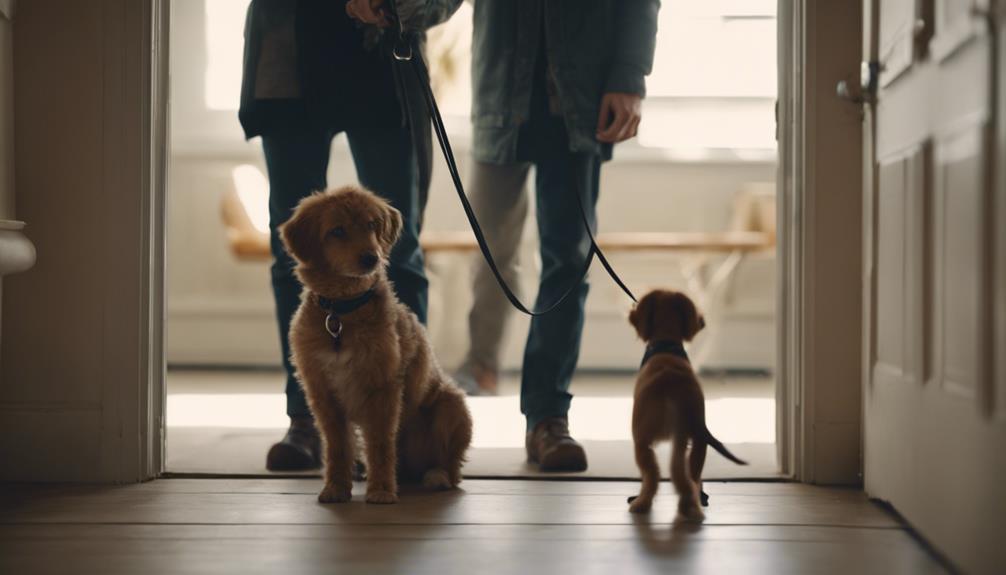
Practicing doorway manners in real-life situations is crucial for your dog to generalize their learning and respond correctly in various contexts. Start by having your dog wait at a closed door, then gradually increase the difficulty by adding distractions, such as opening the door slightly or having someone enter or exit.
Consistency is essential when practicing doorway manners. Ensure all family members follow the same training protocol to avoid confusing your dog. For broader strategies, explore these Effective Dog Behavior Correction Techniques. Reward your dog for calm behavior, such as sitting or standing still, and avoid rewarding excited or anxious behavior.
Crate training can be beneficial in promoting good behavior and reducing anxiety. However, it may take up to six months for your dog to fully accept the crate as their safe space. Be patient and consistent when introducing the crate.
To generalize doorway manners, practice at different locations, such as at a friend’s house or in a public building. This will help your dog understand that the rules apply everywhere, not just at home. Start with simple door training exercises and gradually increase the difficulty as your dog becomes more confident.
When practicing, open the door slowly and calmly to help your dog learn to wait politely. Use verbal cues, such as “wait” or “stay,” to remind your dog of what’s expected of them. Be patient, as practicing doorway manners in real-life situations takes time and effort.
Frequently Asked Questions
How to Teach a Dog Doorway Etiquette?
Teach your dog door manners by following these steps:
- Start by having your dog sit beside you on a leash. This helps them focus on you and learn to wait.
- Use clear commands like “wait” or “stay” and reward your dog with treats and praise when they obey.
- Gradually increase the time your dog must wait before entering or exiting the door. This helps them learn patience and self-control.
- Consistency is key. Practice door manners regularly to reinforce good behavior and prevent bad habits.
- As your dog becomes more confident, you can phase out the leash and treats. They’ll learn to associate the door with good manners, ensuring their safety and strengthening your bond.
Remember to stay calm and patient during training. With time and practice, your dog will master door manners.
What Is the Doorway Method for Dogs?
The doorway method for dogs is a training technique that teaches your dog to wait calmly at doorways. This technique helps overcome door anxiety and promotes spatial awareness. By mastering this method, you’ll improve your dog’s socialization and ensure calm entrances. This skill is essential for a well-behaved dog in any environment.
The doorway method is simple to learn and practice. It involves training your dog to wait at a doorway, such as at the front door or a room entrance, until you permit them to enter. This technique helps your dog develop self-control and understand boundaries.
With the doorway method, you can reduce your dog’s anxiety and excitement at doorways. This leads to more pleasant walks and entrances. By practicing this technique consistently, you’ll see improvements in your dog’s behavior over time.
How to Train a Dog to Not Run Out the Door?
To train your dog to not run out the door, follow these steps:
First, practice leash training to teach your dog to walk beside you. This helps establish boundary setting and exit control.
Next, practice threshold waiting. Stop five feet from the door and reward your dog with treats for remaining calm. Start with short sessions and gradually increase the waiting time.
Consistency and patience are crucial for successful training. By following these steps, your dog will learn self-control and understand that waiting is expected before exiting.
How Do I Get My Dog to Go Through the Doorway?
To help your dog overcome doorway anxiety, practice entry hesitation exercises. Start by having your dog stand in front of a doorway, then reward them with treats and praise for remaining calm. Gradually increase the time they need to wait before entering the room. As they become more confident, they’ll learn to navigate doorways smoothly.
Remember that exit excitement can also be a challenge. To address this, practice exiting rooms with your dog, rewarding them for calm behavior. Consistency is key, so make sure to practice regularly. With time and patience, your dog will master going through doorways.
In summary
Mastering doorway etiquette with your dog takes time, effort, and consistency. However, the results are well worth it. By following these steps, you’ll improve your relationship with your dog and create a more harmonious living environment.
To achieve this, practice patience, consistency, and positive reinforcement. With time, your dog will learn to wait calmly by the door, allowing you to enter or exit without chaos. This skill requires repetition and clear communication, but the payoff is a well-behaved dog that respects your space.
Remember, raising a well-behaved dog is a process that demands dedication and persistence. Focus on building a strong bond with your dog, and with time, you’ll enjoy a more peaceful and rewarding relationship.
- Advertisement -