
Which Entropion in Dogs Breeds Are Most Affected?
- Advertisement -
You may be wondering which dog breeds are most affected by entropion. Certain breeds, such as Saint Bernards, Great Danes, and Shar Pei, are more prone to developing entropion due to their unique facial structures and genetic predispositions. Hunting breeds like Labrador Retrievers, Gordon Setters, Irish Setters, and Golden Retrievers are also at risk due to their genetic makeup. These breeds' physical characteristics, such as prominent eyes and loose eyelid skin, increase their likelihood of developing entropion. By understanding the breeds most affected, you can take steps to identify and address the issue early on, and learn more about the causes, symptoms, and treatment options for this condition.
Key Takeaways
- Saint Bernards, Great Danes, and Shar Pei are commonly affected by entropion due to their prominent eyes and loose eyelid skin.
- Hunting breeds like Labrador Retrievers, Gordon Setters, Irish Setters, and Golden Retrievers are prone to entropion due to their genetic makeup.
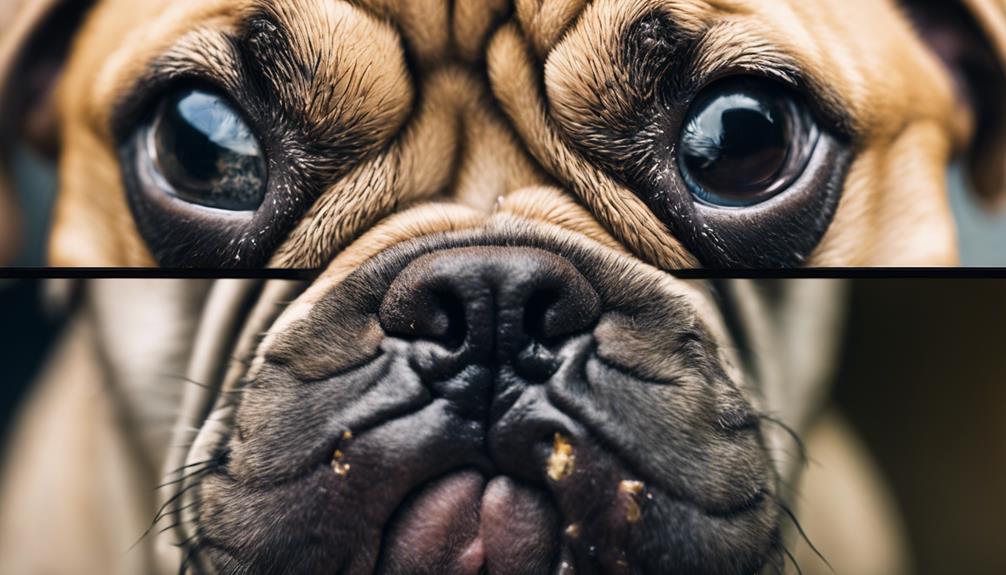
- Brachycephalic breeds, such as Pugs and Bulldogs, are more prone to eyelid problems due to their facial structure and breed conformation.
- Breeds with excess skin and large eyelid openings, like Bloodhounds and Basset Hounds, are also at higher risk of developing entropion.
- Giant and sporting breeds, such as Rottweilers and Doberman Pinschers, are also commonly affected by entropion due to their genetic predisposition.
Breeds Prone to Entropion
Breeds Prone to Entropion
Certain dog breeds are more likely to develop entropion due to their facial structure or genetic predisposition. Breeds with prominent eyes and loose eyelid skin, such as Saint Bernards, Great Danes, and Shar Pei, are commonly affected. Hunting breeds like Labrador Retrievers, Gordon Setters, Irish Setters, and Golden Retrievers are also prone to entropion due to their genetic makeup.
If your dog belongs to one of these breeds, it's crucial to monitor their eye health closely. Early detection and treatment of entropion can prevent complications and improve their quality of life. Look out for signs of entropion, including redness, discharge, squinting, or avoidance of light. If you suspect your dog has entropion, consult a veterinarian for proper diagnosis and treatment.
Causes of Eyelid Problems
Eyelid problems in dogs can be caused by several factors. Entropion, where the eyelid rolls inward, and ectropion, where it rolls outward, can lead to corneal issues and discomfort.
Breed conformation plays a significant role in eyelid problems. Breeds with brachycephalic conformation, such as Bulldogs and Pugs, are more prone to eyelid issues due to changes in breed conformation over the past 100 years.
Desirable breed traits, like droopy eyes and wrinkly faces, increase the risk of ectropion and entropion. Breeds like Hounds, Spaniels, and Bulldogs are more likely to experience these issues.
Excess skin and large eyelid openings, common in breeds like Labrador Retrievers, Gordon Setters, and Shih-Tzus, can also lead to eyelid problems.
Both genetic and environmental factors contribute to eyelid issues. Genetic predisposition increases the risk of entropion and ectropion in certain breeds.
Understanding these causes helps identify breeds prone to eyelid problems. In some cases, surgical correction may be necessary to alleviate discomfort and prevent complications. Recognizing the underlying causes enables you to take proactive steps to protect your dog's eye health and overall well-being.
Symptoms and Diagnosis

Symptoms of entropion in dogs include eye discomfort, rubbing their face, and sensitivity to light. These signs can lead to more severe complications if left untreated. Affected dogs often exhibit general eye discomfort, which may cause them to rub their face or be light-sensitive.
Short-nosed breeds typically show excess tears, bloodshot eyes, and profuse blinking. Giant and sporting breeds tend to have mucoid or purulent discharge from the outer corner of their eyes. In dogs with secondary entropion, symptoms depend on the primary cause but usually include ocular discharge and squinting.
If entropion leads to corneal ulceration, the cornea may become cloudy and appear white or blue. A veterinarian diagnoses entropion by observing the eyelid rolling inward. To check for corneal ulceration, a fluorescent dye is applied to the cornea. The ulcerated area will absorb the dye, while healthy tissue will remain clear. The veterinarian will also look for underlying conditions contributing to the entropion, such as eyelid scarring, nerve damage, infection, or excessive weight loss.
Early recognition and veterinary care can prevent corneal scarring and ensure your dog receives necessary treatment to alleviate eye discomfort.
- Advertisement -
Treatment and Surgery Options
Surgical correction is the most effective way to treat entropion in dogs. This typically involves removing a section of skin from the affected eyelid to reverse its inward rolling. The procedure, known as blepharoplasty, can be complex and may require multiple surgeries to achieve the best results.
You have four treatment options to consider:
- Surgical correction: Removing a section of skin from the affected eyelid to reverse its inward rolling.
- Temporary sutures: Placing sutures to roll the eyelids outwards in young puppies.
- Hyaluronic acid (HA) injections: Injecting HA to evert the eyelid margin in some cases.
- Combination therapy: Combining surgical correction with management of secondary problems, such as corneal ulcers, conjunctivitis, and chronic eye discharge.
The cost of entropion surgery ranges from $500-$1000 per eye. A general veterinary practitioner or board-certified veterinary ophthalmologist can perform the procedure. It's crucial to work closely with your veterinarian to determine the best course of treatment for your dog. By understanding these options, you can help your dog find relief from the discomfort and pain caused by entropion.
Prevention and Breed-Specific Risks

Preventing entropion in dogs is crucial to avoid the condition and its complications. Since entropion is hereditary, it's essential to avoid breeding dogs with the condition to prevent passing it down to future generations.
Maintaining a healthy weight in your dog can reduce the risk of entropion, as excess weight can contribute to its development. Certain breeds are more prone to entropion due to their physical characteristics. Breeds with short noses and excess skin folds, such as Chesapeake Bay Retrievers, Pugs, Bulldogs, and Chow Chows, are more likely to develop entropion.
Regular eye exams are vital to identify entropion early, allowing for prompt treatment and prevention of complications like corneal ulcers. By staying vigilant and addressing any signs of entropion promptly, you can help your dog live a healthier life. Remember, prevention is key, and taking proactive steps can reduce the risk of entropion in your dog.
Frequently Asked Questions
Which of the Following Dog Breeds Is More Prone to Have Entropion?
Some dog breeds are more prone to entropion due to their physical characteristics. Pugs, for example, are prone to eye problems, including entropion. Bulldogs often experience eyelid issues, which can increase their risk of developing the condition. Cocker Spaniels have a higher risk of entropion due to their facial structure. Poodles can inherit genetic disorders that affect their eyes, making them more susceptible to entropion. Chow Chows may experience vision issues, including entropion, due to their eye shape. Akitas have a unique eye anatomy that can increase their risk of developing the condition. Boxers, Beagles, and Rottweilers also have facial features that can affect their eyes and increase their risk of entropion.
Which of the Following Breeds Is Most Susceptible to Entropion?
Several breeds are prone to entropion, an eyelid condition. Pugs are highly susceptible, but they're not alone. Bulldogs, Shih Tzus, and Cocker Spaniels are also at risk. Chihuahuas, Pomeranians, Boxers, and Chow Chows are also on the list. French Bulldogs and Affenpinschers are prone to eyelid deformities and irregularities as well. Knowing your breed's specific needs is crucial to providing the best care.
Which Dog Breed Is Commonly Afflicted With Ectropion?
Ectropion affects various dog breeds, but it's more common in senior dogs than puppies. Bulldogs are prone to ectropion due to their unique facial structure, which can cause redness and discharge. Pugs, Basset Hounds, and Bloodhounds are also susceptible to this condition. In severe cases, Cocker Spaniels may require ectropion surgery. Proper dog eye care is crucial for all breeds to prevent and diagnose ectropion. Regular check-ups and monitoring for symptoms can help identify the condition early on, ensuring timely treatment and preventing complications. By taking proactive measures, you can help protect your dog's eye health and quality of life.
What Breed of Dog Gets Entropion?
Dogs with flat faces, such as Pugs, Bulldogs, and Shih Tzus, are more likely to develop entropion due to their facial structure. Other breeds, including Cocker Spaniels, Yorkshire Terriers, and Poodles, can also experience entropion, which can lead to eye problems. Additionally, Chihuahuas, Boxers, Dachshunds, and Beagles can develop entropion, causing vision issues if left untreated. Regular monitoring of your dog's eye health is crucial to catch any potential issues early, regardless of breed.
In summary
Certain dog breeds are more prone to entropion due to their physical characteristics. Brachycephalic breeds, such as Pugs and Bulldogs, have a higher risk of developing entropion because of their flat-faced skulls. In fact, research shows that these breeds are 13 times more likely to develop entropion compared to other breeds. If you're considering getting a dog, it's essential to be aware of this potential health issue and take preventative measures to ensure your dog's quality of life.
- Advertisement -