

Top Dog Dental Care Products
- Advertisement -
When it comes to top dog dental care products, it's essential to choose ones that meet your dog's specific needs, considering their size, breed, age, and health. Look for products with the Veterinary Oral Health Council (VOHC) seal of approval, which certifies they effectively reduce plaque and tartar buildup. Introduce new products gradually to prevent discomfort or resistance. VOHC-approved products, such as PETSMILE ENZYMATIC TOOTHPASTE, ORAVET CHEWS, and HEALTHY MOUTH water additive, have been clinically proven to promote healthy teeth and gums. Understanding the benefits of these products is just the start of creating an effective oral health routine for your dog.
Key Takeaways
- Choose dog dental care products with the VOHC seal of approval, ensuring they reduce plaque and tartar buildup.
- Select products suitable for your dog's size, breed, age, and health, such as PETSMILE ENZYMATIC TOOTHPASTE or ORAVET CHEWS.
- Dental chews, like those with the VOHC seal, remove calculus and promote healthy teeth and gums through mechanical action.
- Look for toothpaste and dental gels that can be used with daily toothbrushing to remove plaque and tartar, supporting clean teeth and healthy gums.
- Consider dental treats with natural ingredients, such as carrots, coconut oil, and apple slices, to support good oral health in dogs.
Choosing the Right Dental Product
Choosing the right dental product for your dog is crucial for their oral health. Consider your dog's size, breed, age, and health when selecting a product. Look for the Veterinary Oral Health Council (VOHC) seal of approval, which ensures the product has been tested and proven to reduce plaque or calculus in dogs.
VOHC-approved products, such as dental chews and toothpaste, have been clinically proven to reduce plaque and tartar buildup. When brushing your dog's teeth, use a soft-bristled toothbrush or a veterinary toothbrush. Brush their teeth at least three times a week, or daily if they have existing periodontal disease.
Introduce new dental products gradually to prevent discomfort or resistance. Use positive reinforcement, such as words of affirmation and healthy treats, to make the process enjoyable. Start with short sessions and gradually increase the duration as your dog becomes more comfortable.
VOHC-Approved Pet Dental Care Products
When choosing a dental product for your dog, it's crucial to verify that it has the Veterinary Oral Health Council (VOHC) seal of approval. The VOHC is a non-regulatory agency that tests pet dental products claiming to reduce plaque or calculus, and awards the VOHC Seal of Acceptance to products that meet the requirements.
VOHC-approved products are a reliable choice for your dog's dental care. For example, PETSMILE ENZYMATIC TOOTHPASTE is a VOHC-approved toothpaste suitable for dogs and cats, and comes in multiple flavors. If you prefer dental chews, ORAVET CHEWS and TARTAR SHIELD SOFT RAWHIDE CHEWS are VOHC-approved options that use mechanical action to remove calculus. HEALTHY MOUTH water additive is another VOHC-approved product that passively helps prevent plaque formation and is all-natural. HEALTHY MOUTH ANTIPLAQUE WIPES are also a VOHC-approved option, although they don't provide the same level of cleaning as toothbrushing.
Brushing and Toothpaste Essentials
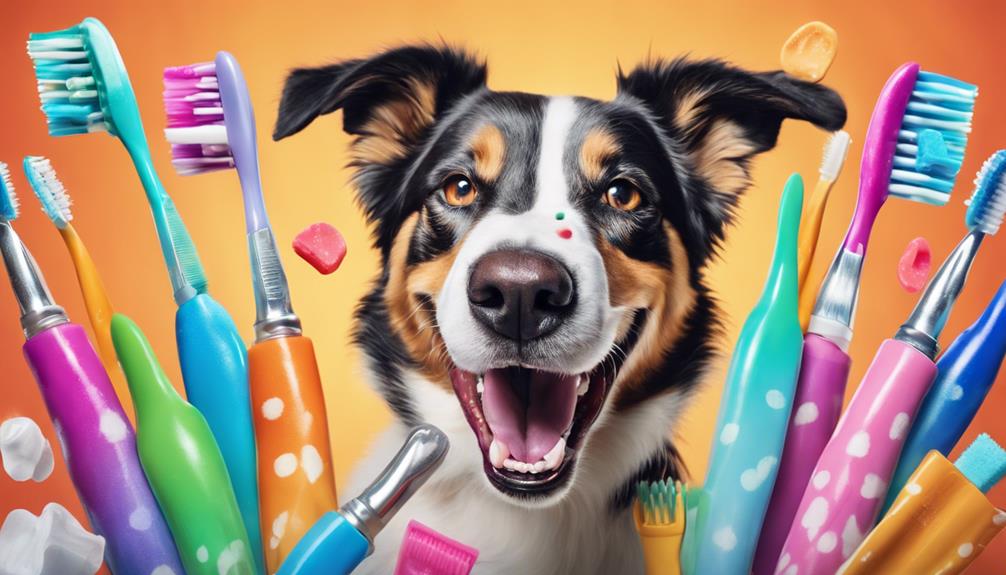
When it comes to brushing your dog's teeth, using the right toothbrush and toothpaste is crucial for their dental health.
Selecting the perfect toothbrush involves considering factors such as size, shape, and bristle type. You'll want a toothbrush specifically designed for dogs, as human toothbrushes are not suitable. Look for a toothbrush with soft bristles and a small head that can fit comfortably in your dog's mouth.
Toothpaste is another essential component. Human toothpaste is not safe for dogs, so make sure to choose a toothpaste specifically formulated for canines. These toothpastes usually carry the Veterinary Oral Health Council (VOHC) seal of approval, ensuring they meet dental health standards.
Proper brushing techniques are also vital. Start by introducing the toothbrush gradually, letting your dog get accustomed to the sensation. Then, brush in small circular motions, focusing on the teeth and gum line. Be sure to reward your dog with praise and treats for good behavior.
Toothbrush and Paste Choices
Brushing your dog's teeth requires the right tools. You need a soft-bristled toothbrush or a veterinary toothbrush designed for your pet's needs. When selecting toothpaste, look for products with the VOHC Seal, such as PETSMILE ENZYMATIC TOOTHPASTE, which comes in multiple flavors.
Soft bristles are essential because hard bristles can damage your dog's gums and tooth enamel. Hard bristles can cause bleeding, pain, and even lead to infections.
Choose a toothpaste with the VOHC Seal. This seal confirms the product has been tested and proven to reduce plaque and calculus.
Brush your dog's teeth regularly. Aim to brush at least three times a week to make a significant difference in their oral health.
Dental Care for Puppies
Establishing a dental care routine for your puppy is crucial to prevent dental issues. You can start brushing their teeth as early as three months old. Use a toothbrush with soft bristles and pet-safe toothpaste, as human toothpaste is toxic to them. Puppies have 28 baby teeth that start erupting at around three weeks old, making them prone to dental problems.
Daily brushing with a puppy-specific toothpaste helps remove plaque and tartar, reducing the risk of dental disease. Introduce toothbrushing gradually to help your puppy get accustomed to the process. This makes it a positive experience and prevents periodontal disease and plaque buildup, ensuring their oral health.
Brushing Techniques Matter
Mastering Brushing Techniques for Optimal Dog Dental Care
Brushing your dog's teeth is a crucial aspect of their dental care routine. To do it effectively, you need to brush correctly and make it a positive experience for your dog.
Introduce Brushing Gradually
Start by introducing your dog to brushing gradually. Use a soft-bristled toothbrush and toothpaste specifically designed for dogs. This helps your dog get comfortable with the process.
Proper Brushing Technique
Brush your dog's teeth in small circular motions. Focus on the areas where the teeth and gums meet. This helps remove plaque and tartar effectively.
Make Brushing a Positive Experience
Reward your dog with positive reinforcement, such as praise and healthy treats, to make the process enjoyable. This encourages your dog to cooperate during brushing.
Dental Wipes and Chews Explained
Dental wipes and chews can be a convenient way to support your dog's oral health. However, it's crucial to understand their benefits and limitations.
Dental wipes effectively remove biofilm and early forming plaque from your dog's teeth. However, they don't reach underneath the gumline like toothbrushing does.
Dental chews can be a valuable tool in your dog's oral health arsenal. Look for products carrying the Oral Health Council (VOHC) seal of approval, as they have been proven to remove calculus and prevent plaque formation through mechanical action. Some VOHC-approved chews even contain Enzymatic Oral Hygiene properties, which break down plaque and tartar, leaving your dog with fresh breath.
Dental diets can also support your dog's oral health. These diets are designed to be very hard, which helps remove calculus when your dog chews. However, they may not be suitable for pets with oral pain or historical tooth resorption. Monitor your dog's calorie intake, as some dental diets have higher fat content than others.
Water Additives and Dental Diets

Enhance your dog's oral health routine with water additives and dental diets that work together to prevent plaque formation and calculus buildup. HEALTHY MOUTH, an all-natural water additive, helps prevent plaque formation passively.
Dental diets, on the other hand, are designed to remove calculus when your dog chews, preventing dental disease. However, they may not be suitable for pets with oral pain or historical tooth resorption. Some dental diets have higher fat content, so monitor your dog's calorie intake.
To get the most out of water additives and dental diets:
- Advertisement -
- Introduce them gradually to get your dog accustomed to the taste and texture.
- Choose VOHC-approved products, which have been tested and proven to reduce plaque or calculus.
- Monitor your dog's oral health and adjust their diet and water additive as needed to ensure the best care.
Importance of Regular Brushing
Regular brushing plays a crucial role in maintaining your dog's oral health. It helps prevent periodontal disease and promotes overall well-being. By brushing your dog's teeth regularly, you can significantly reduce the risk of dental problems. This habit also allows you to detect oral health issues early on, enabling you to seek prompt veterinary care.
Consistency is key when it comes to brushing. Establish a routine and stick to it. This will help keep your dog's teeth and gums healthy. Regular brushing also helps you identify potential problems before they become severe. By doing so, you can ensure your pet receives the necessary treatment in a timely manner.
Brushing for Good Health
Daily brushing with a dog toothbrush and toothpaste is essential for your dog's oral health and overall well-being. This habit helps prevent dental disease, which can lead to other health problems like heart disease in dogs. Aim to brush your dog's teeth at least three times a week, and daily if they have existing periodontal disease.
Brushing is vital for three key reasons:
- It removes plaque, a major contributor to dental disease.
- It maintains a healthy gumline, reducing the risk of periodontal disease.
- It promotes overall health by preventing dental disease.
When brushing, use a soft-bristled toothbrush or a veterinary toothbrush and pet-safe toothpaste to avoid toxicity. Make brushing a regular part of your dog's routine to maintain their oral health and overall well-being.
Daily Brushing Habits
Daily brushing is essential for your dog's oral health. It helps prevent dental disease, which can lead to other health issues. To make daily brushing a habit, start slowly and reward good behavior.
Use a suitable dog toothbrush and toothpaste, as human toothpaste is toxic to pets. Look for products with the Oral Health Council (VOHC) registered seal, ensuring they meet high standards for effectiveness and safety.
Daily brushing helps prevent dental disease by removing plaque and tartar. Veterinary Dental Specialists recommend regular oral health assessments to identify and address dental issues early on.
To make brushing a positive experience for your dog, use positive reinforcement such as words of affirmation and healthy treats. You can also supplement daily brushing with dental chews, which can help freshen your dog's breath.
Regular Oral Health
Regular oral health assessments are crucial in identifying dental issues before they become severe problems. By prioritizing your dog's oral health, you can prevent painful and costly problems from arising. Regular brushing, along with the use of dental care products, helps remove plaque and tartar buildup, reducing the risk of dental disease.
Regular oral health care is essential for your dog's well-being for three key reasons:
- Prevents Bad Breath: Brushing and dental care eliminate bad breath, making it more enjoyable to be around your dog.
- Reduces Pain: Preventing dental issues reduces the risk of pain and discomfort for your dog, ensuring a happy and healthy life.
- Saves You Money: Identifying and addressing dental issues early on saves you money by avoiding costly surgeries and treatments.
Consequences of Poor Oral Health

Neglecting your dog's oral health can lead to a range of serious problems that put their overall well-being at risk.
Failing to clean your dog's teeth regularly allows plaque and tartar to build up, leading to gum disease, tooth decay, and tooth loss. This can cause your dog significant pain and reduce their quality of life.
Moreover, poor oral health can lead to systemic infections that spread to other parts of the body, such as the heart, liver, and kidneys. Bacteria from the mouth can enter the bloodstream, causing infections in other areas of the body. Research has also linked poor dental health to various diseases, including diabetes, arthritis, and heart disease.
To prevent these problems, regular oral care is essential. Daily brushing can reduce the risk of oral health issues by removing plaque and tartar buildup. Regular dental check-ups with your veterinarian can identify problems early on, allowing for prompt treatment and prevention of further complications.
Top-Rated Dental Care Products
Choosing the right dental care products for your dog is crucial for their oral health. With so many options available, it's essential to select products that are both effective and safe.
When selecting dental chews, look for the Veterinary Oral Health Council (VOHC) seal of approval. This seal indicates that the product has been tested and meets the requirements for reducing plaque or calculus.
Three top-rated dental care products can help maintain your dog's healthy teeth and gums:
VOHC-approved dental chews remove calculus and promote healthy teeth and gums through mechanical action. Examples include Oravet Chews and Tartar Shield Soft Rawhide Chews.
Toothpaste and dental gels can be used with daily toothbrushing to remove plaque and tartar, supporting clean teeth and healthy gums.
Dental treats with natural ingredients, such as carrots, coconut oil, and apple slices, can also support good oral health in dogs.
Frequently Asked Questions
What Is the Most Effective Dog Dental Care?
Effective dog dental care involves a combination of daily brushing with a soft-bristled toothbrush and a plaque remover. Additionally, gum massage and tartar control measures can further support oral hygiene. Natural cleaners and fresh breath products can also contribute to healthy gums.
However, it's crucial to remember that brushing alone cannot reach plaque below the gumline. To provide thorough care, combine brushing with other methods, such as VOHC-approved chews or dental diets. These can help remove plaque and tartar that regular brushing misses. By incorporating these steps, you can help maintain your dog's oral health.
What Do Vets Recommend for Dogs' Teeth?
Veterinary dentists recommend regular brushing with a dog-friendly toothbrush and canine toothpaste to maintain your dog's oral health. They also suggest dental diets and dental chews to help reduce plaque and calculus. Regular oral exams and professional cleanings are crucial to preventing periodontal disease. When choosing products, look for the VOHC Seal of Acceptance, which indicates vet-approved items that can significantly improve your dog's oral health.
What Is Best Dental Treat for Dogs?
When choosing dental treats for your dog, look for products that control tartar and fight plaque. These treats support oral health, promoting a healthy smile for your dog.
VOHC-approved Oravet Chews and Tartar Shield Soft Rawhide Chews are good options. They are designed to freshen breath, promote healthy gums, and clean teeth.
What Is the Best Dog Dental Additive?
When selecting a dog dental additive, look for natural ingredients that promote healthy teeth and fresh breath. Dental Drops Benefits, which reduce plaque and tartar, are a good option. Research water additives by reading reviews to find the most effective ones. In addition to water additives, consider Fresh Breath Formula and Oral Health Supplements to support your dog's dental health. Pet Smile Enhancers, Healthy Teeth Tonics, and Bad Breath Eliminators that use Natural Dental Aids can also be helpful. Before adding any supplements, consult your veterinarian to ensure your dog's safety.
In summary
Prioritize your pet's oral health by investing in premium dental care products and establishing a regular brushing routine. This helps prevent tartar buildup and bad breath, as well as safeguarding against various systemic health issues. Regular dental care can prevent problems such as heart disease, kidney disease, and even diabetes. By taking care of your pet's teeth, you're investing in their overall health and well-being. Start a regular brushing routine today and give your pet the gift of a healthy, happy smile.
- Advertisement -