

The Role of Service Dog Socialization Training
- Advertisement -
By incorporating socialization training into a Service Dog's development, you're giving them the tools to thrive in public settings. Socialization exposes them to various environments, people, and animals, reducing fear and anxiety, and laying the foundation for a strong bond with their handler. This training helps Service Dogs handle distractions, remain focused, and perform tasks in different settings, ultimately leading to a more confident and well-behaved companion. As you learn more about the role of socialization in Service Dog training, you'll discover how it can lead to a stronger, more effective partnership between dog and handler.
Key Takeaways
- Socialization training reduces fear and anxiety in Service Dogs, enabling them to focus on their tasks in various environments.
- Proper socialization lays the foundation for a strong bond between the Service Dog and its handler, facilitating effective communication.
- Socialization helps Service Dogs navigate public environments confidently, reducing the risk of behavioral problems and anxiety disorders.
- Socialization training exposes Service Dogs to different sights, sounds, and smells, building adaptability and focus in unfamiliar situations.
- Consistent socialization from an early age is crucial for a Service Dog's development, ensuring effective communication and a strong bond with its handler.
The Importance of Socialization
Socialization is a crucial aspect of Service Dog training. It's essential for developing well-behaved, confident, and focused companions. Socialization is not optional; it's a requirement for Service Dogs to excel in their roles.
By socializing Service Dogs, you expose them to various environments, people, and animals. This helps them develop good social skills, reduces fear and anxiety, and increases their confidence in new situations. Proper socialization significantly lowers the risk of behavioral problems, fear-based aggression, and anxiety disorders.
Well-socialized Service Dogs are better equipped to handle distractions, remain focused, and perform their tasks in different settings, including public spaces. Socialization also lays the foundation for a strong bond between the Service Dog and its handler, enabling them to work together seamlessly in public.
To socialize your Service Dog effectively, invest time and effort into exposing them to various situations. This will help them become confident, well-trained, and supportive companions for those who need their help. Remember, socialization is key to developing a reliable and effective Service Dog.
Training Regimen and Preparation
A well-structured training regimen and thorough preparation are essential for your Service Dog's success. Socialization is critical in helping your dog navigate public environments confidently. To achieve this, consistent training and socialization from an early age are necessary.
Work with certified trainers to design a training regimen tailored to your dog's needs, focusing on socialization with people and animals. This training will help your dog become approachable and friendly. Distraction training is also crucial, teaching your dog to stay focused amidst temptations and remain calm in emergencies.
Regular outings to public places will help your Service Dog adapt to new situations and handle interactions without aggression or timidity. This lays the groundwork for effective communication and mutual understanding between you and your dog. As you prepare for the Canine Good Citizen Test, you'll be preparing your Service Dog for real-world scenarios and unexpected challenges, enabling them to excel in their role as a working service dog for individuals with emotional disabilities.
During training, prioritize consistency, patience, and positive reinforcement. This will help your dog understand what is expected of them and build trust between you and your dog. With a well-structured training regimen and thorough preparation, your Service Dog will be equipped to handle the demands of their role and provide the necessary support for individuals with emotional disabilities.
The Broader Impact of Training

The Broader Impact of Training
Your Service Dog's training has a ripple effect that goes beyond just helping you. It raises awareness about the importance of Service Dogs and promotes inclusivity and accessibility in public spaces.
By training your Service Dog to perform tasks that help with your emotional disability, you're showing others that individuals with disabilities can navigate public places with confidence. This helps break down barriers for others who may need similar assistance.
Your training also helps the public understand Service Dogs' roles and rights. By educating people about Service Dogs, you're dispelling misconceptions and promoting acceptance. This allows Service Dog teams to access public spaces without issues, creating a more inclusive environment for everyone.
The impact of your training is significant. As you and your Service Dog navigate public spaces, you're contributing to a society that's more understanding and accepting of individuals with disabilities.
Public Training and Adaptability
To prepare your Service Dog for real-world scenarios, focus on public training and adaptability. This training helps your dog build confidence in various settings and respond safely to unexpected challenges. Expose your dog to different environments and distractions to develop adaptability and focus. This will enable them to assist you reliably.
Public training involves practicing obedience commands in busy areas like shopping malls, parks, and sidewalks. This helps your dog learn to focus on you despite distractions. Adaptability training involves exposing your dog to new sights, sounds, and smells to build confidence in unfamiliar situations.
Real-World Scenario Preparation
Service Dogs in training need to be exposed to various real-world scenarios to prepare them for their future roles. Public training helps them build confidence and adaptability in the face of distractions and temptations. By taking your Service Dog to public places, you're helping them learn to navigate different settings and remain calm amidst chaos. This training also educates the public about Service Dogs' rights and roles.
Regular outings help your Service Dog develop essential skills, such as responding to commands and remaining focused. These skills are crucial for their future tasks and keeping their handlers safe in emergency situations. Public training exposes your Service Dog to sudden noises and distractions, which helps them learn to stay calm and focused.
As you continue public training, your Service Dog will become more confident and calm. This is essential for providing support to disabled individuals who rely on them. By exposing your Service Dog to different public environments, you're helping them develop the skills they need to perform their tasks effectively.
Building Confidence Safely
When taking your Service Dog to public places, you're helping them build confidence and adaptability in the face of distractions and temptations. This public training is essential for developing real-world skills. By exposing your dog to various environments, people, and situations, you're teaching them to remain calm and focused amidst distractions.
Public training has four key benefits:
- Generalization: Your Service Dog learns to apply their training to new situations, environments, and distractions, enabling them to confidently assist you in different contexts.
- Reducing anxiety: Public training helps reduce your dog's anxiety and fear in response to new stimuli and unexpected events, making them more confident and calm.
- Building trust: Socializing in public strengthens the bond between you and your Service Dog, fostering trust, understanding, and effective communication in various situations.
- Effective communication: Through public training, you're teaching your dog to respond to your cues and commands amidst distractions, ensuring effective communication and teamwork.
Celebrating Service Dog Heroes

Service dogs have played a crucial role in assisting individuals with disabilities. Let's take a closer look at their remarkable stories, which demonstrate their bravery and selflessness in the face of danger. By recognizing their sacrifices, we can gain a deeper understanding of the strong bonds between service dogs and their handlers.
These stories highlight the important work service dogs do every day. They provide emotional support, assist with daily tasks, and even save lives. By celebrating their heroic acts, we can appreciate the significant impact they have on their handlers' lives.
Honoring Service Dog Heroes
Honoring Service Dog Heroes
Service Dogs play a vital role in assisting individuals with disabilities. By recognizing their contributions, we acknowledge the hard work and dedication that goes into their training and daily assistance.
As working service animals, Service Dogs provide stability and support to individuals with emotional disabilities, significantly reducing their daily challenges. They are allowed in public places to accompany their owners, making a substantial difference in their lives. A licensed mental health professional often works closely with the individual and their Service Dog to foster a strong bond and effective assistance.
There are several reasons why celebrating Service Dogs is important:
Raising awareness: By celebrating Service Dogs, we educate the public about their vital role in assisting individuals with disabilities.
Inspiring stories: The stories of Service Dogs and their owners inspire and educate, highlighting the importance of these animals in changing lives.
Continued support: Recognizing the contributions of Service Dogs ensures continued support and training for these invaluable companions.
Respect and recognition: By acknowledging their selfless work, we can work towards a future where Service Dogs receive the respect and recognition they deserve.
Recognizing Their Bravery
Service dogs demonstrate bravery by putting their owners' needs first, even in challenging situations. They undergo rigorous training and socialization to prepare for their roles. As a result, service dogs, emotional support animals, and service animals have become essential in many people's lives.
Training helps these dogs develop skills and confidence to navigate complex environments and situations. Service dogs can perform various tasks, including assisting individuals with disabilities and providing comfort in times of crisis.
These dogs are heroes, and their bravery deserves recognition. Recognizing their contributions raises awareness about the importance of service dog socialization training and the vital roles they play in our communities. By acknowledging their importance, we can better appreciate the work they do and the difference they make in people's lives.
Celebrating Their Sacrifices
Service dogs make significant sacrifices every day to support individuals with disabilities. It's essential to recognize their crucial role and celebrate their devotion.
Training and Assistance: Service dogs are trained to perform various tasks, such as opening doors, providing emotional support, and assisting with daily activities.
Working Service Dogs: These dogs work tirelessly to support individuals in need, often without recognition or reward. They are always on the job, providing essential support.
- Advertisement -
Access and Independence: Service dogs enable individuals with disabilities to access public spaces, social events, and daily activities with confidence and independence.
Types of Service Dogs: There are different types of service dogs, including guide dogs, hearing dogs, and mobility assistance dogs. Each type is specifically trained to cater to unique needs.
Training and Appreciation: Training a service dog requires patience, dedication, and love. By acknowledging their importance, we can better appreciate the significant difference they make in our lives.
Support and Resources for Handlers
Support and Resources for Handlers
Having a strong support system is crucial for handlers to successfully navigate the journey of owning a Service Dog. Organizations dedicated to Service Dog training and placement, like Retrieving Freedom, rely on public support to continue their work.
Retrieving Freedom offers resources and support for Service Dog training and placement. They provide foster opportunities for Service Dogs in training, which helps with socialization. Public awareness and education are also essential, and these organizations provide the necessary resources and support.
By learning about Service Dogs and their training, you'll understand the impact they have on individuals with disabilities. Service Dogs provide independence, confidence, and companionship to those in need. By supporting organizations dedicated to Service Dog training and placement, you're contributing to education and public awareness, which helps guarantee access to these animals.
These organizations rely on donations and volunteer efforts to continue their work. Every contribution counts, and by supporting them, you're helping to provide life-changing companions to those who need them.
Effective Communication and Trust

Effective Communication and Trust
Now that you've developed a strong support system, it's time to focus on building effective communication and trust with your Service Dog. Socialization is key to establishing this foundation.
Socialization helps you recognize and respond to your dog's needs, creating a strong bond and facilitating effective communication.
Here are four key benefits of socialization:
A well-socialized Service Dog leads to a harmonious handler-dog relationship, laying the groundwork for effective communication and mutual understanding.
Through socialization, you learn to recognize your dog's cues, fostering trust and cooperation in various situations.
Socialization ensures effective communication between handler and dog, making public outings peaceful and enjoyable.
A strong handler-dog relationship relies on trust, understanding, and effective communication, all of which are cultivated through socialization.
Mastering Public Behavior and Etiquette
When you take your Service Dog on public outings, their behavior and etiquette are crucial for a smooth experience. Socialization training is key to shaping their public behavior. By exposing your dog to various public environments, people, and situations, you can build their confidence and calm demeanor.
Consistent training and rewards help your Service Dog stay focused on you, ignoring distractions in public. Recognize cues and provide timely breaks to prevent accidents and maintain composure. Socialization enables effective communication between you and your dog, allowing you to navigate crowded areas without disturbance.
In public, your Service Dog must respond promptly to vocal commands or hand signals, even in noisy environments, to ensure your safety and independence. By training them to behave well in public, you can confidently take them into public areas, knowing they'll remain calm and focused. This allows you to move freely and independently, without worrying about their behavior.
Enhancing Independence and Well-being
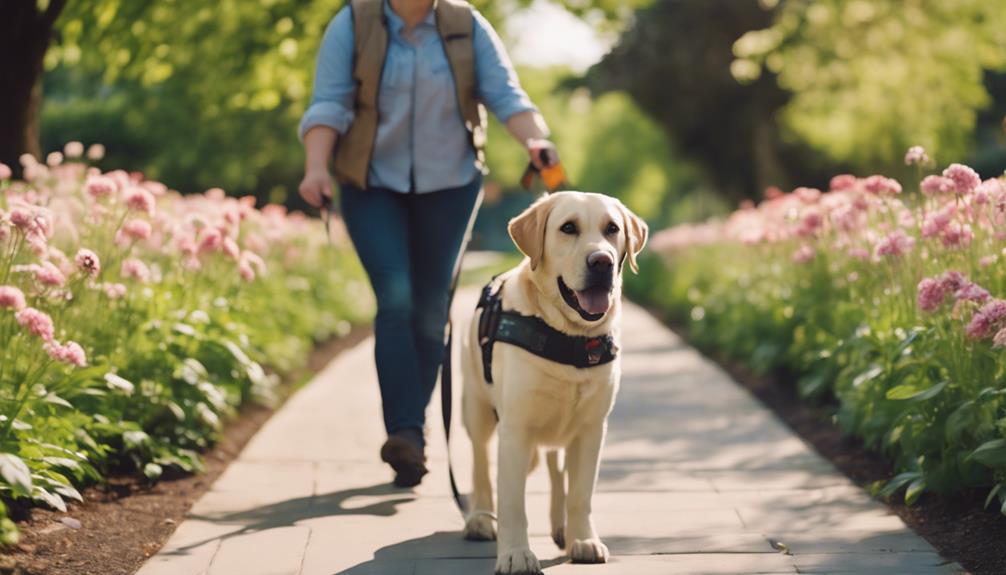
Mastering public behavior and etiquette has laid the foundation for your Service Dog to thrive in various environments. Now, let's explore how socialization training can enhance your independence and well-being as a handler.
Socialization training is crucial for building a strong bond between you and your Service Dog, rooted in trust, loyalty, and companionship. This bond has a direct impact on your mental health outcomes and overall well-being. Socialization training can enhance your independence and well-being in four key ways:
Socialized Service Dogs are better equipped to cope with distractions, reducing the likelihood of anxiety or fear-based behaviors that could compromise your well-being.
By providing emotional support and comfort, socialized Service Dogs enable you to navigate daily tasks with greater confidence and independence.
Socialization training exposes Service Dogs to diverse environments, people, and situations, helping them develop the adaptability and resilience needed to effectively assist you in various contexts.
Well-socialized Service Dogs are more adept at providing emotional support and comfort, leading to improved mental health outcomes and overall well-being.
Frequently Asked Questions
How to Properly Socialize a Service Dog?
To socialize a service dog, follow these steps:
First, teach your dog basic obedience skills in controlled environments like training rooms or quiet areas. This will help them develop good manners and focus.
Next, gradually introduce your dog to real-life scenarios in neutral locations like parks or quiet streets. Start with small steps, such as short walks or brief interactions with strangers.
Focus on calm behaviors during human interactions. Reward your dog for remaining calm and composed, as this will help them build confidence in any situation.
Gradually increase exposure to different community settings, such as stores, restaurants, and public transportation. Ensure public access by practicing in areas with varying levels of noise, crowds, and distractions.
Remember to keep training sessions short and positive, with plenty of rewards and praise. By following these steps, you can help your service dog become confident and well-adjusted in a variety of situations.
What Is the Importance of Dog Socialisation?
Inadequate socialization is a major contributor to behavioral problems in dogs, accounting for a staggering 90% of cases. Proper socialization is crucial for helping dogs develop social skills and reducing fear responses to new people and environments. This is especially important for puppies, as their breed and age affect their socialization needs. Sensory exposure and emotional intelligence also play a role in shaping a dog's social hierarchy. By prioritizing socialization, you can set your dog up for a lifetime of confident interactions.
Why Is Training Important for Service Dogs?
Training is crucial for service dogs because it lays the groundwork for essential social skills. Early exposure and puppy development are key. Human interaction, environmental factors, and public access training help service dogs become confident and task-focused. Breed selection and owner involvement also play a significant role.
Effective training enables service dogs to perform tasks with precision, making them reliable companions for those in need. Training helps service dogs develop the skills they need to assist their owners. For example, a service dog may be trained to open doors, pick up items, or provide support.
Should Service Dogs Socialize With Other Dogs?
Service dogs should socialize with other dogs to some extent. While their primary focus is assisting their handler, socialization can be beneficial. A service dog that has no exposure to other dogs may experience anxiety or fear in situations where dogs are present.
Socialization can help mitigate several issues. It can reduce social anxiety, breed-specific reactions, and fear-based behaviors. Controlled interactions with other dogs can also help prevent aggression issues. Puppy socialization, in particular, is crucial in shaping a service dog's behavior and temperament.
To socialize your service dog, start with controlled interactions in a quiet environment. Gradually introduce new dogs, breeds, and situations to help your dog become confident and calm in the presence of other dogs. Remember to reward good behavior and consult a professional trainer if you need guidance.
In summary
Socialization training is a crucial component of service dog development. It plays a vital role in shaping a well-behaved service dog that can assist individuals with disabilities in various settings. By prioritizing socialization, you can help individuals with disabilities lead more independent lives, build their confidence, and improve their overall well-being.
Proper socialization helps service dogs become comfortable in new environments and situations, which is essential for their handlers to navigate public spaces with ease. A well-socialized service dog is less likely to be distracted or anxious, allowing its handler to focus on their daily activities without interruptions.
Incorporating socialization into your service dog training program can have a significant impact on the dog's behavior and performance. It helps the dog develop good manners, reduces the risk of behavioral problems, and strengthens the bond between the dog and its handler.
- Advertisement -