
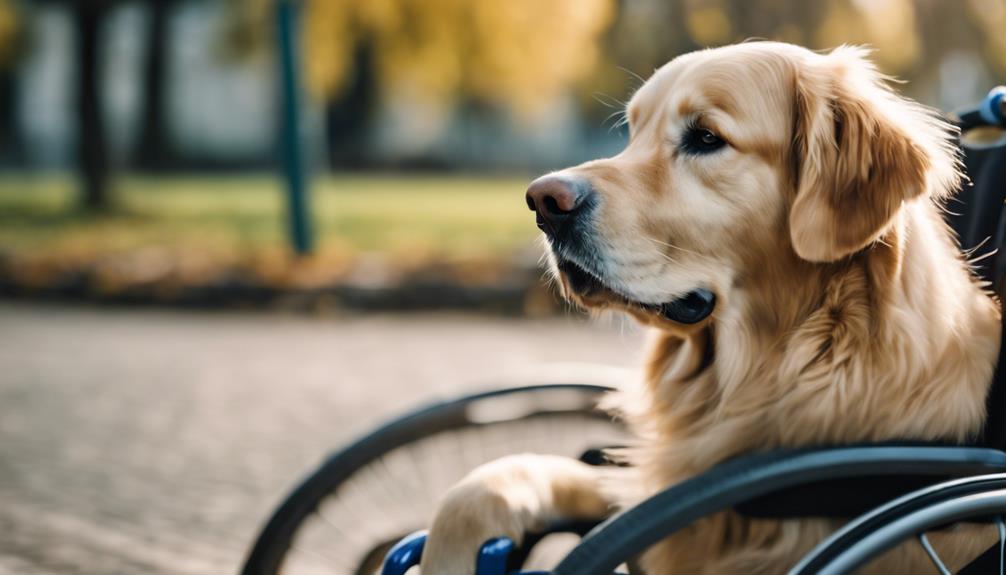
Mastering Service Dog Retrieval Training
- Advertisement -
You're taking the first step towards mastering service dog retrieval training by focusing on building a strong foundation in obedience, impulse control, and fundamental behaviors that enable your dog to confidently pick up and deliver objects. To set your dog up for success, start by introducing playful exercises that encourage them to retrieve toys or treats, gradually increasing the distance and object size. Consistently reward successful deliveries and provide toys made of various materials to generalize retrieval skills. By following these steps, you'll lay the groundwork for a successful service dog, and as you progress, you'll uncover the essential skills and techniques needed to train a professional service dog.
Key Takeaways
- Building confidence in picking up objects is crucial for service dog candidates through playful exercises and positive reinforcement.
- Generalizing retrieval skills to different materials and objects is essential for service dogs to assist in various ways.
- A strong retrieve foundation involves four key components: take, carry, hold, and give, requiring time, patience, and understanding.
- Identify and address challenges like chewing on retrieved objects or refusing to pick up non-food items by using high-value treats and ignoring undesired behavior.
- Mastering Service Dog Retrieval Training program provides a comprehensive and structured approach to train a professional service dog, focusing on practical application and real-world scenarios.
Foundational Behaviors for Retrieval
Mastering Service Dog Retrieval: Foundational Behaviors
To teach your service dog to retrieve, focus on the essential foundation skills that make successful fetching possible. These underlying skills are necessary for your dog to master before moving on to more advanced retrieval tasks.
First, teach your dog to willingly pick up and hold objects. You can do this through playful exercises, such as hiding toys or treats and encouraging your dog to find them. As your dog becomes more confident, gradually introduce smaller objects and increase the distance they need to retrieve them.
Next, teach your dog to bring the object back to you and release it into your hands. This requires your dog to understand the concept of "delivery." Consistently reward your dog for successful deliveries to create a strong association between the action and the reward. This will make it easier to teach more complex retrieval tasks later on.
Preparing Service Dog Candidates
When preparing service dog candidates, building confidence in picking up objects is crucial. Provide toys made of various materials, such as plastic, wood, metal, and fabric, to generalize retrieval skills. This variety helps candidates become proficient in picking up different types of objects.
Playing with your service dog candidate creates a positive association with retrieval, making them more likely to offer behaviors in training. A fun, low-pressure environment allows candidates to develop retrieval skills without anxiety or stress. As a result, they'll become more confident in their ability to retrieve objects, a vital skill for service dogs.
Generalizing retrieval skills to different materials and objects is essential for service dogs. Introduce your candidate to various toys and objects to set them up for success in future training. This foundation enables them to retrieve objects of different textures, shapes, and sizes, making them a valuable asset in assisting individuals in need. As you continue training, you'll build upon this foundation, teaching specific item retrieval and task performance that will make a significant difference in someone's life.
Setting Up for Retrieve Success

To set up for retrieve success, gather essential items like your dog's favorite toys or treats. Choose a clear, distraction-free training area. This preparation enables you to focus on effective retrieval training. Having the right environment and materials helps you achieve successful retrieval with your service dog.
Prepare for Success
To prepare your dog for successful retrieval training, focus on building a strong foundation in obedience and impulse control. Identify potential distractions and minimize them during training sessions to help your dog stay focused. Use clear and consistent cues to communicate what you expect from your dog. This will help build trust and confidence.
Every dog learns at their own pace, so be patient and acknowledge small achievements. A well-structured training plan is key to mastering service dog retrieval tasks. By following these steps, you'll set your dog up for success and lay the groundwork for effective retrieval training.
Gather Essential Items
To begin service dog retrieval training, gather the following essential items:
Collect a variety of retrieval items made of different materials, including:
- Wooden dowels
- Household items
- Toys made of plastic, wood, metal, and fabric
This range of items will help your dog generalize retrieval skills. Prepare high-value treats and rewards to motivate your dog and reinforce desired behaviors during training.
Designate a distraction-free training area to help your dog focus on the retrieve task. Make sure you understand the training process and troubleshooting strategies to avoid frustration and ensure success.
Importance of Retrieve Training
Retrieve training is a crucial part of service dog development. Teaching your service dog to retrieve empowers them to assist you in various ways. This fundamental skill involves four key components: take, carry, hold, and give. A strong retrieve foundation is essential for service dogs, as it allows them to apply the behavior to different situations, such as putting objects away in public.
Formal retrieving is a key task for service dogs. To teach a service dog to retrieve, you'll need to invest time, patience, and understanding. Be prepared to address common challenges, like chewing of retrieved objects and building a reliable, long-duration hold. With a solid retrieve foundation, your service dog will be better equipped to assist you in daily tasks.
Training the Retrieve Behavior

To train your service dog candidate in retrieval, start with foundational behaviors like nose touch and chin rest. These skills are essential for picking up and delivering items. By mastering these building blocks, your dog will develop the necessary skills and confidence for successful retrieval. Focus on these basics to set your dog up for success in this behavior.
Foundational Behaviors
Before training your service dog candidate to retrieve items, establish a strong foundation with the following key elements:
Generalize retrieval skills by providing toys made of various materials (plastic, wood, metal, fabric) to build confidence in picking up objects.
Create a positive association by playing with your service dog candidate in a fun, low-pressure environment to develop retrieval skills.
Set up success by gathering items of different sizes and materials (wooden dowels, household items) to confirm your dog can perform the retrieve behavior successfully.
Nose Touch and Chin Rest
- Advertisement -
Mastering the Retrieve Behavior with Nose Touch and Chin Rest
To teach your service dog candidate the retrieve behavior, focus on two essential steps: nose touch and chin rest. These foundational actions will enable your dog to use its nose to retrieve items, a crucial skill for any Service Animal.
Nose Touch
Hold a treat in front of your dog's nose to encourage them to touch their nose to your hand. As they become more comfortable, gradually move your hand back, requiring them to stretch to touch their nose to your palm. Increase the distance over time and add a verbal cue, such as "touch," once they consistently perform the action.
Chin Rest
Introduce the chin rest exercise once your dog has mastered nose touch. Hold a treat under their chin, and as they sniff, they'll naturally rest their chin on your hand. Reward this behavior, and with time, they'll associate the action with the reward.
These exercises lay the groundwork for more complex retrieve behaviors, ultimately enabling your dog to use their nose to retrieve items for you.
Troubleshooting Common Challenges
During service dog retrieval training, challenges are inevitable. To overcome them, identify the root cause of the issue, which could be lack of motivation, inadequate clicker conditioning, or insufficient targeting skills.
Common challenges include your dog chewing on retrieved objects instead of bringing them back. To address this, use high-value treats and ignore undesired behavior. Another issue is your dog's refusal to pick up anything except food. Gradually introduce novel objects and reward desired behavior with treats and praise to overcome this.
Additional strategies to troubleshoot challenges include:
- Avoid using a long lead to physically stop your dog during retrieval training, as it can be restrictive and create anxiety. Instead, focus on positive reinforcement techniques and clear communication.
- Break down the retrieval task into smaller components, such as "take," "carry," "hold," and "give," to identify and address specific challenges more effectively.
- As a Working Dog trainer, prioritize your dog's needs and adapt your troubleshooting strategies accordingly.
Program Overview and Benefits
The Mastering Service Dog Retrieval Training program is a comprehensive course designed to teach you the skills and techniques required to train a professional service dog. This program focuses on developing the expertise needed to train an Essential Service Dog, which provides invaluable assistance to individuals with disabilities.
The program's structured approach covers specific tasks, such as teaching your dog to retrieve items, open doors, and provide emotional support. By the end of the program, you'll be able to train a dog that can assist individuals with a range of needs.
One key benefit of this program is its focus on practical application. You'll learn through hands-on exercises and real-world scenarios, preparing you for the challenges of training a service dog. By mastering these skills, you'll be equipped to make a meaningful difference in the lives of others.
With a professionally trained service dog, individuals with disabilities can regain independence, confidence, and a sense of freedom. This program provides a clear and practical path to achieving that goal.
Frequently Asked Questions
How to Teach Service Dog Retrievals?
Teaching a service dog to retrieve requires a structured approach. First, create a positive association with retrieval through playful activities. This builds the dog's confidence in picking up items.
Next, introduce various objects and materials to expand the dog's retrieval skills. Set clear expectations and rewards to establish boundaries. As the dog becomes more confident, incrementally add distractions and difficulties to refine the retrieve behavior.
Remember to maintain a calm and assertive tone when training your service dog. Consistency and patience are key to successful retrieval training.
How to Teach Formal Retrieve?
To teach a formal retrieve, focus on precise placement and gentle mouthwork. Introduce formal commands like "bring" or "fetch" and use them consistently. Hold an item, such as a toy or glove, and encourage your dog to take it gently.
Gradually increase the distance and difficulty, rewarding precise placement in your hand. For example, start with short distances and gradually move to longer ones. You can also vary the item's size, shape, and texture to challenge your dog.
Be patient, as developing a reliable, formal retrieve takes time and practice. Avoid pushing your dog's nose or forcing them to release the item, as this can create anxiety and undermine the training process.
How Do I Teach a Dog to Retrieve?
To teach a dog to retrieve, you'll need to motivate them using positive reinforcement. Clicker methods are effective in encouraging your dog to pick up objects. Start by building foundation skills, such as nose touches and chin rests, when your dog is still a puppy. As they gain confidence, introduce different materials and sizes to help them generalize their retrieval skills.
What Should You Prepare for Retrieve Training?
To prepare for retrieve training, choose a quiet area with minimal obstacles. Select equipment that makes it easy for your dog to grasp and retrieve, such as a ball or toy. Consistency is crucial, so establish a clear handler role and communication style. This helps your dog understand what's expected and builds trust. Set up an environment that works for you and your dog, and you'll start strong.
Remember to:
- Minimize distractions
- Use appropriate equipment
- Be consistent in your communication and role
- Create a conducive environment
In summary
Mastering service dog retrieval training is a crucial skill that greatly benefits individuals with disabilities. Studies show that 92% of service dog handlers experience increased mobility and confidence. By dedicating time to train a service dog, you'll significantly improve someone's daily life.
This skill is vital because it enables individuals to live more independently. A well-trained service dog can retrieve essential items, reducing reliance on others. With a service dog by their side, people with disabilities can navigate their environment more easily.
The impact of service dog retrieval training is substantial. It allows individuals to perform daily tasks with greater ease, boosting their overall confidence and independence. By mastering this skill, you'll make a tangible difference in someone's life.
- Advertisement -