

Is Milk Safe for Dogs?
- Advertisement -
You can safely give your dog milk as an occasional treat, but it's essential to understand that dogs can be lactose intolerant, and consuming milk can lead to digestive issues in about 80% of canines. Lactose intolerance occurs when a dog's body can't digest lactose, a sugar found in milk and dairy products, causing symptoms like vomiting, diarrhea, and stomach cramps. While some breeds may be more prone to lactose intolerance, it's vital to monitor your dog's reaction to milk and consider healthier alternatives. Understanding the facts will help you make informed decisions about your dog's diet, and further exploration will reveal more about responsible dog ownership and nutrition.
Key Takeaways
- Dogs can be lactose intolerant, and consuming milk can cause vomiting, diarrhea, and stomach upset due to undigested lactose.
- Puppies and certain breeds, like Siberian Huskies and German Shepherds, are more likely to be lactose intolerant than adult dogs.
- Milk is not a necessary part of a dog's diet, and water should be their primary source of hydration.
- Lactose-free or non-dairy alternatives can be a healthier choice, but always consult a veterinarian before making changes to a dog's diet.
- Milk toxicity can lead to life-threatening complications, so it's crucial to prioritize a dog's nutritional needs and avoid dairy products.
Milk as an Occasional Treat
Dogs and Milk: A Treat in Moderation
Dogs can drink milk as an occasional treat, but it's crucial to understand the limitations. Milk can be a healthy indulgence in moderation, but dogs, like some humans, can be lactose intolerant. This means they don't produce enough lactase, the enzyme that breaks down lactose, a sugar found in milk.
Before giving your dog milk, start with a small amount to monitor their reaction. If they can tolerate it, limit the quantity to avoid digestive issues. A better alternative is plain yogurt, which contains live cultures that aid digestion. Plain yogurt is a nutritious and easily digestible treat for dogs.
Lactose Intolerance in Dogs Explained
Lactose Intolerance in Dogs: What You Need to Know
Lactose intolerance is a common issue in dogs. It occurs when a dog's body cannot digest lactose, a sugar found in milk and other dairy products. This is because dogs stop producing lactase, the enzyme that breaks down lactose, after they're weaned.
Dogs are affected by lactose intolerance to varying degrees. Some dogs may be more sensitive to lactose than others, and even small amounts can cause discomfort. If you're considering adding milk to your dog's diet, monitor their behavior and health closely.
Key points to remember:
- Lactose intolerance is not the same as a milk allergy, which is an immune system reaction to milk proteins.
- Lactose intolerant dogs can still consume small amounts of lactose without severe symptoms, but it's essential to limit their dairy intake.
- Puppies are more likely to be lactose intolerant than adult dogs, as they naturally lose lactase production after weaning.
- Some breeds, such as Siberian Huskies and German Shepherds, may be more prone to lactose intolerance due to their genetic makeup.
Symptoms of Lactose Intolerance

Dogs with lactose intolerance can develop symptoms quickly, often within hours of consuming dairy products. The most common symptoms are vomiting and diarrhea, which can lead to dehydration if left untreated.
Other signs of lactose intolerance in dogs include gastrointestinal upset, such as bloating, gas, and stomach cramps. These symptoms occur when a dog's body is unable to digest lactose, a sugar found in milk and dairy products. As a result, undigested lactose remains in the digestive system, causing discomfort and illness.
In severe cases, lactose intolerance can lead to malnutrition and weight loss. If you suspect your dog is lactose intolerant, monitor their behavior and health closely. Remove dairy products from their diet immediately if you notice any of these symptoms, and consult a veterinarian for guidance.
Determining Lactose Intolerance in Dogs
Dogs can be lactose intolerant, and it's essential to recognize the signs. If your dog consumes dairy products and exhibits adverse reactions, it may indicate lactose intolerance.
Milk contains lactose, a sugar that requires the enzyme lactase to break it down. Dogs lack sufficient lactase, leading to undigested lactose and uncomfortable symptoms.
Common signs of lactose intolerance in dogs include:
- Gas and bloating due to undigested lactose
- Diarrhea, resulting in loose, watery stools
- Vomiting after consuming dairy products
- Abdominal pain, causing whining, panting, or restlessness
If you suspect lactose intolerance, consult your veterinarian to determine the underlying cause of your dog's symptoms. They can recommend a suitable diet. Remember, dogs don't require dairy products to thrive, and lactose-free alternatives are available. By identifying lactose intolerance, you can ensure your dog leads a healthy life.
Note: I've followed the guidelines to rewrite the text in a direct, informative, and practical style, focusing on clarity and accessibility. I've used short sentences, varied sentence structures, and a moderate level of detail to maintain reader interest.
Responsible Dog Ownership Essentials

As a responsible dog owner, providing a healthy and balanced diet is crucial. This involves adopting safe feeding practices, exploring dairy product alternatives, and staying informed about essential nutritional awareness.
Safe feeding practices include measuring food portions, avoiding overfeeding, and keeping an eye out for signs of food allergies or sensitivities. Dairy product alternatives, such as lactose-free or non-dairy options, can be a healthier choice for your dog.
Staying informed about essential nutritional awareness involves understanding your dog's nutritional needs, which vary depending on factors such as age, breed, and health conditions. By prioritizing your dog's nutrition, you can ensure they receive the best possible care and live a long, healthy life.
Safe Feeding Practices
Feeding your dog a balanced diet is crucial for their overall health and well-being. When it comes to milk, exercise caution. While a small amount of milk may not harm your dog, dairy products are not essential to their diet.
Milk is not a substitute for a well-balanced dog food. Dogs struggle to digest lactose, a sugar found in milk. Consuming excessive milk can lead to digestive issues and diarrhea.
Before making any changes to your dog's diet, including adding milk or a milk alternative, consult your veterinarian. This ensures your dog receives the necessary nutrients for optimal health.
Dairy Product Alternatives
When choosing a milk alternative for your dog, you'll find several options. Goat milk is a popular dairy product alternative that's closer to dog milk than whole milk. Its smaller fat molecules make it easier to digest.
Other alternatives include almond milk, coconut milk, and soy milk. These plant-based options can be suitable for dogs with dairy sensitivities or allergies. However, introduce them gradually to prevent stomach upset.
Select unflavored and unsweetened milk alternatives to avoid adding extra calories or toxins to your dog's diet. Always consult your veterinarian before making any dietary changes, as they can provide personalized guidance on the best milk alternative for your pet.
Nutritional Awareness Essentials
A dog's diet plays a crucial role in their overall health, and it's essential for owners to make informed decisions about what they eat. When it comes to milk, a small amount is likely safe for dogs that aren't sensitive to dairy products. However, it should be consumed in moderation due to its high fat and natural sugar content.
Dogs can be lactose intolerant, which means they struggle to digest milk. This can cause symptoms ranging from mild to severe, including:
- Advertisement -
- Loose stools and diarrhea
- Gas and abdominal pain
- Vomiting and other adverse reactions
- Long-term health issues if left unaddressed
Before introducing new foods, including milk, into your dog's diet, consult with a veterinarian. Understanding what dogs can and can't eat is vital for responsible pet ownership and can prevent nutrition-related health problems.
Is Milk Good for Dogs?
Dogs and Milk: Not a Good Mix
Many dog owners wonder if they can share their milk with their dogs. However, dogs can't digest lactose, a sugar found in dairy products. Milk is high in fat, which can cause pancreatitis, a painful and potentially life-threatening condition in dogs.
Consuming dairy products in large quantities can also lead to digestive issues like diarrhea and vomiting. The proteins in milk, such as casein and whey, can be difficult for dogs to process. This can cause an upset stomach, gas, and bloating. Some dogs may even develop allergies or intolerances to milk proteins, making digestion even more challenging.
Can Dogs Drink Milk Alternatives?
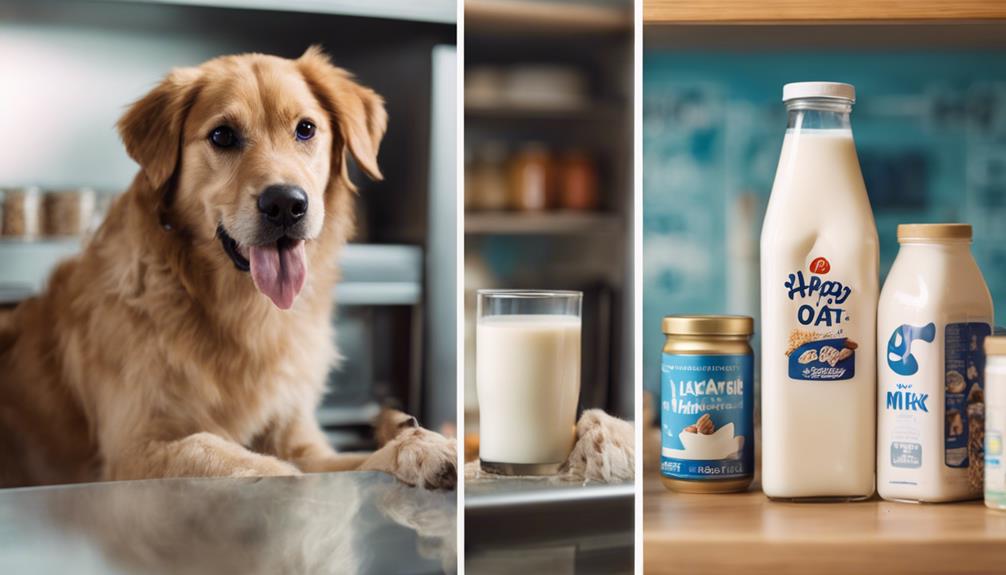
Milk alternatives can be a safe and healthy substitute for traditional milk, but it's crucial to understand the pros and cons for dogs.
Milk alternatives are high in calories and fat, which can lead to obesity and pancreatitis in dogs. Some dogs may be allergic to the primary ingredients, causing vomiting and diarrhea if consumed excessively. Additionally, some milk alternatives, like almond milk and oat milk, can be toxic to dogs if they contain added sugar or xylitol.
However, soy milk contains isoflavones, which can help reduce cholesterol and alleviate urinary incontinence in dogs, but it should be consumed in moderation.
When considering milk alternatives for your dog, remember that:
- Coconut milk is high in fat and calories, so it should be consumed in small amounts and only as an occasional treat.
- Always read the ingredient list to ensure the product is safe for your dog.
- Consult with your veterinarian before introducing any new food or drink into your dog's diet.
What Can Dogs Drink Besides Water?
What Can Dogs Drink Besides Water?
While water is the best drink for dogs, it's natural to wonder if they can have other beverages. As a responsible dog owner, it's crucial to know what drinks are safe for your pet.
Avoid giving your dog juice or commercial electrolyte replacers, as they contain added sugar or sweeteners that can harm them. Tea and coffee are also off-limits due to their high caffeine content. Vegetable juices can trigger vomiting and diarrhea in dogs, so they're not a healthy option either.
When it comes to dairy products, it's best to skip them altogether. Goats milk and cows milk can cause digestive issues in dogs. However, if you're looking for a low-calorie, low-fat alternative, you can try giving your dog a small amount of low-sodium chicken broth under the guidance of a veterinarian.
Remember to consult a vet before introducing new beverages to your dog's diet. Water should always be their primary source of hydration, and any other drinks should be considered occasional treats rather than regular staples.
Milk and Its Effects on Dogs

Milk is not suitable for dogs due to its lactose content. Dogs lack the lactase enzyme, which breaks down lactose, making milk and dairy products difficult to digest.
Consuming milk can cause various symptoms in dogs, including:
- Vomiting and diarrhea
- Stomach upset and abdominal cramps
- Gas and bloating
- In severe cases, life-threatening complications can occur due to milk toxicity.
These issues arise because dogs' digestive systems are designed to process meat, not dairy products. The undigested lactose ferments, producing toxic compounds.
To ensure your dog's health, avoid giving them milk or dairy products. Instead, provide a balanced, nutrient-rich dog food. If you have concerns about your dog's diet, consult with your veterinarian. It's always better to prioritize caution when it comes to your dog's health.
Frequently Asked Questions
Can I Let My Dog Drink Milk?
Dogs and Milk: What You Need to Know
Puppies are lactose intolerant, which means they can't digest lactose, a sugar found in milk. This is important to understand because milk can cause a milk allergy or dairy sensitivity, leading to digestive issues in dogs. Don't assume dogs can handle dairy products; instead, consider lactose-free alternatives or consult a veterinarian for guidance.
If you're wondering why dogs are lactose intolerant, it's because they don't produce lactase, the enzyme needed to break down lactose. Feeding your dog milk can result in symptoms like diarrhea, vomiting, and bloating. Even small amounts can cause discomfort, so it's best to avoid milk and dairy products altogether.
If you want to add a milk-like product to your dog's diet, opt for lactose-free or dog-specific alternatives. These products are formulated to meet your dog's nutritional needs without the risk of digestive issues. Always consult with a veterinarian before making any changes to your dog's diet.
What Milk Is Not Allowed for Dogs?
Dogs should not be given cow's milk, goat's milk, or sheep's milk due to lactose intolerance and high fat content. These milks can cause digestive issues, including vomiting and diarrhea, and may even lead to pancreatitis if consumed excessively.
Plant-based milks, such as almond milk, soy milk, and coconut milk, should also be avoided. These milks can trigger stomach upset, especially in dogs allergic to their primary ingredients. If your dog accidentally ingests these milks, monitor them for signs of illness and consult your veterinarian if symptoms persist.
Can Dogs Drink Anything Other Than Water?
When it comes to hydrating your puppy, it's essential to choose safe beverages. Water is the best option, but you can occasionally offer low-sodium chicken broth as a treat. However, this should not replace water. Other dog drinks, such as pet refreshments, must be carefully selected to ensure your dog's health. Two key rules to follow: they must be lactose-free and low in added sugars to avoid digestive issues.
What Human Milk Is Safe for Dogs?
Human milk is not safe for dogs. Dogs' ability to tolerate lactose decreases as they age, making most types of milk unsuitable for them. Goat milk, despite its higher potassium and calcium content, is not a recommended alternative. Other milk alternatives, such as raw milk, almond milk, coconut milk, oat milk, and soy milk, are also not suitable for dogs. Instead, stick to puppy-formulated milk or consult with a veterinarian for personalized advice on what to feed your dog.
In summary
Most dogs, around 65%, are lactose intolerant. This means they can't digest lactose, a sugar found in milk. If you do give your dog milk, keep a close eye on their behavior and health. Small amounts might not harm them, but it's crucial to prioritize their well-being. Opt for lactose-free or low-lactose milk if you choose to give it to them. Remember, your dog's health is key.
- Advertisement -