
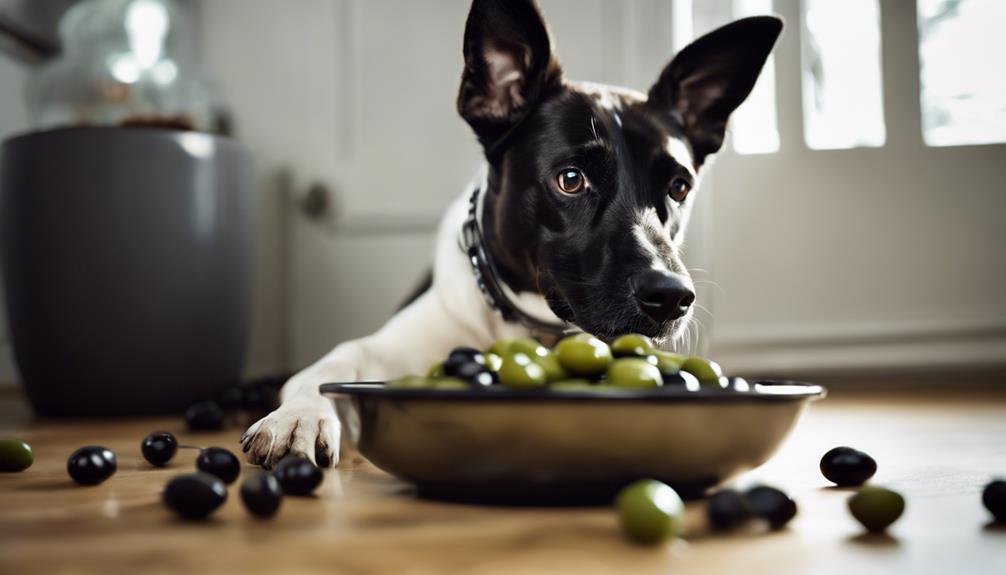
Can Dogs Eat Olives
- Advertisement -
You should exercise caution when considering olives as a snack for your dog, as while they can be a nutritious treat in moderation, they also pose potential health risks if not prepared and fed correctly. Olives contain a toxic compound called oleuropein in their pits, leaves, and stems, which can cause vomiting, diarrhea, and even kidney failure in dogs. To guarantee safe consumption, remove pits, leaves, and stems, check ingredients for toxic substances, and start with small amounts to monitor your dog's reaction. If you want to learn more about the benefits and risks of olives for your dog and how to feed them safely, continue exploring this topic further.
Key Takeaways
- Olives can be toxic to dogs if pits, leaves, or stems are ingested, causing vomiting, diarrhea, and kidney failure.
- Remove pits, leaves, and stems, and choose plain, pitted olives without additives or seasonings to minimize health risks.
- Feed olives in small amounts as an occasional treat, monitoring for signs of digestive upset or allergic reactions.
- Olives are high in sodium, which can harm dogs if consumed excessively, leading to electrolyte imbalance and dehydration.
- Consult a veterinarian before making olives a regular part of a dog's diet to discuss potential risks and determine the best course of action.
Olive Safety Guidelines
Olive Safety Guidelines for Dogs
Olives can be a healthy snack for dogs, but only if fed safely. Olives contain a toxic compound called oleuropein in their pits, leaves, and stems, which can cause vomiting, diarrhea, and even kidney failure in dogs. Remove these parts before feeding olives to your dog.
Olives are also high in sodium, which can harm dogs if consumed excessively. Dogs require a limited amount of sodium in their diet, and excessive consumption can lead to health problems.
To feed olives safely:
- Only feed pitted, ripe olives in small amounts.
- Use olives as an occasional treat or mix them with their regular meals.
- Prioritize your dog's health and consult with a veterinarian if you have any concerns.
Health Benefits of Olives
Olives provide three key benefits that make them a nutritious snack for dogs. They are rich in antioxidants, contain healthy fats, and offer essential vitamins and minerals.
Antioxidants in olives, like vitamin E and polyphenols, help protect dogs from cell damage and oxidative stress. This contributes to a healthy dog with a strong immune system. Monounsaturated fats in olives support overall health by maintaining a shiny skin and coat, and can even improve skin condition. Additionally, olives contain essential vitamins and minerals like copper, iron, and potassium, which are crucial for maintaining overall health and well-being.
When fed in moderation, olives can be a safe and healthy addition to a dog's diet. However, it's essential to be mindful of the amount served, as olives are high in fat and calories. As an occasional treat or mixed into meals, olives can provide a nutritional boost and support a dog's health.
Risks Associated With Olives

Feeding your dog olives can be risky. As a responsible dog owner, you need to know the potential dangers.
Olives contain high amounts of sodium, which can be toxic to dogs in large quantities. Olive pits can also cause serious health problems by blocking or piercing your dog's digestive tract.
If your dog eats olives, watch for signs of digestive issues like vomiting, diarrhea, or abdominal pain. The reactions can range from mild to severe, so monitor your dog's behavior and health closely.
Some key risks to consider:
- High sodium content can cause electrolyte imbalance and dehydration.
- Olive pits can obstruct or puncture the digestive tract.
- Adverse reactions can be mild or severe, including vomiting, diarrhea, and abdominal pain.
- Long-term olive consumption can lead to chronic health problems and harm your dog.
Remember to prioritize your dog's health and take necessary precautions when it comes to olives.
Types of Olives to Avoid
Avoid certain types of olives that can harm your dog's health. Marinated, stuffed, and seasoned olives often contain toxic ingredients. These added ingredients can cause serious health problems if your dog ingests them.
Marinated Olive Risks
Marinated olives pose a significant threat to your dog's health. The high sodium content in these olives can cause vomiting, diarrhea, and tremors in dogs.
In addition to the sodium, marinated olives often contain toxic ingredients like garlic and onions, which are poisonous to canines. The high fat content in olives can also lead to pancreatitis, a potentially life-threatening condition. Moreover, some marinated olives may contain alcohol, which is toxic to dogs and can cause severe illness or even death.
It's essential to avoid feeding your dog marinated olives altogether. If you still want to give your dog olives, opt for plain, pitted ones in moderation. Remember, your dog's health is at risk if you ignore these warnings.
Stuffed Olive Dangers
Stuffed olives can be a deadly snack for dogs. When preparing snacks, keep them out of your dog's reach. Stuffed olives pose a significant threat to your dog's health, even after pits are removed.
Some stuffed olives are soaked in alcohol, which is toxic to dogs. Others contain high levels of sodium, causing electrolyte imbalances and health issues. The stuffing itself can be a choking hazard if ingested. Olives are high in fat, which can lead to pancreatitis in dogs.
Be aware of the types of olives in your home and store them safely away from your dog. This will prevent potential harm and safeguard your dog's safety.
Seasoned Olive Hazards
Seasoned olives can be hazardous to your dog's health, even if they seem harmless. Some types of seasoned olives can cause harm, so it's crucial to be cautious.
Avoid giving your dog olives seasoned with:
- Garlic or onions, which can damage their red blood cells
- High-sodium olives, which can lead to sodium ion poisoning
- Green or black olives with pits, which can cause an obstruction
- Flavored olives with added herbs or spices, which can be toxic
Instead, choose plain, unsalted olives or remove the pit from black or green olives. Dogs can safely eat these types of olives in moderation. When introducing new foods to your dog's diet, it's always better to err on the side of caution.
How to Feed Olives Safely

- Advertisement -
Feeding your dog olives requires careful consideration to avoid potential health risks. First, remove the pit to prevent choking or obstruction. Start with small amounts to gauge your dog's tolerance and monitor their reaction closely. Watch for signs of digestive issues or allergic reactions, such as vomiting, diarrhea, or itching. By following these guidelines, you can minimize risks and ensure a safe snacking experience for your dog.
Olive Safety Guidelines
Feeding Olives to Your Dog: Safety Guidelines
To ensure a safe and enjoyable experience for your dog, follow these guidelines when feeding olives:
Only offer plain, unsalted olives without added ingredients like garlic or oils, which are toxic to dogs. Remove the pit to prevent choking hazards and intestinal blockages.
Start with small amounts: about 1/4 teaspoon per 10 pounds of body weight. This allows you to monitor your dog for signs of digestive upset.
Choose high-quality, cold-pressed olive oil and plain, unsalted olives to maximize health benefits. Remember, moderation is key. Olives should not replace your dog's regular meals.
Olive Feeding Precautions
When introducing olives into your dog's diet, take these precautions to ensure their safety. Introduce olives slowly to monitor for signs of digestive upset. Due to their high sodium content, limit the amount of olives you give your dog to avoid adverse effects.
A good rule of thumb is to feed 1-2 olives per 10 pounds of body weight as an occasional treat, not as a regular part of their diet. Watch for signs of discomfort, such as vomiting or diarrhea, if your dog eats an olive.
Dogs on prescription diets or with certain health conditions should not be fed olives. Consult with a veterinarian before making significant changes to their diet. By following these guidelines, you can safely incorporate olives into your dog's diet as an occasional treat.
Monitoring for Adverse Reactions
Monitoring for Adverse Reactions
When feeding olives to your dog, it's crucial to monitor their behavior and health closely. Even in moderation, olives can cause adverse reactions in individual dogs.
Watch for these signs of adverse reactions:
- Vomiting or diarrhea: If your dog vomits or has diarrhea after eating olives, it may indicate stomach upset.
- Abdominal pain: Whining, panting, or restlessness can signal abdominal pain or discomfort.
- Allergic reactions: Look for signs of an allergic reaction, such as hives, itching, or difficulty breathing.
- Increased thirst and urination: If your dog drinks more water than usual or urinates more frequently, it could indicate an imbalance in their system.
Alternatives to Olives for Dogs

If you're considering feeding olives to your dog, it's essential to explore safer alternatives that can provide similar health benefits. Turkey is a safe and healthy snack option, offering a lean protein source and fewer calories than olives. Other protein-rich snacks like crab and cottage cheese also make nutritious alternatives.
For low-calorie snacks, dog-safe fruits and veggies like watermelon, apple, and carrots are nutritious treats. Pumpkin is another fiber-rich snack that supports healthy digestion and bowel movements, making it a suitable alternative.
When introducing new snacks, do so in moderation to prevent upsetting your dog's stomach. While bacon, ham, and hot dogs can be consumed in moderation due to their high sodium content, they should not be regular options.
Providing your dog with a variety of safe and healthy snacks ensures they receive the nutrients they need without the risks associated with feeding olives.
General Olive Safety Precautions
Feeding your dog olives can be risky, and taking precautions is essential to ensure their safety. While an occasional olive may not harm your dog, regular consumption or eating large quantities can lead to health issues.
To ensure your dog's health, follow these general olive safety precautions:
- Check the ingredients to ensure they don't contain toxic substances like onions, garlic, or seasonings.
- Start with small amounts to monitor your dog's reaction and gradually increase the quantity if they tolerate it well.
- Opt for plain, pitted olives that are free from additives and seasonings, which can harm your dog's health.
- Consult your veterinarian before making olives a regular part of your dog's diet to discuss potential risks and determine the best course of action for their specific health needs.
Frequently Asked Questions
Can Dogs Eat Green or Black Olives?
Dogs should not eat green or black olives, regardless of their ripeness. Olives contain healthy fats, but also toxic compounds like oleuropein, which can cause digestive issues in dogs. Fresh olives, whether green or ripe, can lead to stomach problems. Some olives are processed to reduce these toxins, but it's still crucial to prioritize your dog's digestive health. Before giving your dog olives, consult a veterinarian to ensure it's safe for their specific needs. Remember, olives can harm your dog, so it's better to err on the side of caution.
How Much Olive Can a Dog Eat?
Determine a safe amount of olive for your dog by considering their individual tolerance. A daily limit of 1/4 teaspoon of olive oil per 10 pounds of body weight is recommended. This amount ensures a safe portion without reaching toxic levels. Use olives as an occasional treat within your dog's daily limit, rather than replacing their regular meals.
Can Dogs Eat Olives With Pimento?
When it comes to feeding your dog olives with pimento, proceed with caution. While some olives are safe, the pimento stuffing can be risky. Pimento can cause allergic reactions in rare cases, irritating your dog's taste buds. On the other hand, pimento has health benefits. If you still want to give your dog pimento-filled snacks, make sure the pimento doesn't overpower the olive oil, which can have negative effects. A safer option is to choose pimento-free alternatives.
Can Dogs Have Salted Olives?
Dogs and salted olives don't mix. Olive toxicity can cause vomiting, diarrhea, and even seizures in your dog. The problem isn't just the olive pits, but also the high sodium content in salted olives, which can lead to dehydration and electrolyte imbalances.
To keep your dog safe, avoid giving them salted olives or any human food that contains olive oil. Instead, stick to pet snacks that meet their unique nutritional needs. If you're unsure what to feed your dog, consult with your veterinarian for personalized advice.
In summary
Dogs can eat olives in moderation, but it's essential to remember they're a human food, not a canine staple. Olives should be treated as an occasional snack, not a replacement for their balanced diet. Don't overfeed your dog olives, and never substitute them for regular meals. When giving olives as a treat, do so responsibly and in limited amounts.
- Advertisement -