
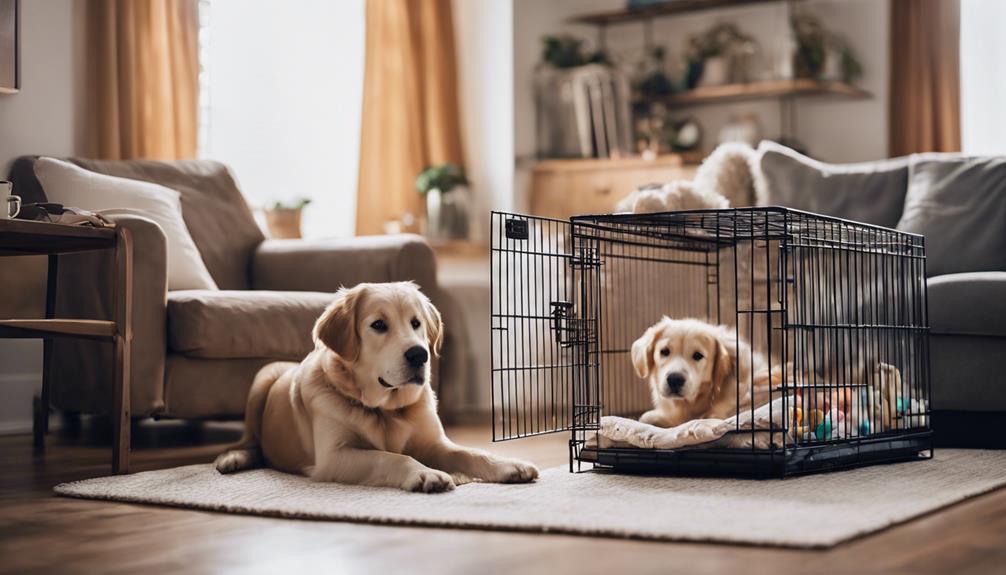
Crate Training Best Practices for Every Dog Owner
- Advertisement -
Crate training is essential for dog owners, as it provides a safe space and reduces anxiety. Start by selecting a crate that allows your dog to stand, turn, and lie down comfortably. Gradually introduce the crate, using treats to create positive associations. Short sessions of 5-10 minutes will help your dog adjust. Address challenges like whining by evaluating your dog's needs and ensuring the crate is appropriately sized. Consistency and positive reinforcement are vital in this training process. For those seeking additional strategies and recommendations, there are more practices to explore for effective crate training.
Key Takeaways
- Select an appropriately sized crate that allows your dog to stand, turn around, and lie down comfortably.
- Gradually introduce the crate, using treats and positive reinforcement to create a welcoming environment.
- Start with short crate sessions, gradually increasing the duration to build your dog's comfort and confidence.
- Monitor your dog's behavior and respond to signs of stress or anxiety to ensure a positive crate training experience.
Understanding Crate Training
Understanding crate training is important for giving your dog a safe and comfortable space. It helps promote good behavior and reduces anxiety. Crate training is a useful tool for house training and prevents destructive behavior when you leave your dog alone. It taps into your dog's natural instinct to find a cozy den, which helps them relax.
When choosing a crate, make sure it's the right size. Your dog should be able to stand, turn around, and lie down comfortably. A crate that's too big might allow your dog to eliminate in one corner while resting in another.
Start crate training gradually. Begin with short periods and increase the time as your dog gets used to it. Puppies shouldn't be in a crate for more than three to four hours at a time to avoid discomfort. For adult dogs, the crate introduction should be positive. Pair crate time with exercise and play to prevent any issues with socialization.
It's vital to establish the crate as a positive space. Never use it as a form of punishment. Use positive reinforcement during training. This will help your dog see the crate as a safe and comfortable place. Remember, patience and consistency are key to successful crate training. This leads to a well-adjusted and happy dog.
Benefits of Crate Training
Crate training has many practical benefits for your dog.
First, it creates a safe space where your dog can feel secure. This designated area helps them relax and reduces anxiety.
Second, crate training is useful for potty training. Dogs naturally avoid soiling their sleeping area, which can help them learn to hold it until they're taken outside.
Additionally, using a crate can help manage unwanted behaviors. It limits your dog's access to areas where they might get into trouble. This can lead to a calmer home environment for both you and your pet.
Safety and Security
Crate training provides a safe space for your dog, which can help reduce anxiety and encourage independence.
When you crate train, your dog learns that their crate is a secure area where they can relax.
This can be especially useful for dogs that experience separation anxiety, as a crate can offer them comfort when you aren't at home.
Using a crate also helps prevent destructive behaviors.
If you're busy or away, a crate keeps your dog from chewing on furniture or digging in the yard.
Additionally, it helps your dog understand where it's appropriate to go to the bathroom, which can significantly reduce accidents in your home.
Behavior Management
Crate training is an effective way to manage your dog's behavior.
When done correctly, it can help reduce issues like separation anxiety and destructive behavior.
A crate can become a safe space for your dog, promoting calmness and relaxation.
Dogs have a natural instinct to seek out dens, which makes crate training a useful tool.
It encourages them to be clean and independent.
Teaching your dog to stay calm when separated from you can also prevent problems such as aggression and anxiety.
While puppies often adapt to crate training more easily, adult dogs can also benefit from this approach.
To start crate training, leave the crate door open so your dog feels safe.
Allow them to explore the crate at their own pace.
With time, your dog will learn to associate the crate with comfort and security.
This training can lead to better behavior overall, making life easier for both you and your pet.
Establishing a routine won't only help with behavior management but also build trust between you and your dog.
Potty Training Assistance
Using a crate can significantly improve your dog's potty training process. It helps teach bladder control and reduces accidents indoors. A crate gives your dog a specific area to learn to hold its bladder and bowels until it's time to go outside. This method makes housebreaking faster and more effective.
Dogs instinctively avoid soiling their sleeping area, which is why crate training is useful. By setting a consistent routine, you can greatly lower the number of potty accidents—potentially cutting them by 50-70% compared to traditional methods.
When you add a crate to your dog's space, it creates a safe spot that promotes good potty habits. Over time, your dog will see the crate as a cozy resting area, which helps them feel secure.
As you guide your dog through crate training, be patient and reward positive behaviors. With dedication and the right techniques, crate training can be an effective way to achieve successful potty training. This approach benefits both you and your dog, leading to a more peaceful living situation.
Selecting the Right Crate

Choosing the right crate for your dog is important for their comfort and security. A good crate should provide enough space for your dog to stand up, turn around, and lie down without feeling cramped.
Size: Make sure the crate is appropriate for your dog's adult size. It should have a few inches of extra space above their head.
Ventilation: Look for a crate with good airflow. This helps keep your dog comfortable.
Durability: The crate should be made from strong materials that can withstand chewing and scratching.
Cleanliness: Choose a crate that's easy to clean. This makes maintenance simple.
For puppies, it's a good idea to select a crate that fits their expected adult size. This way, you won't need to buy a new one as they grow. If your dog is anxious, consider a crate with removable tops or doors. These features can help make the crate a more positive environment.
If you find the crate is too large, use dividers or partitions to limit the space. This prevents your dog from designating one area for sleeping and another for elimination.
Preparing for Crate Training
To get ready for crate training, start by choosing a crate that's the right size for your dog. It should be big enough for them to stand up, turn around, and lie down comfortably.
Next, make the crate a safe and inviting space. You can add a soft blanket or a toy to help your dog feel secure.
Introduce your dog to the crate gradually. Begin by allowing them to explore it with the door open. Encourage them to go inside by using treats or toys. Keep the sessions short at first to avoid overwhelming them.
As your dog becomes more comfortable, you can start closing the door for short periods while you're nearby. Gradually increase the time they spend inside the crate. Always reward them for staying calm and relaxed.
Selecting the Right Crate
Choosing the right crate is crucial for effective crate training. A well-selected crate helps your dog feel comfortable and secure.
Size: Make sure the crate is big enough for your dog to stand, turn around, and lie down comfortably. There should be a few inches of extra space above their head.
Growth Potential: Pick a crate that can grow with your dog. Some crates come with partitions that you can adjust as your dog matures, helping to prevent accidents.
Material: Choose a crate made of durable materials. It should be strong enough to handle your dog's energy and easy to clean. Good ventilation is also important.
Style: Consider your dog's preferences. Some dogs prefer kennel-style crates, while others may feel more secure in airline-style crates that offer darkness.
Selecting the right crate meets both your dog's physical and emotional needs. A good crate serves as a safe space for your dog, which is essential for successful crate training.
Creating a Safe Space
Creating a safe and inviting crate for your dog is crucial for their comfort during training.
Start by ensuring the crate is big enough for your dog to stand up and turn around. A cramped crate can cause anxiety, making your dog see it as a negative space. Add a comfortable bed or blanket inside to help your dog associate the crate with warmth and security.
- Advertisement -
Place the crate in a busy area of your home. This way, your dog can feel included in family activities. By doing this, your dog will learn to view the crate as a safe place, not a solitary confinement.
To encourage exploration, put treats or toys inside the crate. This helps your dog feel more at ease.
Gradual Introduction Process
Introducing your dog to the crate should be a gradual process. This approach helps your dog feel confident and comfortable in the space.
Place the crate in a busy area of your home. This encourages your dog to explore it naturally.
Keep the crate door open at first. This allows your dog to enter without feeling trapped.
Use treats or toys to reward your dog for going near or inside the crate. This builds a positive association.
Feed your dog near the crate. This creates a welcoming atmosphere.
Start by letting your dog investigate the crate at their own pace. You can leave the door closed but make sure it's propped open for easy access.
Begin with short periods inside the crate, gradually increasing the time as your dog gets more comfortable. This method prevents overwhelming your dog during training.
Step-by-Step Training Process

To start crate training, place the crate in a quiet area of your home. This helps your dog feel safe and comfortable in their new space.
With the door open, encourage your dog to enter the crate on their own. You can make it inviting by putting treats or toys inside.
To build a positive association, feed your dog near the crate. Over time, try putting their food dish or a puzzle toy inside to encourage them to go in.
Begin with short time periods of 5-10 minutes in the crate. This helps your dog adjust. As they get more comfortable, you can gradually increase the time.
Keep an eye on your dog's behavior during training. Watch for signs of stress or anxiety and respond quickly.
Crate training can take days or weeks, depending on your dog's personality and past experiences. Be patient; each dog learns at their own pace.
By creating a supportive environment and rewarding positive behavior, you can successfully crate train your dog.
This method helps your dog see the crate as a safe space, which can strengthen your bond.
Addressing Common Challenges
Addressing common challenges during crate training can enhance your dog's comfort and improve your experience as an owner. Many dog owners face specific issues, particularly when introducing a new puppy.
Whining at Night: It can be tough to figure out if your dog needs to go outside or if they're just looking for attention.
Separation Anxiety: This problem goes beyond crate training. You'll need specialized techniques to help.
Ignoring Unwanted Behaviors: Sometimes ignoring whining can work, but consistency in your response is crucial.
Misinterpreting Your Dog's Needs: It's essential to understand your dog's signals for effective training.
When your dog whines in the crate, it's important to assess the situation. If the whining continues, try a phrase that signals going outside. If your dog responds positively, it may be time for a quick trip outside. If they don't need to eliminate, ignoring the whining until it stops is often the best choice.
Keep in mind that crate training alone isn't enough for dogs with separation anxiety. You'll need to use counterconditioning and desensitization techniques to tackle this issue. Consulting a professional animal behavior specialist can provide effective strategies for resolving these challenges.
Creating a Positive Environment

Creating a positive environment for crate training helps your dog feel safe and comfortable in their new space.
Start by placing the crate in a quiet area of your home with minimal distractions. This will allow your dog to relax. Ensure the crate is the right size; your dog should be able to stand, turn around, and lie down easily.
Use positive reinforcement to make the crate a welcoming place. Encourage your dog to enter the crate with treats or toys. This builds a positive association with the crate. When your dog goes inside, praise them. This reinforces their good behavior and helps them see the crate as a safe spot.
Introduce your dog to the crate slowly. Begin with short periods inside. This helps them get used to the crate without feeling overwhelmed. As your dog becomes more comfortable, gradually increase the time they spend in the crate.
Pay attention to your dog's reactions during training. If they seem anxious or upset, shorten their time in the crate and use more positive reinforcement. Patience and consistency are key. A supportive environment helps your dog adjust and builds trust between you both. In the end, this approach leads to successful crate training for you and your pet.
Frequently Asked Questions
Is Crate Training Good for Every Dog?
Crate training isn't the best option for every dog. Some breeds, especially those that are fearful, may feel anxious in small spaces.
For puppies, socialization is crucial, and being confined can limit their interactions with people and other animals.
Additionally, larger breeds might struggle with crate training due to their size.
The owner's personality also plays a role in how well crate training works. Dogs that have a fear of crates or specific medical conditions, like arthritis, may find crates uncomfortable.
It's important to evaluate each dog's individual needs before deciding on crate training.
Consider their temperament, breed, and any health issues. This approach will help ensure a positive experience for both the dog and the owner.
Does Everyone Crate Train Their Dog?
Not all dog owners choose crate training for their pets. Some find this method effective, while others prefer to raise their dogs without crates or use different training techniques.
Misunderstandings about crate training can lead to confusion about its purpose.
Successful dog owners often have different routines. They might use puppy socialization or other strategies tailored to their dog's specific needs.
Each owner's experience influences their choice of training methods and how they manage their dog's behavior.
How Many Times a Day Should You Work on Crate Training?
To effectively crate train your dog, aim for 3 to 5 training sessions each day. Each session should last between 5 and 10 minutes. This method allows you to adapt to your dog's daily needs.
Pay attention to your dog's behavior and adjust the training schedule as necessary.
For puppies, keep crate time to a maximum of 3 to 4 hours. This ensures that your puppy feels secure and comfortable in their crate.
Consistency is key to successful crate training.
Should I Let My Dog See Me While Crate Training?
When crate training your dog, it's best not to let them see you. Your presence can create anxiety and lead to a reliance on you for comfort.
Instead, focus on calm departures to help your dog learn to be independent. Start by introducing the crate gradually. This allows your dog to become familiar with it without feeling stressed.
By limiting your dog's view of you during this process, you encourage them to develop self-soothing behaviors. This approach can make crate training more successful in the long run.
In summary
Crate training can be a valuable practice for both dogs and their owners when approached correctly.
To ensure success, follow best practices and create a positive environment.
The crate shouldn't be seen as a confinement space; instead, view it as a cozy den where your dog feels secure.
By properly introducing the crate, you can help your pet adjust and thrive.
Embrace this method, and you may find it to be a rewarding choice for both you and your dog.
- Advertisement -