
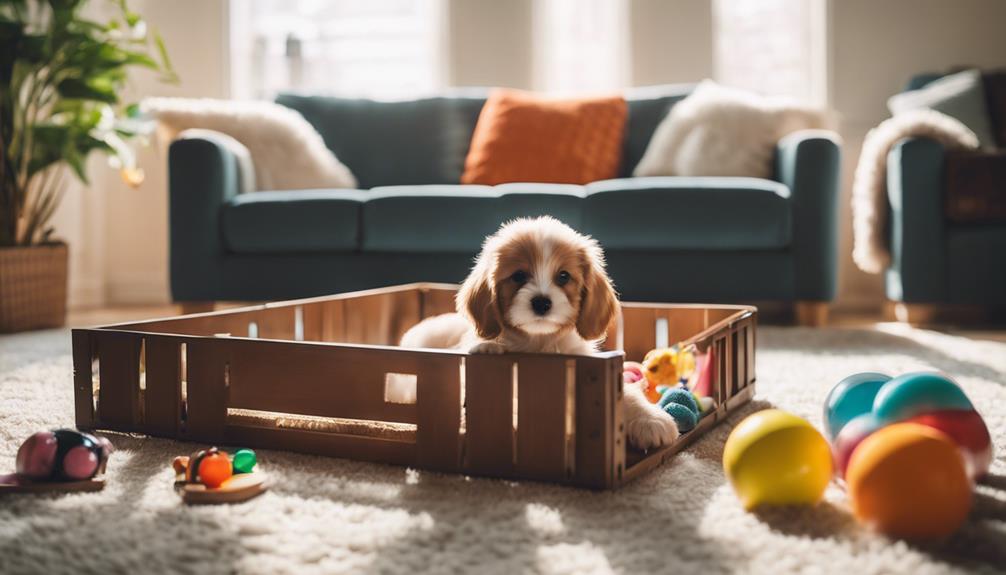
Combining Crate Training and Potty Training for Success
- Advertisement -
Combining crate training with potty training establishes a structured and effective approach to teach your pet appropriate bathroom habits. The crate offers a safe space while also serving as a tool to promote consistency in potty training. By linking crate time with regular potty breaks, you can create a routine that your pet can easily understand. It's vital to recognize your pet's signals, such as whining or pacing, which indicate the need to go outside. Rewarding successful potty behavior reinforces learning. This method not only aids in potty training but also fosters a well-adjusted pet. Further insights can enhance your training strategy.
Key Takeaways
- Establish a consistent routine linking crate time with regular potty breaks to reinforce bladder control.
- Use positive reinforcement, rewarding pets immediately after successful potty breaks to encourage desired behavior.
- Pay attention to pets' signals, such as whining or pacing, to recognize when they need to go outside.
- Gradually increase crate confinement time while ensuring pets have frequent potty breaks to prevent accidents.
Understanding Crate Training Basics
Crate training is an effective method to create a safe space for your pet. It helps your puppy feel secure and understand their environment. This training method can also reduce anxiety.
When done correctly, crate training promotes a consistent routine. The crate can act as a designated area for potty training. Take your puppy outside right after they come out of the crate. This encourages them to go potty outside and helps prevent indoor accidents. Reward your puppy with treats and praise when they successfully do this. This builds a positive association between the crate and safety.
Make sure the crate is the right size. Your puppy should be able to stand, turn around, and lie down comfortably. If the crate is too big, your puppy might use one corner as a bathroom.
Consistency is crucial in crate training. Stick to a regular schedule for crate time and potty breaks. Over time, your puppy will learn to see the crate as their safe space. This not only helps in potty training but also contributes to raising a well-adjusted pet.
Importance of a Proper Crate
Choosing the right crate size is crucial for effective crate training. A crate should be just large enough for your puppy to stand up, turn around, and lie down comfortably. This size restriction helps prevent accidents in their space and encourages your puppy to hold its bladder, making potty training easier.
The Midwest iCrate, which measures 42L x 28W x 30H, is a solid option for many puppies. Look for a crate with an adjustable divider. This feature allows you to modify the space as your puppy grows, ensuring comfort and security throughout the training process.
When selecting a crate, consider the material. Plastic crates create a dark, den-like environment that can make your puppy feel safe. Wire crates, on the other hand, provide visibility and airflow, helping your puppy stay connected to their surroundings. There are also soft crates made of washable canvas with a metal frame, which are comfortable and portable.
Steps for Effective Crate Training
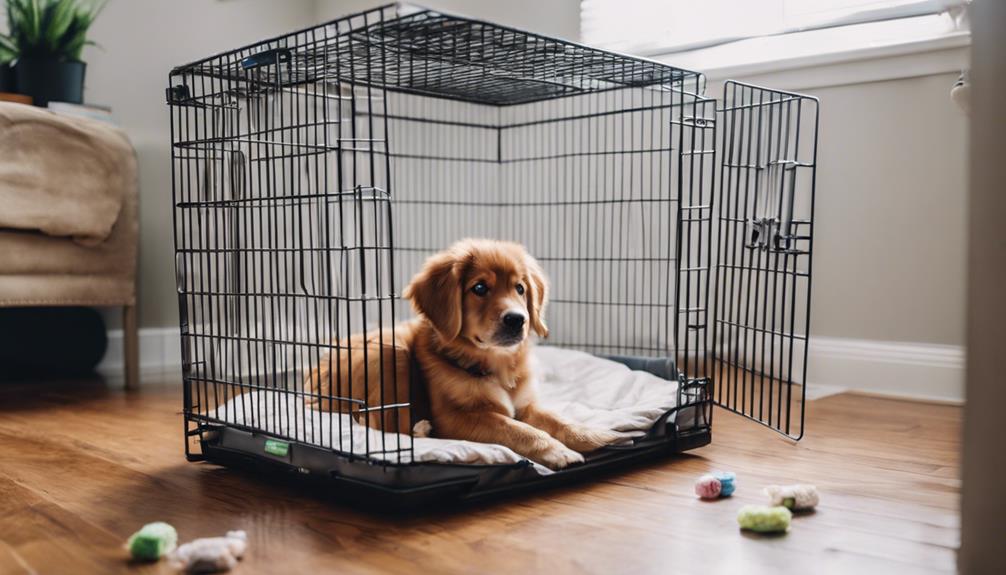
To crate train your dog effectively, follow these straightforward steps.
First, select a crate that fits your dog's size. It should be comfortable, allowing your pet to stand, turn around, and lie down easily.
Next, introduce your dog to the crate slowly. Place it in a quiet area of your home. Show your dog that it's a safe space. Use treats or toys to encourage them to enter. Positive reinforcement helps create a good association with the crate.
Once your dog is comfortable, start closing the door for short periods. Gradually increase the time they spend inside. Always reward them for being calm and quiet.
Consistency is key. Stick to a routine for feeding and bathroom breaks to help your dog adjust.
With patience and practice, your dog will learn to see the crate as their own cozy den.
Choosing the Right Crate
Choosing the right crate is crucial for successful crate training. It creates a secure and comfortable space for your puppy. When selecting a crate, consider how big your dog will eventually get. A crate with a divider is a smart choice. It allows you to adjust the size as your puppy grows.
The crate should be just big enough for your puppy to stand up, turn around, and lie down comfortably. This size helps your puppy see the crate as a safe space, rather than a place to eliminate.
There are different types of crates: plastic, wire, and soft-sided. Plastic crates are enclosed and provide a dark space, which can help your puppy feel secure. Wire crates, such as the Midwest iCrate, offer good visibility and ventilation. They're easy to access and versatile. Soft crates, made from washable canvas with a metal frame, are practical for travel.
Choose the crate that best fits your needs and your puppy's comfort.
Gradual Crate Introduction
Starting with a gradual introduction helps your puppy feel comfortable in their new crate.
Create a Welcoming Space: Keep the crate door open. Place treats or toys inside. This encourages your puppy to explore and enter on their own. It helps them see the crate as a safe space.
Encourage Exploration: Scatter treats or kibble on the floor leading to the crate. When your puppy goes inside, give them praise and extra treats. This builds positive feelings about the crate.
Gradual Confinement: Once your puppy is comfortable entering the crate, close the door while they eat or play inside. Start with short periods of 5-10 minutes. Gradually increase the time in 30-minute increments. This helps your puppy get used to being confined and makes the crate feel safe.
Follow these steps to make crate training easier for both you and your puppy.
Positive Reinforcement Techniques
Using positive reinforcement techniques can make crate training easier and help your puppy feel comfortable in their crate. This method not only aids in training but also builds a better bond between you and your puppy.
To use these techniques effectively, start by setting a regular feeding schedule. Consistency helps your puppy know when to expect meals and bathroom breaks, which is key for successful potty training.
When your puppy goes into the crate, reward them with a small treat or their favorite toy. This reinforces the idea that the crate is a safe and enjoyable space. Don't forget to offer praise. A cheerful tone can encourage your puppy every time they enter the crate on their own.
As your puppy gets used to the crate, you can slowly increase the time they spend inside. Be patient. Each puppy learns at their own pace.
Establishing a Potty Training Routine
To create a successful potty training routine, take your puppy to the same small potty area regularly. This helps them learn where it's okay to go. Consistency is key. It reinforces the behavior and helps your puppy associate that spot with potty time.
Use the 10, 10, 10 rule: spend 10 minutes in the yard, designate a potty area about 10 feet in diameter, and supervise your puppy for 10 minutes.
Set a Timer: Schedule regular potty breaks based on your puppy's age and needs. Younger puppies may require more frequent trips outside. Adjust your schedule accordingly.
Supervise Your Puppy: Watch your puppy closely when they're awake. This helps you spot signs that they need to go out, allowing you to prevent accidents inside.
Reward Success: After your puppy successfully goes potty outside, reward them immediately with treats and praise. Positive reinforcement is crucial. It helps them understand that going in the right place is a good thing.
Linking Crate Time and Potty Breaks
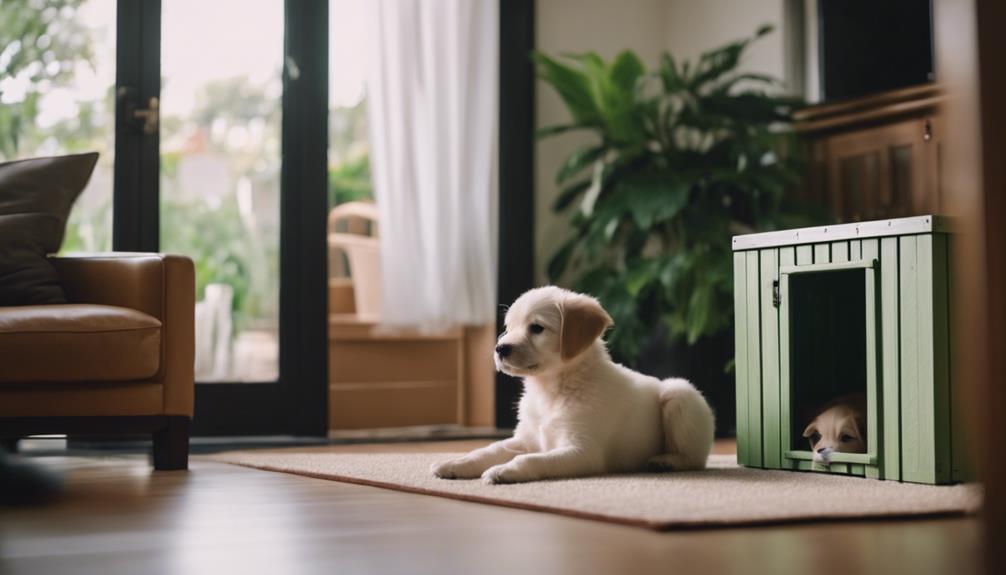
Linking crate time with potty breaks is crucial for effective training. Establish a consistent routine so your pet knows when it's time to go outside. This predictability helps your pet learn when to expect potty breaks.
Pay attention to your pet's signals. These can include pacing, whining, or sniffing around. Recognizing these cues reinforces good behavior. The more you respond to these signals, the smoother the process will be for you and your pet.
Keep in mind that patience is key. Training takes time, but with a clear routine and good communication, you can make significant progress.
Establishing a Routine
Establishing a routine for your puppy is key to effective potty training. A consistent schedule helps your puppy learn bladder control and understand when it's time to go outside.
- Limit Crate Time: Keep your puppy in the crate for no more than 2-3 hours during the day. This reduces the chance of accidents and gives your puppy regular chances to go outside.
- Designate a Potty Area: Always take your puppy to the same spot after crate time. This builds a strong link between the crate and the need to eliminate.
- Create a Schedule: Set up a routine that includes potty breaks after meals, playtime, and naps. This predictability teaches your puppy when to expect to go outside, which reinforces bladder control.
Recognizing Communication Signals
Observing your puppy regularly is key to understanding when they need a potty break after crate time. Recognizing their communication signals is crucial for effective training.
If your puppy returns to their crate and starts to show signs of restlessness, it usually means they need to go outside. Look for common signals like whining, barking, or pacing.
Responding quickly to these signals helps your puppy make the connection between crate time and potty breaks. When your puppy consistently signals their needs and you take them outside, they learn that going potty is important.
This reinforces their understanding of what to expect after being in their crate.
It's also important to watch your puppy's body language. If they sniff around, circle, or stand by the door, these indicate they need to go potty.
Reinforcing Positive Behavior
To reinforce positive behavior in your puppy, reward them right after they go potty outside following crate time. This helps your puppy learn that going in the designated area is what you want. By linking crate time to potty breaks, your puppy will start to associate going outside with good outcomes.
Use Treats: Keep small, tasty treats ready. Give one to your puppy immediately after they finish eliminating outside. This quick reward helps them understand the behavior you want.
Verbal Praise: Combine treats with enthusiastic verbal praise. Tell your puppy they did a great job. This positive feedback encourages them to repeat the behavior.
- Advertisement -
Playtime Reward: After your puppy goes potty successfully, play with them for a short time. This makes going outside a fun experience and reinforces the behavior.
Recognizing Signs of Need
Recognizing when your puppy needs to relieve itself is crucial for successful crate and potty training. Puppies have specific behaviors that signal their need to go outside. Common signs include sniffing the ground, circling, and squatting. If you notice these actions, take your puppy outside right away.
Pay attention to your puppy's body language. Raised legs or squatting are clear signs that they need to go out immediately. Also, listen for vocalizations like whining or barking. These sounds often mean they're in a hurry. Quick responses to these cues can help prevent accidents in your home.
Restlessness is another important sign. If your puppy starts pacing or seems fidgety, it's likely they need outdoor access. Recognizing these behaviors will help with potty training success. Remember that a puppy's age and breed can affect how often they need to go outside. Some breeds may require more frequent trips, so adjust your routine as needed.
Rewarding Successful Potty Behavior
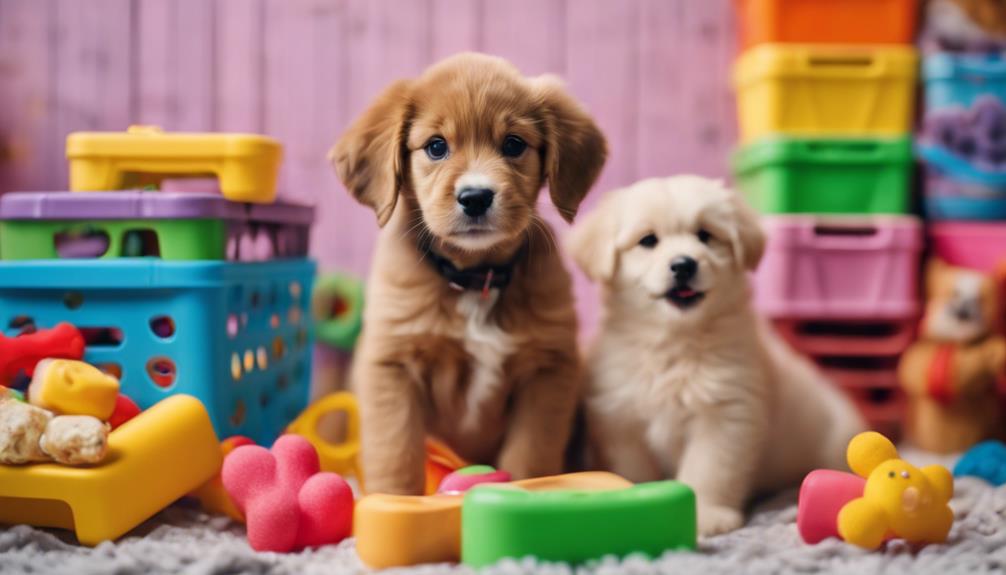
Rewarding your puppy right after they potty outside is crucial for effective potty training. It reinforces the behavior and encourages them to do it again.
Select Tasty Treats: Pick treats that your puppy really enjoys. This makes going to the bathroom outside more appealing than inside.
Be Quick with Rewards: Give the treat within 1-2 seconds after your puppy finishes pottying. This quick action helps them link going outside with getting a reward.
Add a Verbal Cue: Use a phrase like “go potty” when you reward them. This helps them associate the phrase with the action, making future potty training easier.
Common Crate Training Challenges
Crate training can be tough. Many puppies feel anxious or resist being confined.
A common problem is when puppies soil their sleeping area. Puppies usually avoid eliminating where they rest, but if left in a crate for too long, they may have to go. This can lead to accidents indoors and reinforce bad habits.
To fix this, watch for signs that your puppy needs to go outside. Look for pacing, whining, or sniffing. When you see these behaviors, take your puppy to the potty area right away.
A consistent routine will help your puppy understand when it's time to go out.
Another issue is when puppies feel anxious about being alone in the crate. Gradual desensitization can help. Start by making the crate a positive space. Use toys or treats to encourage your puppy to enter.
Reward them when they go in willingly. This helps them associate the crate with good experiences.
Patience and consistency are crucial. By using these strategies and positive reinforcement, you can create a supportive environment for your puppy.
This will help them feel secure and make potty training more effective for both of you.
Transitioning to More Freedom
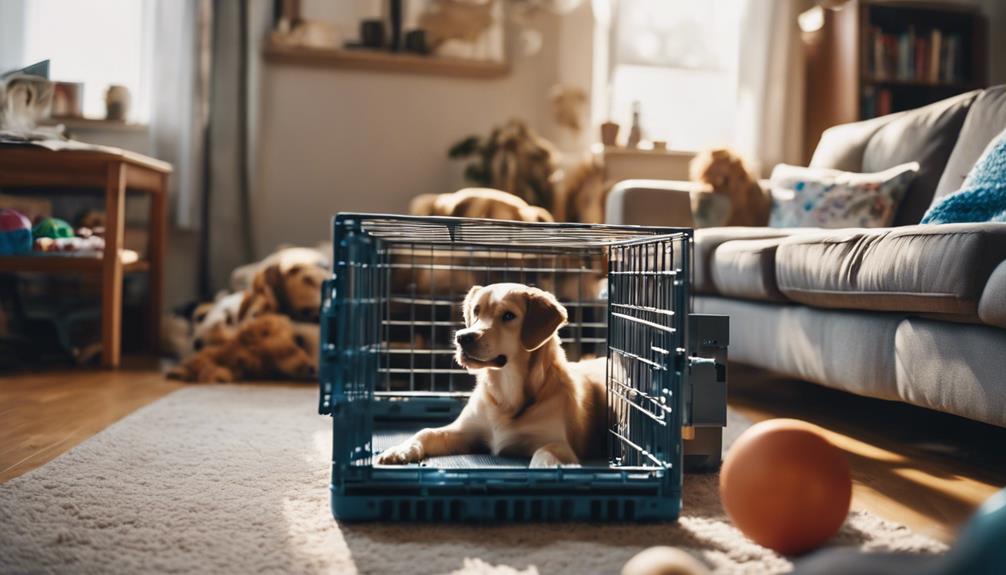
Once your puppy is consistently potty trained, you can start giving them more freedom in your home. This should be done gradually while keeping an eye on them to ensure they keep up their good habits. As your puppy grows, they'll be able to hold their bladder and bowels for longer, making this transition easier.
Begin by allowing your puppy access to one new room at a time. Watch them closely. This helps them apply their potty training skills in different spaces.
A good guideline is to add about 30 minutes of freedom each week, as long as there are no accidents. This slow increase helps your puppy adjust without feeling overwhelmed.
Even with more freedom, it's important to supervise your puppy. This helps prevent accidents and reinforces their good habits.
Frequently Asked Questions
Will Crate Training Help With Potty Training?
Crate training can be very helpful for potty training your puppy. A crate provides a controlled space that encourages your puppy to hold their bladder and bowels. This can lead to fewer accidents in the house and makes housebreaking easier.
To make the most of crate training, consistency is key. After your puppy spends time in the crate, take them outside regularly. This reinforces the idea that outside is the right place to go.
How Long Does It Take to Potty Train a Dog Using a Crate?
Potty training a dog using a crate usually takes between 4 to 6 months. Several factors can affect this timeframe, such as the dog's age, breed, and temperament.
Younger dogs might take longer, needing around 6 to 9 months to fully train. On the other hand, older dogs typically require about 2 to 4 months.
To improve success, it's crucial to be consistent with your training routine. Make sure the crate is the right size; it should be comfortable for your dog but not too big, as this can lead to accidents.
Keep in mind that distractions, like those from daycare, can also slow down the process. A steady training schedule will help speed things up and lead to effective potty training.
How Big Should a Dog Crate Be When Potty Training?
Choosing the right size for your dog's crate is essential for effective potty training. The crate should be large enough for your dog to stand, turn around, and lie down comfortably. The ideal size will depend on your dog's breed and size.
When selecting a crate, place it in a quiet area of your home to help your dog feel secure. Consider the material of the crate as well; it should be durable and safe for your pet.
A properly sized crate not only provides comfort but also aids in training your dog to understand where to go potty. A crate that's too big may encourage your dog to use one corner as a bathroom.
Stick to the basics: measure your dog and choose a crate that fits their needs. This will make the potty training process smoother for both you and your dog.
Is It Easier to Potty Train a Puppy if You Already Have a Dog?
Potty training a puppy can be easier if you already have an older dog.
The existing dog can serve as a mentor, demonstrating where to go and what to do.
This guidance can help the puppy learn faster.
However, be aware that sibling rivalry may arise, which can disrupt the training process and create chaos at home.
To promote successful potty training, keep a consistent routine for both dogs.
Make sure to provide regular bathroom breaks for the puppy, just like you do for the older dog.
Socializing the new puppy with the existing dog can also be beneficial.
It helps them bond and creates a positive environment for learning.
In the end, your consistency and patience are crucial.
Stay committed to the training process, and don't get discouraged by any challenges that come up.
With the right approach, you can successfully potty train your puppy, even with an older dog in the mix.
In summary
Combining crate training with potty training creates a structured environment for your dog. This method helps establish good habits and makes your pet feel more secure.
To do this effectively, start by understanding how both training methods work.
First, introduce your dog to the crate. Make it a comfortable space with bedding and toys. Dogs naturally avoid soiling their sleeping area, which helps with potty training.
Next, create a routine for bathroom breaks. Take your dog outside regularly, especially after meals and naps.
Pay attention to your dog's signals. If they seem restless or sniff around, they may need to go out.
When they do go outside, reward them with praise or treats. This reinforces the desired behavior.
Be patient and consistent throughout the process. Adjust your methods as needed based on your dog's progress.
With time, your pet will develop good habits, leading to more freedom and confidence in their behavior. Remember, training takes time, so stay committed, and you'll see results.
- Advertisement -