
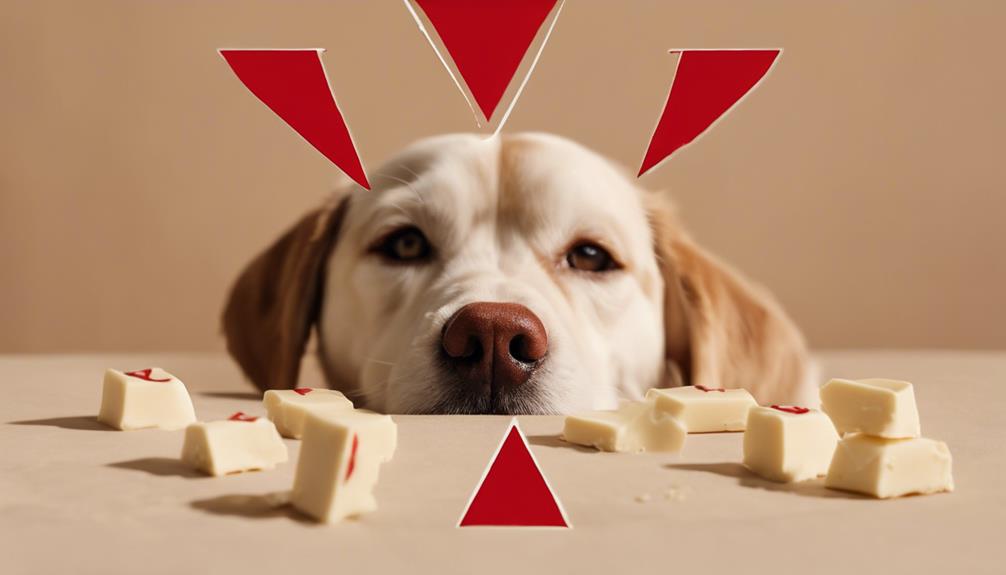
Can Dogs Eat White Chocolate
- Advertisement -
You immediately need to know that white chocolate poses a significant threat to your dog's health due to its high levels of fat, sugar, and theobromine, a toxic compound similar to caffeine. Even small amounts can be poisonous if ingested in large quantities, causing cardiac issues, neurologic symptoms, and even death. White chocolate can cause vomiting, diarrhea, and dehydration in dogs, especially older dogs or those with preexisting conditions. Keep white chocolate out of your dog's reach, and be aware of the risks to safeguard their safety. Learn more about the dangers of white chocolate and how to protect your dog.
Key Takeaways
- White chocolate is toxic to dogs due to its theobromine content, which can cause poisoning if ingested in large amounts.
- Even small amounts of white chocolate can cause vomiting, diarrhea, and dehydration in dogs, especially older dogs or those with preexisting conditions.
- The high fat and sugar content in white chocolate can lead to pancreatitis, a potentially fatal inflammation of the pancreas.
- Theobromine in white chocolate can cause cardiac issues, neurologic symptoms, and even death in dogs if ingested in large quantities.
- It's best to keep white chocolate out of reach of dogs and instead offer safe, healthy alternatives like crunchy snacks, sweet potato chews, and protein-rich treats.
Understanding the Risk of White Chocolate
White chocolate poses a risk to your dog's health due to its theobromine content. Theobromine, a xanthine compound similar to caffeine, can be toxic to dogs if ingested in large amounts, causing poisoning.
While the risk is lower compared to dark or semi-sweet chocolate, white chocolate is still a potential threat. It contains a significant amount of fat and sugar, which can lead to digestive issues in dogs.
If you suspect your dog has ingested white chocolate, monitor their behavior closely for signs of theobromine poisoning, such as vomiting, diarrhea, increased heart rate, and hyperactivity. In severe cases, it can lead to seizures, tremors, and even death.
To keep your dog safe, keep white chocolate out of reach. If you're unsure about what human foods are safe for your dog, consult your veterinarian for personalized advice. By being informed and taking proactive steps, you can protect your dog from the risks associated with white chocolate.
Harmful Effects of White Chocolate
White chocolate poses a significant threat to your dog's health. The high levels of fat and sugar can cause stomach upset and serious illness, especially in older dogs and those with pre-existing health conditions. Even small amounts of theobromine, a toxic compound in white chocolate, can be poisonous if ingested in large quantities, leading to cardiac problems in dogs of any size, age, or breed.
The high-fat concentration in white chocolate can cause pancreatitis, a potentially fatal inflammation of the pancreas. Theobromine levels in white chocolate can also lead to cardiac issues in dogs, with doses over 40 mg causing cardiac problems and doses over 60 mg resulting in neurologic symptoms like tremors and seizures.
It's crucial to remember that white chocolate is toxic to dogs, and even small amounts can cause significant harm. The combination of high fat and sugar content, along with theobromine, makes white chocolate a hazardous treat for your dog. To keep your dog safe, keep white chocolate out of reach and avoid sharing it with them altogether.
Clinical Signs of Poisoning

Recognizing the clinical signs of white chocolate poisoning is crucial for prompt action and preventing severe consequences.
White chocolate poisoning, or theobromine toxicity, can cause a range of signs, including:
- Increased heart rate and blood pressure: Theobromine in white chocolate can lead to cardiac issues by increasing heart rate and blood pressure.
- Restlessness and hyperactivity: Theobromine's stimulant effects can cause abnormal energy levels, leading to restlessness, agitation, or aggression.
- Vomiting and diarrhea: Ingestion of white chocolate can cause gastrointestinal upset, resulting in vomiting and diarrhea.
Closely monitor your dog's behavior and physical condition, as the clinical signs of white chocolate poisoning vary depending on the amount and type of chocolate consumed, as well as your dog's size, age, and individual sensitivity. Prompt recognition of these signs is vital, as white chocolate is toxic to dogs and swift action can mean the difference between life and death.
What to Do in Case of Ingestion
If your dog ingests white chocolate, act fast. Every minute counts. White chocolate contains theobromine, a toxic substance that can cause serious health risks in dogs.
Contact your veterinarian or the Pet Poison Helpline at (855) 764-7661 immediately. They will guide you on what to do next based on the amount of white chocolate your dog has eaten and their weight, age, and health conditions.
If your dog shows signs of chocolate poisoning, such as tremors, seizures, or irregular heartbeats, take them to the vet right away. The vet may induce vomiting to prevent theobromine absorption. They may also administer activated charcoal and fluid therapy to block absorption and stabilize symptoms.
Prompt action is crucial. The sooner treatment begins, the better the outcome for your dog. Don't delay – every minute counts. Seek veterinary attention immediately if your dog eats white chocolate.
Preventing White Chocolate Poisoning

To prevent white chocolate poisoning, keep white chocolate and other hazardous substances out of your dog's reach. Store them in high cabinets or locked containers to minimize the risk of accidents. Be aware of your dog's surroundings and remove temptation to reduce the likelihood of poisoning. By taking these proactive measures, you can significantly lower the risk of white chocolate poisoning and keep your dog safe.
Preventing Accidents
When consuming white chocolate treats around your dog, it's crucial to stay vigilant. Dogs can experience health risks if they eat white chocolate due to its high sugar content. Preventing accidents is key.
- Watch your dog: Always supervise interactions between your dog and white chocolate treats to prevent sneaking or snatching.
- Secure storage: Store white chocolate treats in a safe location, out of your dog's reach, to avoid accidental ingestion.
- Manage the amount: Be aware of the amount of chocolate you have around and ensure your dog doesn't access even a small amount, which can still cause harm.
Keeping Chocolate Away
To prevent white chocolate poisoning in your dog, you must take proactive steps. Keep all types of chocolate, including white, milk, and dark, out of your dog's reach. Theobromine, a toxic compound in chocolate, can cause severe symptoms in dogs, even in small amounts.
Store chocolate in a secure location, such as a high cabinet or a locked container. Keep an eye on trash cans and countertops, as dogs can easily access them. When baking or cooking with chocolate, make sure your dog is not nearby.
It's essential to know that dogs should not eat any chocolate. White chocolate, although containing less theobromine than milk or dark chocolate, can still harm your dog. Preventing white chocolate poisoning requires responsible pet ownership and vigilance.
To ensure your dog's safety, follow these guidelines:
- Store chocolate safely
- Keep an eye on your dog when cooking or baking with chocolate
- Don't give your dog any chocolate, even in small amounts
Theobromine Toxicity Explained
Theobromine, a compound found in cacao beans, is responsible for the toxicity of white chocolate to dogs. The levels of theobromine in white chocolate pose a significant risk to your pet's health.
- Advertisement -
Theobromine Levels
Theobromine Levels in White Chocolate: A Risk to Dogs
While white chocolate contains less theobromine than dark chocolate, it still poses a toxicity risk to dogs. The amount of theobromine in white chocolate varies depending on the cocoa content.
White chocolate can contain up to 2.5% theobromine, which is toxic to dogs. Additionally, its high fat and sugar content can make theobromine toxicity worse. White chocolate made from cocoa beans may have higher theobromine levels than those made from cocoa butter.
As a dog owner, it's crucial to be aware of the theobromine levels in white chocolate to keep your dog safe. Even small amounts can be harmful, so keep white chocolate out of your dog's reach.
White Chocolate Risks
Dogs and White Chocolate: A Toxic Combination
White chocolate can be toxic to dogs due to its theobromine content. The severity of theobromine toxicity depends on the amount and type of white chocolate consumed, as well as the dog's size and sensitivity.
If your dog eats a small amount of white chocolate, it may experience mild symptoms like vomiting, diarrhea, and an increased heart rate. However, large amounts can lead to severe symptoms, including seizures, tremors, and even death.
Monitor your dog's behavior and health closely if you suspect it has ingested white chocolate. If you notice any symptoms, seek veterinary attention immediately. It's always better to keep white chocolate out of your dog's reach to avoid any potential risks.
Dangers of Chocolate for Dogs
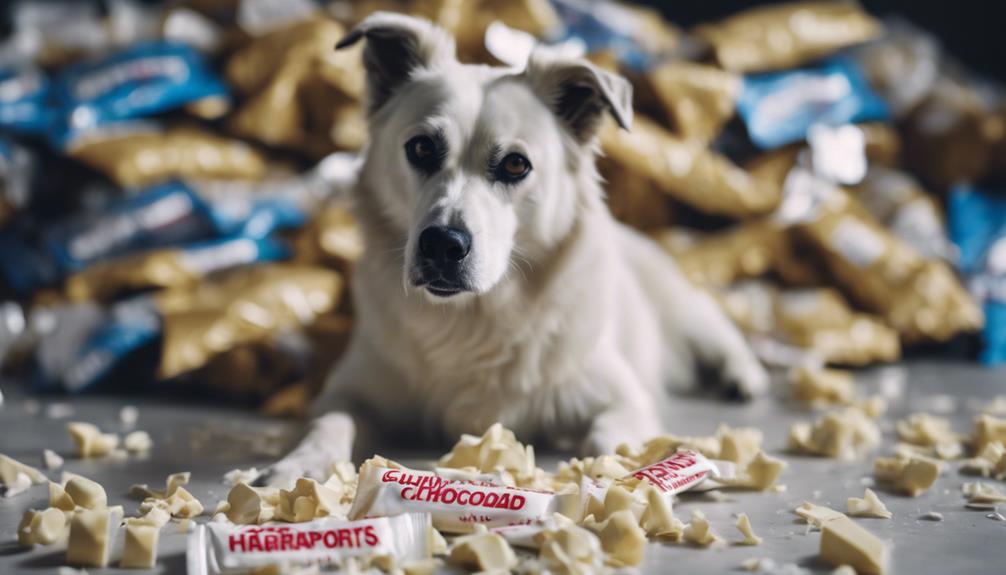
Dogs and Chocolate Don't Mix
Sharing chocolate with your dog may seem harmless, but it can be deadly. Chocolate contains a stimulant called theobromine, which is toxic to dogs.
Theobromine can cause vomiting, diarrhea, and dehydration in dogs. In large amounts, it can be fatal. Dark or semi-sweet chocolate is particularly dangerous, as even small amounts can be poisonous. The toxic dose of theobromine is as low as 20 mg/kg, making it a serious threat to your dog's health.
Chocolate also contains high amounts of sugar, leading to digestive issues in dogs. Additionally, it contains caffeine, which worsens the toxic effects of theobromine. Older dogs or those with preexisting conditions are more susceptible to chocolate poisoning, which can cause cardiac issues, neurologic symptoms, and even death.
White chocolate, although less toxic than darker varieties, still contains theobromine and is not safe for your dog to eat. To keep your dog safe, keep chocolate out of reach. Remember, it's always better to err on the side of caution when it comes to your dog's health.
Safe Alternatives to White Chocolate
When it comes to treating your dog, it's crucial to choose safe and healthy alternatives to white chocolate. Crunchy snacks like carrots, green beans, and apple slices are tasty, nutritious, and a great option. Sweet potato chews and frozen peanut butter-filled Kongs are another harmless treat for your dog.
To make your own dog treats at home, use protein-rich ingredients like cooked chicken, steak, or fish instead of white chocolate. Combine these with healthy fats and complex carbohydrates to create a balanced treat. Yogurt drops and pumpkin puree can support your dog's digestive health without the risks of white chocolate.
For a sweet treat, try making banana and oat biscuits or peanut butter and banana bites. These are nutritious, chocolate-free, and easy to customize to your dog's tastes and dietary needs. By choosing these safe alternatives, you can indulge your dog without compromising their health.
Frequently Asked Questions
What Happens if a Dog Eats White Chocolate?
If your dog ingests white chocolate, take immediate action. While fatalities are rare, white chocolate contains toxic compounds like theobromine and caffeine that can harm your pet. Monitor your dog for symptoms like vomiting, diarrhea, and rapid heartbeat. In severe cases, contact poison control or seek veterinary care right away to ensure your pet receives proper treatment. Prompt action is crucial to preventing serious harm.
How Much White Chocolate Is Too Much for a Dog?
Feeding your dog an entire white chocolate cake is dangerous. The daily intake of white chocolate can be toxic, and it's crucial to know the safe amount. The toxic dose depends on the type of chocolate, your dog's weight, and individual sensitivity.
As a general guideline, limit white chocolate to 1 ounce per 10 pounds of body weight per day. However, it's always better to err on the side of caution. If you're unsure, consult your veterinarian for personalized advice.
Is Milk or White Chocolate Worse for Dogs?
Milk chocolate poses a greater risk to dogs than white chocolate due to its higher concentration of theobromine, a toxic substance. Even small amounts of milk chocolate can be toxic, whereas white chocolate requires a larger amount to reach toxic levels. Both types of chocolate contain harmful fat and sugar, but milk chocolate's toxicity makes it the worse choice. It's a common misconception that white chocolate is the primary culprit, but the facts show that milk chocolate is the more dangerous option.
Can Dogs Eat a Little but of Chocolate?
Dogs and Chocolate: A Toxic Mix
As a dog owner, it's crucial to understand the risks of chocolate consumption. Even small amounts can be toxic to dogs. Theobromine, a compound found in chocolate, can cause serious health issues, including vomiting, diarrhea, increased heart rate, and even seizures or death.
The severity of the reaction depends on the type and amount of chocolate consumed, as well as the dog's size and sensitivity. Dark chocolate and baking chocolate are the most toxic, while milk chocolate is less so.
To keep your dog safe, keep all chocolate products out of reach. This includes candy, baked goods, and even cocoa powder. If you suspect your dog has ingested chocolate, monitor them closely for signs of toxicity and seek veterinary care immediately if symptoms occur.
In summary
Dogs should not eat white chocolate. While it may not be as toxic as dark or semi-sweet chocolate, it can still cause stomach upset and other health problems in dogs. The risks are higher if your dog eats a large amount or has a pre-existing health condition.
Instead of giving your dog white chocolate, consider healthier alternatives that satisfy their sweet tooth. Fresh fruits, carrots, and sweet potatoes are all safe and nutritious options. If you're looking for a special treat, consult with your veterinarian for recommendations. Remember, it's always better to err on the side of caution when it comes to your dog's health.
- Advertisement -