

Can Dogs Eat Tomatoes
- Advertisement -
You're wondering if dogs can eat tomatoes. The answer is, it's complicated. While ripe tomatoes can be a healthy snack for dogs in moderation, the green parts of the plant, like stems and leaves, contain a toxic compound called tomatine that can cause symptoms like loss of coordination, muscle weakness, and gastrointestinal upset. Unripened tomatoes also contain higher levels of another toxic compound, solanine. But with careful preparation, ripe tomatoes can provide fiber, vitamins, and minerals that support healthy digestion and overall well-being. To learn more about safely feeding tomatoes to your dog, including precautions and key takeaways, explore the details.
Key Takeaways
- While ripe tomatoes can be a healthy snack for dogs in moderation, unripe or green tomatoes contain toxic compounds that can cause poisoning.
- Tomatoes must be served without stems and leaves, which contain tomatine, a toxic compound that can cause loss of coordination and muscle weakness.
- Feeding tomatoes to dogs should be done in small amounts to avoid digestive upset, and owners should monitor for adverse reactions.
- Tomato-based products, such as sauces or soups, are not safe for dogs due to added ingredients like onions, garlic, or sugar that are toxic.
- Tomatoes can be a choking hazard if not cut into small, manageable pieces, and owners should limit tomatoes to no more than 10% of a dog's daily caloric intake.
Understanding Tomatine Poisoning
Tomatine Poisoning in Dogs: What You Need to Know
When you bring your dog into the garden or kitchen, be aware of the potential risks associated with tomatoes. While it's unlikely your dog will eat enough tomato plants to cause serious harm, understanding tomatine poisoning is crucial.
Tomatine, a toxic compound found in the nightshade family of plants, is most concentrated in the green parts of the plant, such as stems and leaves. If your dog ingests a large amount of tomato plants or unripe tomatoes, they may experience symptoms like:
- Loss of coordination
- Muscle weakness
- Gastrointestinal upset
Small breeds and puppies are more susceptible to tomatine poisoning, so keep a close eye on them around tomato plants. Ingestion of 2-4mg of tomatine per kilogram of body weight can cause symptoms, making it essential to monitor your dog's behavior.
While tomatine poisoning is usually not fatal, and most dogs recover fully, seek veterinary attention if you notice any symptoms. To keep your dog safe, take necessary precautions around tomatoes.
Tomatoes as a Healthy Snack
Ripe tomatoes can be a healthy snack for dogs when served in moderation. They provide fiber, vitamins, and minerals that support healthy digestion and overall well-being. As a low-calorie food, tomatoes are also suitable for dogs that need to lose weight or maintain a healthy weight.
Tomatoes contain antioxidants that may reduce the risk of certain illnesses, such as cancer and heart disease. They are also a good source of vitamin C and potassium, essential for immune health and proper muscle function.
When feeding tomatoes to your dog, moderation is key. Overconsumption can lead to digestive upset. Tomatoes should not replace a balanced meal, but they can be a nutritious addition to your dog's diet.
To incorporate tomatoes into your dog's diet, follow these guidelines:
- Serve ripe tomatoes only.
- Feed in moderation to avoid digestive upset.
- Do not replace a balanced meal with tomatoes.
Safe Preparation and Feeding
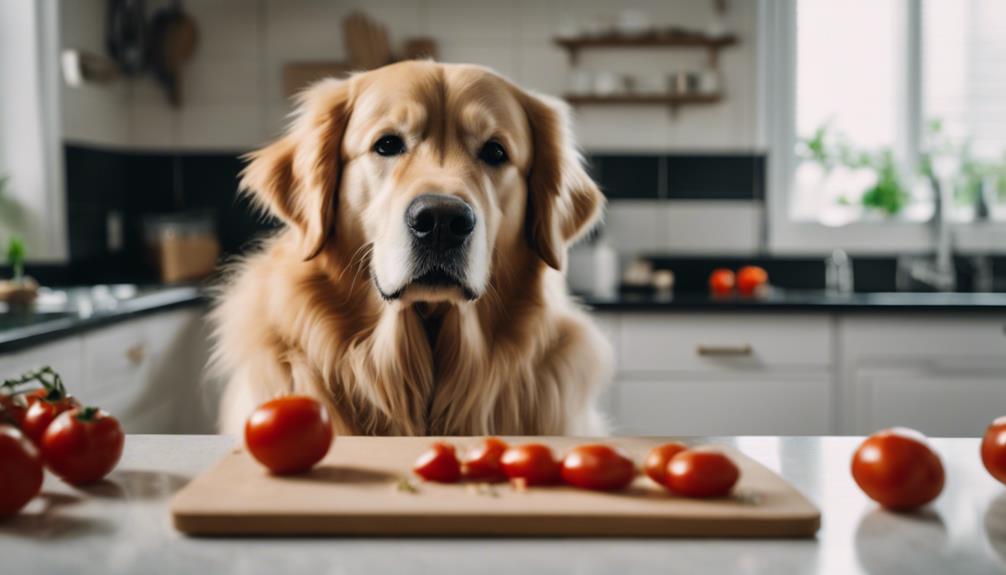
To safely prepare tomatoes for your dog, select ripe ones and remove any stems or leaves that contain the toxic substance tomatine. Cut the fruit into small pieces to prevent choking hazards.
When introducing tomatoes to your dog's diet, start with small amounts and monitor their reaction to prevent digestive upset. Feed them in moderation, as tomatoes should not replace a balanced diet. Limit tomatoes to no more than 10% of your dog's daily caloric intake.
Avoid feeding your dog tomato-based products like sauces, soups, or salsas, which often contain toxic ingredients like onions, garlic, or excess salt. Stick to fresh, ripe tomatoes. If you're unsure about preparation or feeding, consult your veterinarian for personalized advice.
Risks of Tomato Plant Poisoning
Tomato plants pose a significant threat to your dog's health. Every part of the plant, from leaves to stems, contains toxic compounds called solanine and tomatine. These compounds are poisonous to dogs and can cause a range of symptoms depending on the amount consumed.
If your dog ingests any part of the tomato plant, it may experience vomiting, diarrhea, and abdominal pain. In severe cases, it may exhibit difficulty breathing, dilated pupils, and an increased heart rate. In extreme cases, solanine poisoning can lead to seizures, paralysis, and even death.
Unripened tomatoes contain higher levels of solanine than ripe tomatoes and are particularly bad for dogs. The leaves of the tomato plant are highly toxic, and even small amounts can cause significant harm. If you suspect your dog has ingested any part of the tomato plant, seek veterinary attention immediately.
Growing Tomatoes With Dogs

When growing tomatoes with dogs around, safety is key. Tomato plants contain toxic parts that can harm your pets if ingested. To prevent accidents, block access to your plants using physical barriers like chicken wire or mesh. This simple precaution creates a safe environment for both your plants and dogs.
Tomato Garden Safety
When creating a tomato garden, it's crucial to ensure your furry friends don't get into harm's way. Tomatoes can be toxic to dogs if ingested, so it's essential to take precautions to keep them safe.
To grow a successful and safe tomato garden with dogs, follow these guidelines:
- Keep dogs away from tomato plants: Tomatoes belong to the nightshade family, and their green stems or leaves can be toxic to dogs if ingested. Prevent your dog from accessing the plants to avoid potential harm.
- Use physical barriers: Fence or block off the tomato garden to prevent your dog from getting to the plants.
- Supervise interactions: Always watch your dog when they're near the tomato garden to ensure they don't eat any stems or leaves.
Preventing Accidental Ingestion
To prevent accidental ingestion of tomatoes by your dog, take the following precautions:
While a few cherry tomatoes are unlikely to harm your pet, eating large amounts can cause problems. Dogs may show signs of an allergic reaction, such as vomiting, diarrhea, or lethargy, if they consume too many tomatoes.
If you suspect your dog has ingested tomatoes, call your veterinarian immediately.
To avoid feeding your pet tomatoes unintentionally:
- Keep an eye on them when they're in the garden or near tomato plants.
- Consider fencing off the area or using deterrents to keep dogs away from ripe tomatoes.
Safe Planting Practices
When growing a tomato garden with dogs around, careful planning is essential. To ensure your dog's safety, follow these safe planting practices:
- Advertisement -
Plant tomatoes in an area difficult for your dog to access, such as a fenced-in garden or a raised bed. This reduces the risk of your dog ingesting toxic tomato parts.
Use physical barriers like tomato cages or trellises to keep your dog away from the plants. This adds an extra layer of protection.
Regularly remove any fallen green tomatoes from the garden. These can be toxic to your dog if ingested, so it's crucial to dispose of them promptly.
Key Takeaways for Dog Owners
When it comes to feeding your dog tomatoes, remember these three essential rules:
First, only ripe tomatoes are safe for your dog to eat, and even then, only in moderation. Never feed your dog green tomatoes, stems, or leaves, as they contain toxic compounds like tomatine and solanine.
Second, tomatoes should be free from any toxic parts. Only fully ripe tomatoes are good for your dog.
Third, feed your dog tomatoes in moderation. Overconsumption can still cause issues, even with ripe tomatoes. Solanine poisoning can be severe, especially for small breeds and puppies.
If you suspect your dog has ingested toxic parts of the tomato plant, call a vet right away. The sooner you seek professional help, the better the outcome will be.
Tomatoes in Dog Food and Treats
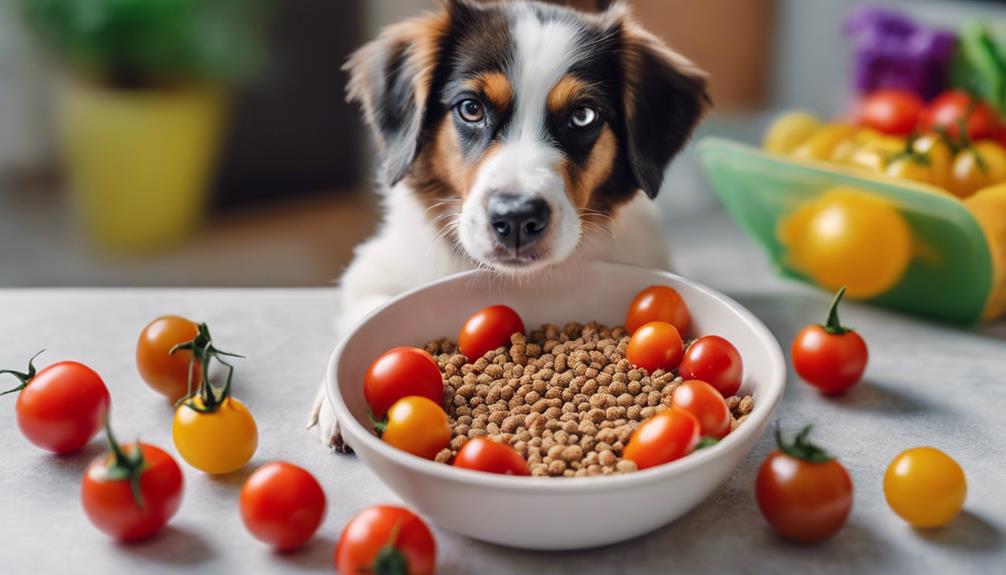
Tomatoes can be a nutritious addition to your dog's diet when consumed in moderation. They provide essential vitamins and minerals that support tissue growth and cell function. Ripe tomatoes are a good source of fiber, antioxidants, and vitamins, making them a valuable ingredient in dog food.
The benefits of tomatoes in dog food and treats include:
- Nutrient-rich ingredients: Tomatoes provide fiber, antioxidants, and vitamins that support overall health.
- Immune system support: Tomato-based ingredients can help reduce inflammation, promote healthy skin and coat, and support immune health.
- Convenient snacks: Tomato-based treats can be a healthy and convenient snack option for dogs.
When feeding your dog tomatoes, remember to:
- Only use ripe tomatoes, as unripe or green tomatoes can be harmful.
- Consume them in moderation, as excessive tomato consumption can cause harm.
- Choose dog food and treats with minimal ingredients and no added preservatives.
Precautions for Feeding Tomatoes
To safely feed tomatoes to your dog, follow these precautions:
Remove stems and leaves, as they contain toxic compounds like tomatine that can cause poisoning. Although rare, it's better to err on the side of caution.
Cut ripe tomatoes into small, manageable pieces to avoid choking hazards and digestive issues.
Introduce tomatoes into your dog's diet in small amounts to monitor for signs of allergic reactions or gastrointestinal upset.
Avoid feeding dogs tomato-based products, such as sauces or soups, as they often contain added ingredients like onions, garlic, or sugar that are toxic to dogs.
Supervise your dogs closely when they're around tomato plants to prevent accidental ingestion of toxic parts. Consider fencing off outdoor gardens or keeping indoor plants out of reach.
Frequently Asked Questions
Is It Safe for Dogs to Eat Tomatoes?
Dogs can eat ripe tomatoes, but it's crucial to avoid green tomatoes and tomato leaves. These contain toxic compounds that can cause digestive issues, upset stomachs, and even more severe symptoms in dogs. To ensure your dog's safety, only offer ripe tomatoes and steer clear of cherry tomatoes or green tomatoes. This will help prevent tomato poisoning and keep your furry friend healthy.
Can Dogs Eat Tomatoes and Cucumbers?
Dogs can eat tomatoes and cucumbers, but it's essential to prepare and serve them correctly. While these vegetables can be a healthy addition to your dog's diet, improper preparation can lead to health issues.
Raw tomatoes and cucumbers can be a nutritious snack for dogs, providing essential vitamins and minerals. However, tomatoes belong to the nightshade family, which means they contain a toxic compound called solanine. This compound is mostly concentrated in the leaves and stems, so make sure to remove them before serving.
Cucumbers are generally safe for dogs to eat, but they can cause digestive upset if fed in excess. It's crucial to introduce them gradually and in moderation to prevent stomach issues.
When serving tomatoes and cucumbers to your dog, follow these guidelines:
- Remove seeds, leaves, and stems from tomatoes to minimize solanine exposure.
- Wash and slice or chop the vegetables to reduce choking hazards.
- Start with small portions to monitor your dog's tolerance and adjust as needed.
- Avoid overfeeding, as both tomatoes and cucumbers are low in calories and high in water content.
What Vegetables Can Dogs Eat?
Dogs can safely eat various vegetables as healthy snacks. Carrot sticks, green beans, and pea pods are crunchy and nutritious options. Sweet potatoes, rich in fiber and vitamins, are another healthy choice. Fresh peas and raw carrots are also safe and nutritious. Cooked broccoli and steamed asparagus can be added to their diet as well. These vegetables provide essential vitamins and fiber, making them a great addition to your dog's meals.
Can Dogs Eat Spaghetti Sauce?
Dogs should not eat spaghetti sauce. Italian dishes, including those with meatballs, contain ingredients harmful to dogs. Two common culprits are onions and garlic, which can cause anemia in dogs. Tomato sauce itself is not toxic, but many recipes include added salt, sugar, and spices that can upset your dog's stomach. Additionally, dinner leftovers may contain other human food additives that are toxic to dogs.
Instead, flavor your dog's food with healthy, dog-safe ingredients. For example, you can add small amounts of low-sodium chicken or beef broth to their meals. You can also try using dog-safe herbs and spices, such as parsley or cinnamon. Always introduce new ingredients slowly and in small amounts to prevent digestive upset.
In summary
Dogs can eat tomatoes, but with caution. The fruit itself is healthy, but the leaves and stems contain a toxic compound called solanine. To safely feed tomatoes to your dog:
- Choose ripe tomatoes, as they have lower solanine levels than unripe ones.
- Remove all leaves and stems, as they contain the highest concentration of solanine.
- Only serve small amounts, as tomatoes are not a nutritionally balanced snack for dogs.
- Be aware of signs of solanine poisoning, such as vomiting, diarrhea, and lethargy.
By following these guidelines, you can share tomatoes with your dog without putting their health at risk.
- Advertisement -