

Top Service Dog Training Programs to Consider
- Advertisement -
When searching for top service dog training programs, consider schools that prioritize positive reinforcement, socialization, and task-specific skills. The Service Dog School of America, Service Dog Trainer School, Cooperative Paws Service Dog Coach, Service Dog Academy, and Tarheel Canine are reputable programs to explore. Look for certifications like AKC Canine Good Citizen and evaluations from organizations like Assistance Dogs International to guarantee high-quality training. It's essential to evaluate training packages, client satisfaction, and ongoing support to find the best fit for you and your dog. As you explore these programs further, you'll uncover the ideal training solution for your unique needs.
Key Takeaways
- The Service Dog School of America offers training for psychiatric, therapy, and alert service dogs, covering a range of disabilities.
- Cooperative Paws Service Dog Coach provides a certificate course focused on post-traumatic stress disorder, catering to individuals with specific needs.
- Tarheel Canine specializes in training work dogs, including those used by law enforcement, and offers service dog programs for individuals with disabilities.
- Service Dog Academy provides online video classes covering basic obedience to advanced task work for medical alert dogs, offering flexibility and convenience.
- Evaluating training packages, client ratings, and certifications like AKC Canine Good Citizen can help select a high-quality service dog training program.
Understanding Service Dog Training
Service dog training involves teaching your dog to perform specific tasks to assist individuals with disabilities. This training process requires a strong foundation in basic obedience, socialization, and task-specific skills.
Basic obedience training is the first step, including housebreaking, walking on a leash, and responding to basic commands. Once this foundation is established, training progresses to more advanced tasks and public access training.
Positive reinforcement techniques, such as clicker training and reward-based training, are effective in encouraging desired behaviors and strengthening the bond between the dog and handler. Service dogs must learn to work in various environments and situations, including public places, around distractions, and in different weather conditions. This ensures they can provide reliable assistance to their handlers.
Under the Americans with Disabilities Act (ADA), a service dog is defined as an animal individually trained to perform tasks for a person with a disability. The ADA requires service dogs to be allowed in public places and accommodations.
Service dog training is a complex process that demands patience, dedication, and consistency. By following a structured approach and using positive reinforcement techniques, you can help your dog become a valuable assistant for individuals with disabilities.
Top Service Dog Training Schools
When selecting a service dog training school, it's essential to find a program that suits your needs and goals. Here are top schools that offer specialized training for various disabilities and conditions.
The Service Dog School of America provides training for psychiatric, therapy, and alert service dogs. If you're working with individuals with spectrum disorders, consider The Service Dog Trainer School, which offers tailored programs.
Cooperative Paws Service Dog Coach offers a certificate course focused on post-traumatic stress disorder. Service Dog Academy provides online video classes covering basic obedience to advanced task work for medical alert dogs.
Tarheel Canine specializes in training work dogs, including those used by law enforcement, and offers service dog programs for individuals with disabilities. Anything Pawsable and Teamwork Manuals are valuable online resources, providing guidance and information for trainers.
These schools offer a range of programs and specializations to help you and your dog become a well-trained service dog team.
Training Process and Techniques
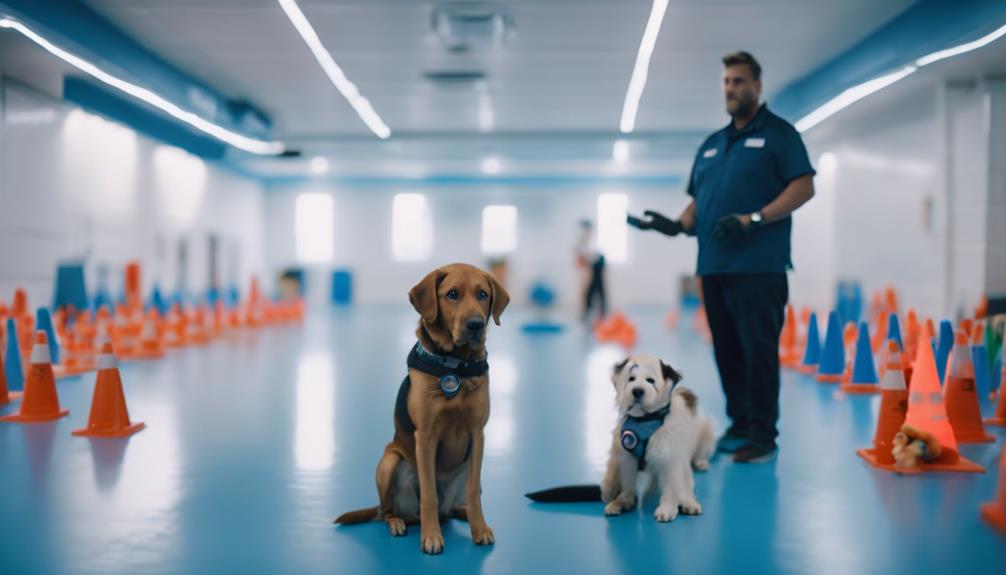
The Training Process and Techniques
To train a service dog, you'll need to understand the techniques and methods used in the process. Positive reinforcement is a key aspect of service dog training, as dogs respond well to rewards and motivation. This approach is often combined with classical conditioning, which taps into a puppy's innate responses, and respondent conditioning, which teaches puppies to react to neutral stimuli and associate them with specific cues or commands.
Conditioning techniques are crucial in service dog training, as they help dogs learn to respond to commands and perform tasks reliably in various situations. Obedience training is also essential, as it lays the foundation for more advanced tasks.
To achieve success, incorporate a range of training methods, including online resources, such as Anything Pawsable and Donna Hill's Assistance Dog Training channel on YouTube, and specialized tools like Teamwork Manuals and Sound CDs.
Socialization and training are critical components of service dog development. You can achieve these through various methods, including online resources and sound CDs for socialization and desensitization. By combining these techniques and resources, you'll train a highly skilled and dedicated service dog.
Specialized Service Dog Training
Specialized service dog training programs address specific disabilities, such as autism and psychiatric conditions. Autism service dog training provides emotional anchors and deep-pressure therapy for individuals with autism. This type of training helps autistic children and adults cope with anxiety and stress.
Psychiatric service dog training, on the other hand, focuses on assisting individuals with mental health conditions. These dogs are trained to respond to emergency situations, perform daily tasks, and provide emotional support. By doing so, they help individuals with psychiatric conditions lead more independent lives.
Autism Service Dog Training
Autism service dog training is a specialized program that helps autistic children and adults by providing emotional support and reducing anxiety in public places. These trained dogs can perform tasks such as interrupting self-soothing behaviors, providing comfort, and facilitating social interactions. They can also detect and respond to meltdowns, helping to de-escalate situations.
The training process involves desensitization and socialization to help the dog become comfortable in public environments and respond to cues in the presence of distractions. Organizations like Autism Service Dogs of America and Service Dogs Inc. offer training programs that provide trained dogs and support to families affected by autism.
Psychiatric Service Dog Training
Psychiatric service dog training is a specialized form of training that teaches dogs to assist individuals with mental health disabilities, such as post-traumatic stress disorder (PTSD), anxiety, and depression. These dogs learn to detect and respond to their handler's emotional states, providing comfort and emotional support to help them cope with their condition.
Training typically includes skills like deep pressure stimulation, emotional anchoring, and interrupting self-destructive behaviors. These skills help individuals with mental health disabilities manage their symptoms and improve their daily lives. For example, a trained psychiatric service dog can help an individual with PTSD by providing a calming presence or interrupting flashbacks.
Under the Americans with Disabilities Act (ADA), psychiatric service dogs are protected and allowed to accompany their handlers in public places. If you're considering training a psychiatric service dog, you can find specialized training and certification programs, such as those offered by Service Dog Academy and Cooperative Paws Service Dog Coach. Online resources like Donna Hill's Assistance Dog Training channel on YouTube also provide valuable information and guidance.
Training Packages and Client Satisfaction

Service dog training schools offer various packages to suit your needs. These packages include in-person and online courses that vary in duration and focus. Evaluating these classes helps you select the best package for you and your dog, ensuring a successful training experience. Client ratings and feedback provide insight into the effectiveness of these training courses and the quality of the training schools. By considering these factors, you can make an informed decision about which package is right for you.
Package Options Available
When selecting a service dog training program, you'll find various packages to choose from. These packages cater to different needs, preferences, and learning styles. You can opt for in-person or online courses, ranging from 8-week intensive programs to 20 online courses. This variety allows you to pick the format that suits you and your dog best.
Evaluating the classes and packages helps you make an informed decision. Training schools provide comprehensive service dog training, which may include:
- Basic, intermediate, and advanced obedience training
- Specialized task training to help your dog assist you with specific tasks related to your disability
Training School Quality
Selecting a high-quality service dog training program is vital to ensure you receive the best possible training for your dog. This decision significantly affects the effectiveness of your service dog in providing reliable assistance and support. To choose a top service dog training program, evaluate the following aspects:
Training packages should cover basic, intermediate, and advanced obedience, agility, and essential skills. Check client ratings and feedback to gauge the effectiveness of the training courses and the school's commitment to quality training. Look for certifications like AKC Canine Good Citizen, Advanced Obedience, or the Public Access Test, which demonstrate the school's professionalism in service dog training.
- Advertisement -
Additionally, research the school's expertise in working with individuals with specific needs, ensuring they can provide personalized training and support. By considering these factors, you can make an informed decision and find a training program that meets your needs.
Service Dog Training Programs Overview
Service dog training programs focus on creating partnerships between specially trained dogs and individuals with disabilities. These programs teach service dogs to perform specific tasks to assist people with various disabilities, including visual, hearing, autism, mobility, seizure, psychiatric, medical, and diabetic conditions.
The Americans with Disabilities Act (ADA) defines a service dog as a dog individually trained to perform tasks for a person with a disability. This definition allows service dogs to accompany their handlers in public facilities, such as restaurants, hotels, and public transportation.
Assistance Dogs International (ADI) is a global coalition of non-profit programs that train and place assistance dogs. ADI fosters a community dedicated to excellence in the assistance dog industry.
Socialization and training are crucial for service dogs. These can be achieved through various methods, including online resources, to develop necessary skills and behaviors. Proper training and matching enable service dogs to provide valuable assistance to individuals with disabilities, promoting independence and enhancing their lives.
About Paws For Life USA
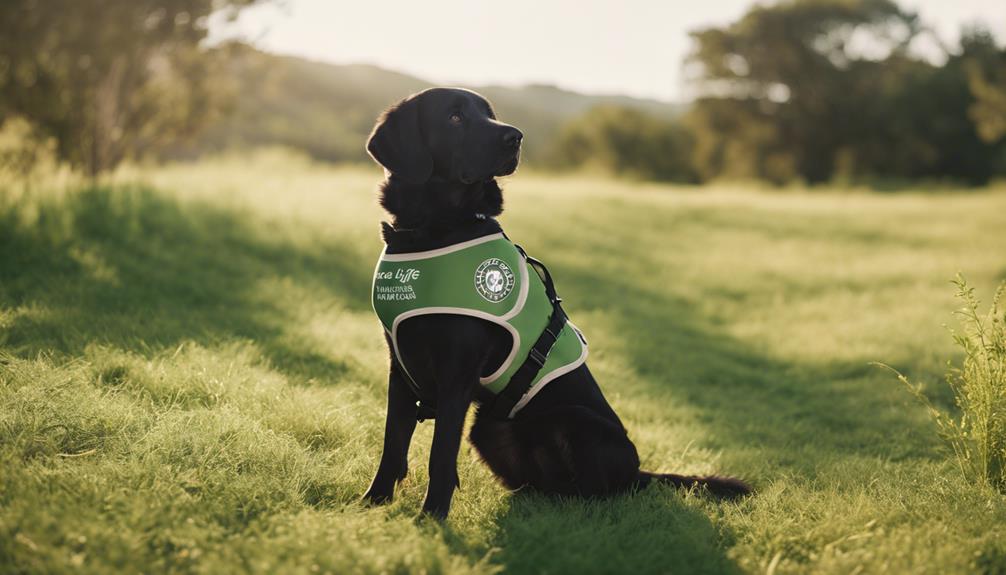
Paws For Life USA is a 501(c)(3) non-profit organization that provides service dog training programs for individuals with disabilities. Their program matches puppies and young dogs with individuals who have visible and non-visible disabilities, focusing on creating the right match between dog and handler.
The organization trains service dogs to assist with various disabilities, including Autism, Multipurpose, Mobility, Seizure, Psychiatric, Hearing, Medical, Diabetic, and others. To participate in the program, applicants must complete a two-part application, including a general information section and a section completed by a doctor, as well as provide a video or photos of their living environment.
Paws For Life USA provides ongoing support and maintenance for service dog teams. Teams are required to return to the school or participate in virtual check-ins every two years to maintain their working relationship and add new tasks as needed.
The organization relies on volunteer trainers, fosters, and donors to support their mission of providing highly trained service dogs to those in need. Paws For Life USA provides service dogs at no cost to the recipient, increasing independence and assisting with daily tasks for individuals with mobility issues, PTSD, and other disabilities.
Their program focuses on creating a strong bond between service dogs and handlers, guaranteeing a successful partnership that lasts a lifetime. By providing emotional support and assisting with daily tasks, Paws For Life USA aims to improve the lives of individuals with disabilities.
Assistance Dogs International Overview
Assistance Dogs International (ADI) is a global network of over 150 non-profit organizations in more than 25 countries, dedicated to providing service dogs to those in need. Founded in 1986, ADI has become a leading authority in the industry, promoting excellence and advocacy for assistance dog teams.
ADI's primary goal is to ensure high-quality assistance dogs are available to individuals with disabilities. To achieve this, ADI provides accreditation to its member organizations, certifying they meet rigorous standards for training, placement, and follow-up care of assistance dogs. This accreditation process guarantees that member organizations adhere to the highest standards of excellence.
With over 28,000 active assistance dog teams and 43,000 volunteers supporting ADI-accredited member programs, ADI's efforts have a significant impact. By facilitating the exchange of best practices, knowledge of industry trends, and further education, ADI empowers its members and the public to make a difference.
ADI's role is crucial in promoting excellence and advocacy for assistance dog teams. As you consider service dog training programs, understanding ADI's accreditation process and standards can help you make an informed decision.
Accreditation and Resources
Excellence in service dog training relies on rigorous standards and continuous learning. When searching for top service dog training programs, consider accreditation and resources that support the assistance dog industry.
Assistance Dogs International (ADI) is a leading authority, offering accreditation to member programs that meet high standards. ADI's Complaint Policy ensures accountability and transparency within the industry. Accredited programs gain access to valuable resources, including an evaluation process, credibility, and the Members Area on the ADI website.
To support your service dog training, consider the following resources:
- Anything Pawsable's online resources provide valuable information and guidance for trainers.
- Donna Hill's Assistance Dog Training channel on YouTube offers free training videos for Service Dog handlers.
- Teamwork Manuals offer training advice for teaching various tasks specifically catered to owner-trainers.
- Sound CDs for Socialization and Desensitization help trainers fill gaps in socialization opportunities.
ADI's accreditation and commitment to excellence, combined with these resources, provide a solid foundation for service dog training. By leveraging these tools and standards, you can ensure your service dog receives high-quality training, ultimately enhancing their ability to support individuals in need.
Frequently Asked Questions
What Is the Highest Rated Dog Training Certification?
The highest rated dog training certification is the Certified Professional Dog Trainer-Knowledge Assessed (CPDT-KA). This certification demonstrates a trainer's expertise in three key areas: dog behavior, learning theory, and training techniques. To earn the CPDT-KA, trainers must meet rigorous professional requirements.
The International Certification Accreditation Council (ICAC) accredits the CPDT-KA, recognizing it as a mark of excellence in the industry. With over 3,000 certified trainers worldwide, the CPDT-KA is a respected credential. It signifies that a trainer has the knowledge and skills to effectively train dogs and help their owners.
What Is the Most Effective Type of Dog Training?
When training your dog, positive reinforcement is the most effective approach. This method focuses on rewarding desired behaviors, building trust and strengthening your bond with your dog. By using obedience-focused, behavior-driven, and socialization-oriented techniques, you'll see improvements in your dog's confidence and learning abilities.
Positive reinforcement is a science-backed, humane approach that works. It's based on encouraging good behavior, not punishing bad behavior. This method helps you develop a strong, healthy relationship with your dog.
With positive reinforcement, you'll use rewards like treats, praise, and play to encourage desired behaviors. You'll also need to be consistent and patient, as this method takes time and effort. However, the results are worth it – a well-behaved, confident dog that responds to your commands and trusts you completely.
How Many Commands Must a Dog Learn to Be a Service Dog?
To become a service dog, a dog must learn various commands and skills. While there's no specific number of commands required, a service dog should master basic obedience skills, advanced tasks, and custom commands tailored to the handler's needs. These skills include complex behaviors, task-specific skills, and public access etiquette.
Basic obedience skills include sitting, staying, walking on a leash, and responding to basic commands like "come" and "leave it." Advanced tasks may involve opening doors, picking up items, or providing balance support. Custom commands are unique to the handler's specific needs, such as alerting them to medical conditions or providing emotional support.
A well-trained service dog should demonstrate these skills in various settings, including in public. Public access etiquette involves the dog remaining calm and focused in busy areas, ignoring distractions, and not causing disruptions. With proper training, a service dog can provide invaluable assistance and emotional support to its handler.
What Is the Number One Rule in Dog Training?
Establishing clear boundaries is crucial in dog training. A significant 85% of dog owners fail to do so, resulting in behavioral issues. The key to successful dog training is consistency. Set a routine and stick to it. As the handler, provide positive reinforcement and a reward system. This involves defining roles, setting clear boundaries, and creating a quiet space for your dog to learn. By doing so, you'll build a strong bond with your dog and overcome behavioral problems.
In summary
When selecting a service dog training program, consider the following top programs to find the best fit for you and your dog. A good program will help you train a well-behaved and obedient service dog that can assist you with your specific needs.
Researching top programs is essential to finding a reputable organization that can provide you with the necessary training, support, and resources. This will give you the confidence and independence you need to manage your daily life.
- Advertisement -