
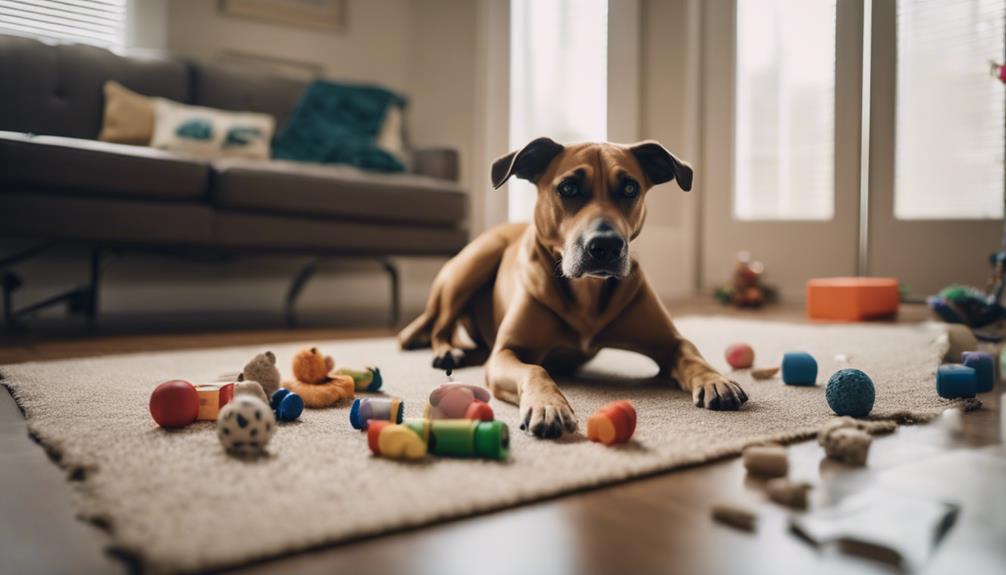
How to Prevent Housebreaking Relapses
- Advertisement -
To prevent housebreaking relapses, you'll want to establish a consistent routine, designating specific areas for elimination and incorporating regular breaks into your daily schedule. Keep a journal to track progress and identify patterns, adjusting your strategy as needed. Avoid punishing mistakes, instead calmly guiding your dog to the correct area and rewarding good behavior. Stay aware of potential triggers, such as changes in your work schedule or introducing new pets, and take proactive steps to reinforce good habits. By maintaining a consistent routine, providing positive reinforcement, and preventing boredom, you'll be well on your way to preventing housebreaking relapses, and there's more to explore to guarantee long-term success.
Key Takeaways
- Establish a consistent daily schedule with regular breaks to prevent housebreaking relapses and reduce stress and anxiety.
- Designate a specific elimination area and use positive reinforcement when the dog uses it correctly to create a strong association.
- Identify and manage triggers, such as changes in routine or environment, to proactively prevent relapses and reinforce good habits.
- Provide positive reinforcement, such as treats and praise, immediately after desired behavior to reinforce the connection in the dog's mind.
- Engage dogs in physical activity, mental stimulation, and environmental enrichment to reduce the likelihood of relapses and prevent boredom.
Establish Consistent Routine
Establish a Consistent Routine to Prevent Housebreaking Relapses
A daily schedule is crucial in preventing housebreaking relapses. By establishing a consistent routine, you can help your pet adjust to new habits and reduce the likelihood of accidents.
Start by taking your pet outside to the designated area immediately after waking up. This helps them associate the outdoors with eliminating, making it easier for them to hold it in until the next scheduled break. A consistent morning routine also regulates your pet's bowel movements, reducing the likelihood of accidents.
Incorporate regular breaks into your daily schedule, taking your pet outside every few hours to eliminate. Use this opportunity to provide exercise and mental stimulation, which helps reduce stress and anxiety that may contribute to housebreaking relapses.
Stick to a consistent routine to help your pet develop good habits and reduce the likelihood of accidents. Adjust your schedule according to your pet's needs and age. Consistency is key in preventing housebreaking relapses.
Designate Elimination Areas
Designate a specific elimination area to prevent housebreaking relapses. Choose a spot that's easily accessible and close to your back door to minimize passage time and accidents. This designated zone helps your dog understand where it's acceptable to go to the bathroom.
When your dog eliminates in the designated area, use positive reinforcement like treats and praise. This associates the behavior with a reward, encouraging your dog to repeat it. Avoid punishing or using negative reinforcement when your dog has an accident, as this can create anxiety and make housebreaking more difficult.
Clean up accidents thoroughly with a pet-safe cleaner to remove any remaining scent that might attract your dog to the same spot again. Consistency and patience are key to preventing housebreaking relapses. Stick to your routine and clearly communicate what's expected of your dog.
Watch for Triggering Signs
When monitoring your pet's behavior, watch for signs that may trigger a housebreaking relapse. Identify common triggers, such as changes in your work schedule or moving to a new home, which can disrupt your pet's routine. These changes can cause your pet to revert to old habits. Proactively addressing these triggers helps prevent accidents and reinforces good habits.
Common Triggers Identified
Housebreaking relapses can occur even with well-trained dogs. Identifying common triggers is crucial to preventing these setbacks.
Past incidents, such as medical issues or environmental changes, can trigger relapses. For example, if a dog had an accident in the house due to a medical issue, it may associate the house with relief and repeat the behavior.
Environmental factors, including changes in your work schedule, moving to a new home, or introducing new pets or family members, can cause anxiety or stress, leading to accidents. Exposure to stimuli like loud noises, strong smells, or extreme weather conditions can also trigger relapses.
Being aware of these triggers allows you to take proactive steps to prevent relapses and reinforce good habits. By understanding what causes setbacks, you can develop strategies to address them and maintain your dog's housebreaking progress.
Changes in Routine Matter
Changes in your daily routine can significantly impact your dog's housebreaking progress. Even slight schedule changes can confuse your dog, leading to accidents. For example, if you normally take your dog out for a walk at 7 am, but suddenly switch to 8 am, your dog may struggle to adjust.
Travel can also disrupt your dog's routine, triggering housebreaking relapses. When you're away from home, your dog may not have access to their usual potty areas, causing them to revert to old habits and have accidents.
Watch for signs that your dog needs to go outside, such as whining, sniffing, or circling. To prevent housebreaking relapses, stick to your dog's routine as much as possible, even during travel or schedule changes. This will help your dog stay on track with their housebreaking progress.
Gradually Increase Freedom
Gradually increasing your dog's freedom is crucial for successful housebreaking. Introducing freedom too quickly can lead to accidents and setbacks. To prevent this, introduce new spaces and freedoms in a controlled and supervised manner.
Increase freedom by 10-15 minutes every few days. This allows your dog to adjust to the new level of freedom before adding more. This gradual approach helps your dog develop good habits and a sense of responsibility.
Establish clear boundaries by restricting access to certain rooms or areas. This helps your dog understand what is expected of them and reduces the risk of relapses. Supervise your dog during this process, as unsupervised freedom can lead to accidents and setbacks.
Avoid Punishing Mistakes
When your dog has an accident, stay calm and avoid punishing them. Punishment can create anxiety, leading to more mistakes. Instead, calmly guide your dog to the correct area and reward them for using it correctly. This redirection helps your dog learn what behavior is desired.
Manage Accidents Calmly
Accidents are inevitable, even with diligent housebreaking efforts. To prevent setbacks, it's crucial to manage accidents calmly and analytically.
When an accident occurs, you'll likely catch your dog in the act or notice a mess on the floor. It's natural to feel frustrated, but take a deep breath and remain calm. Avoid punishing your dog, as this can create negative associations and hinder the training process.
Instead, focus on identifying the triggers that led to the accident. Consider factors such as inadequate supervision, incomplete training, or medical issues. Use this analysis to adjust your training strategy and prevent similar accidents from happening in the future.
Redirect Undesired Behavior
Catch your dog in the act of undesired behavior and redirect their attention to a desired action. This technique is crucial in behavior modification, as it helps your dog understand what's expected of them. Redirecting attention is key in housebreaking, as it refocuses your dog's energy on acceptable behaviors.
- Advertisement -
When you catch your dog engaging in undesired behavior, such as eliminating in the house, calmly say "outside" or "potty" and quickly take them to the designated potty area. This redirects their attention to the desired action. By doing so, you're associating the undesired behavior with an immediate correction, rather than punishing your dog for the mistake.
Maintain Positive Reinforcement
Maintain Positive Reinforcement
Consistently rewarding good behavior helps reinforce the habits your dog has learned during housebreaking. This approach encourages desired behavior rather than punishing undesired actions. Positive reinforcement associates good behavior with rewards, creating a strong foundation for long-term habits.
To maintain positive reinforcement:
Use distinct reward markers, such as "yes" or a clicker, to instantly associate the reward with the desired behavior.
Offer a variety of treats to keep your dog engaged and motivated. This can include healthy snacks like carrots or green beans, or special treats like freeze-dried liver or chicken.
Provide rewards immediately after the desired behavior to reinforce the connection in your dog's mind.
Monitor Progress and Adjust

Monitor Progress and Adjust
To ensure your dog stays on track with housebreaking, regularly monitor their progress. Consistent scheduling and supervision help identify potential relapse triggers, allowing for timely adjustments to the routine.
Keep a journal or log to track accidents, successes, and behavior changes. This helps pinpoint patterns and make informed decisions to prevent relapses. For example, you may notice that your dog has accidents at specific times of the day or in certain areas of the house.
Adjust the frequency or duration of potty breaks based on your dog's age, breed, and individual needs. Gradually increase freedom and responsibility, such as access to more rooms or longer periods without supervision, to help your dog demonstrate self-control.
Remember to address underlying medical issues, such as urinary tract infections or gastrointestinal problems, which can cause accidents. Treating the root cause rather than just the symptoms prevents relapses and keeps your dog on track.
Prevent Boredom and Distractions
On a rainy day, your dog can easily get bored and fall back into old habits, undoing their housebreaking training. To prevent this, you need to keep them engaged and active indoors.
Boredom and distractions can lead to housebreaking relapses. To avoid this, provide your dog with mental stimulation and environmental enrichment.
Try these methods to keep your dog engaged:
Provide interactive toys filled with treats or kibble, which challenge your dog to figure out how to get the reward.
Create a scavenger hunt around the house by hiding treats or toys for your dog to find.
Set up an indoor obstacle course using tunnels, cones, or jumps to keep your dog physically active.
These activities will keep your dog's mind and body active, reducing the likelihood of housebreaking relapses on rainy days.
Frequently Asked Questions
What Are the Four Main Ideas in Relapse Prevention?
To prevent relapses, focus on four key areas. Identify your relapse triggers, such as stress, changes in routine, or other factors that can set you back. Develop healthy coping mechanisms to manage these triggers, like exercise, journaling, or meditation. Establish a support system, including friends, family members, or professionals who can provide help when needed. Create a plan for emergency situations, outlining specific steps to take if a relapse occurs.
What Are Some Skills for Preventing Relapse?
Developing essential coping strategies and consistency habits is crucial for preventing relapses. Establish a daily routine that includes consistent feeding schedules and potty breaks for your dog. This foundation helps build strong habits and reduces the likelihood of setbacks. By adopting these strategies, you'll be better equipped to handle challenges and maintain progress.
Some key skills for preventing relapses include:
- Identifying triggers and high-risk situations
- Practicing self-care and stress management
- Building a support network of friends, family, or a therapist
- Developing problem-solving and coping skills
- Learning to recognize and manage cravings
- Creating a relapse prevention plan with specific strategies and goals
What Are the Top 3 Factors That Contribute to Relapse?
Three primary factors contribute to relapse in housebreaking: inconsistency, owner negligence, and changes in environment or routine.
Inconsistency in potty schedules can trigger potty regression. If you don't stick to a routine, your pet will get confused and revert to old habits. Owner negligence, such as not taking your pet outside frequently enough or not rewarding good behavior, can also lead to relapse.
Changes in environment or routine can be overwhelming for your pet, causing them to forget their potty training. This includes changes in your work schedule, moving to a new home, or adding new family members.
In summary
To prevent housebreaking relapses, establish a structured environment for your dog. This can be achieved by:
- Creating a consistent routine for feeding, exercise, and potty breaks
- Designating specific areas for elimination
- Maintaining positive reinforcement through rewards and praise
Consistency and patience are crucial in preventing relapses. By following these guidelines, you'll help your dog develop new habits and maintain a cleaner home. Remember, it takes time and effort for your dog to adjust to new habits, but with persistence, you can achieve success.
- Advertisement -