

8 Advanced Clicker Training Techniques for Agility and Tricks
- Advertisement -
You can elevate your dog’s agility and trick training by mastering advanced clicker training techniques that focus on precision, consistency, and positive reinforcement. Techniques like target training, shaping complex behaviors, and chaining tricks and commands help build a strong bond with your dog. Variable reinforcement strategies and fading the clicker and lures promote motivation and understanding. Advanced agility training, precise cueing, and timing further refine your dog’s skills. By incorporating these techniques into your training, you’ll be well on your way to tapping your dog’s full potential and achieving impressive results in agility and trick training, and there’s even more to explore.
Key Takeaways
- Mastering target training helps dogs overcome fear by progressively introducing the target near the object of fear.
- Shaping complex behaviors involves breaking down intricate actions into smaller components and gradually building upon each step.
- Chaining tricks and commands involves linking individual behaviors into complex sequences using consistent verbal cues and rewards.
- Variable reinforcement strategies, such as random rewards, maintain the dog’s motivation and engagement in clicker training.
- Fading the clicker and lures gradually reduces dependence on them, allowing the dog to respond to verbal cues alone.
Mastering Target Training
Mastering target training is a crucial step in clicker training, allowing you to communicate effectively with your dog. To learn more about the fundamentals of advanced clicker training techniques, check out this Clicker Training 101 guide. This technique enables you to teach your dog to move to a target and perform a behavior, which is essential for agility, assistance work, and performing tricks.
A target can be any object, such as a spot, stick, or laser pointer. Your dog will learn to associate the target with positive outcomes through consistency in rewards and verbal cues. This consistency promotes trust and understanding between the dog and trainer, creating a sense of security and predictability for the dog.
To master target training, you’ll need to consistently reward good behavior, creating a clear understanding of what’s expected. You’ll click and reward each step towards the target, gradually increasing distance, duration, and distractions. This approach helps your dog understand exactly what’s expected, building confidence and precision in their responses.
Target training can also be used to help dogs overcome fear. By progressively introducing the target near the object of fear, you can help your dog build confidence and associate the target with positive outcomes. This approach allows your dog to overcome their fears gently and positively.
Shaping Complex Behaviors
Shaping complex behaviors is an advanced clicker training technique that involves breaking down intricate actions into smaller components and gradually building upon each step. This process requires patience, persistence, and a clear understanding of the desired outcome.
To shape complex behaviors, start by identifying the individual components of the behavior. Then, use your clicker to reinforce each step, gradually increasing the complexity as your dog becomes more proficient. Consistency is key: focus on what the dog should do, rather than what they should stop doing, and reward good behavior consistently.
Shaping complex behaviors allows you to teach your dog intricate actions that would be impossible to achieve through traditional training methods. This technique focuses on positive reinforcement and operant conditioning, creating a strong bond with your dog based on trust, respect, and clear communication.
The shaping process can be slow and demanding, but the results are worth the effort. As you progress, you’ll see your dog’s confidence grow, and their ability to learn and adapt will increase dramatically. By shaping complex behaviors, you can teach your dog a wide range of actions, from simple tricks to complex tasks.
Some key points to keep in mind:
- Break down complex behaviors into smaller components
- Use your clicker to reinforce each step
- Gradually increase the complexity as your dog becomes more proficient
- Focus on what the dog should do, rather than what they should stop doing
- Reward good behavior consistently
Chaining Tricks and Commands
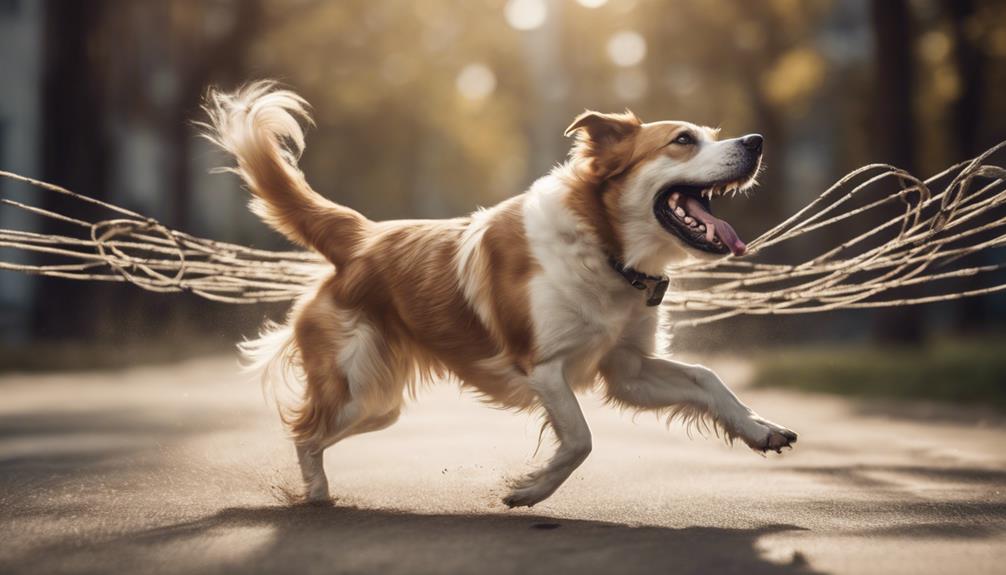
In clicker training, you’ll eventually want to link multiple behaviors together to create complex tricks. This requires precise timing to ensure each behavior flows smoothly into the next. Consistency is essential: use the same verbal cue every time you ask your dog to perform a specific behavior. Reward your dog with a mix of food, praise, and toys to keep them engaged and motivated. By mastering this technique, you can create impressive routines that showcase your dog’s skills and drive progress.
Linking Behaviors Together
Linking individual behaviors into complex sequences is a key aspect of advanced clicker training techniques. This technique involves breaking down complex behaviors into smaller components, reinforcing each step, and gradually linking them together. Consistency is crucial, as it helps your pet understand what behavior is being reinforced.
To link behaviors, start by identifying the individual actions you want to combine. These can be simple tricks like “sit” and “stay” or more complex actions like “weave through cones” and “jump over hurdles.” Use these advanced clicker training techniques to reinforce each behavior until your pet becomes proficient.
Once your pet has mastered each behavior, you can start linking them together. Begin with short sequences and gradually build up to more complex ones. Use a consistent cue for each behavior, and reward your pet with treats and praise when they perform the sequence correctly.
To ensure success, follow these guidelines:
- Use consistent verbal cues for each behavior.
- Start with short sequences and gradually build up to more complex ones.
- Reward your pet with treats and praise when they perform the sequence correctly.
- Be patient and practice regularly to reinforce learning.
Precise Timing Matters
Precise timing is crucial in advanced clicker training techniques to associate the sound of the clicker with the desired behavior. Consistency is key to successful training. To achieve this, you need to mark the exact moment your pet performs the desired behavior with the clicker.
Inconsistent timing can lead to delayed reactions and slow learning. To master precise timing, follow these guidelines:
- Click at the exact moment: Avoid delayed reactions by clicking the instant your pet performs the desired behavior.
- Maintain consistency: Use the same timing and tone for each click to ensure clarity and consistency.
- Regular practice: Regular training sessions help you develop muscle memory for precise timing.
- Use visual cues: Visualize the behavior you want to see and click when it happens, helping you stay focused and accurate.
Rewards Drive Progress
Chaining tricks and commands is a powerful technique in clicker training. It involves linking multiple behaviors together, with each behavior serving as a cue for the next one. This approach allows you to create complex sequences of actions that your dog can learn and perform.
To chain tricks and commands effectively, start with simple behaviors and gradually add more complex ones. Make sure your dog has mastered each step before moving on to the next. Consistency is crucial when rewarding your dog. Provide a treat or praise after completing the entire sequence, not after each behavior. This approach helps you teach complex behaviors, such as agility tasks, by breaking them down into smaller components and rewarding your dog for completing each step.
Chaining tricks and commands has several benefits. It strengthens your bond with your dog, improves communication, and enhances your problem-solving skills. By using this technique, you can teach your dog complex behaviors and achieve impressive results.
Variable Reinforcement Strategies
With advanced clicker training techniques, variable reinforcement strategies play a crucial role in maintaining your dog’s motivation and engagement. When rewards are random and unpredictable, your dog will remain interested and motivated. A fixed reward schedule can lead to predictability and boredom, which is why incorporating variability is essential.
Consistency and patience are vital when correcting behavior. Introducing variability in rewards helps create strong and persistent behavior in your dog. This approach is supported by research in animal welfare, such as this study published in the Journal of Applied Animal Welfare Science. This approach is effective because it keeps your dog guessing, making them more likely to repeat desired behaviors.
Random Rewards
Random rewards, also known as Variable Reinforcement Strategies, involve delivering rewards at unpredictable intervals to maintain learner engagement and motivation. This technique is effective in clicker training as it keeps dogs guessing and enthusiastic to perform.
Consistency in rewarding good behavior is crucial, as it creates a clear understanding of what’s expected. Using a mix of rewards, including food, praise, and toys, keeps dogs engaged and motivated. Rewards should be tailored to individual preferences.
To implement Random Rewards, follow these guidelines:
- Vary the reward type by switching between treats, toys, and praise to keep your dog interested.
- Change the reward frequency by sometimes rewarding every click and other times only rewarding every third or fifth click.
- Use a mix of immediate and delayed rewards to create anticipation. Reward your dog immediately after a correct behavior or wait a few seconds.
- Occasionally provide a larger or more desirable reward, known as a ‘jackpot’ reward, to create excitement and motivation.
Increasing Uncertainty
Incorporating uncertainty into your dog’s training promotes active learning and problem-solving skills. Variable reinforcement strategies, like random and intermittent reinforcement, challenge your dog to think critically and make decisions.
Consistent reinforcement is essential to create a clear understanding of what’s expected. Focus on rewarding desired behaviors, rather than punishing undesired ones. This approach improves performance and encourages your dog to learn and grow.
Random reinforcement involves rewarding your dog at unpredictable intervals, while intermittent reinforcement involves rewarding at fixed intervals, but without letting your dog know the schedule. This uncertainty motivates your dog to repeat the desired behavior to receive the reward, reducing dependence on you.
- Advertisement -
To implement variable reinforcement strategies effectively:
- Start with a consistent reinforcement schedule.
- Gradually introduce uncertainty, monitoring your dog’s response.
- Adjust the strategy as needed.
This approach helps your dog develop reliable and persistent behaviors, making them more confident and responsive in agility and trick training.
Unpredictable Payoffs
Unpredictable Payoffs: Boosting Problem-Solving Skills and Motivation
Incorporating unpredictable payoffs into your dog training routine is an effective way to challenge their problem-solving skills and motivation. This technique, also known as variable reinforcement strategies, involves randomly rewarding desired behaviors to maintain a high level of engagement.
In agility training, unpredictable payoffs mimic real-life obstacles, making dogs more adaptable and resilient. Service dog training programs and puppy socialization programs can also benefit from this technique.
To implement unpredictable payoffs effectively:
- Use different types of rewards, such as treats, toys, or praise, to keep your dog engaged.
- Reward your dog randomly, sometimes after one repetition, sometimes after three.
- Vary the timing of rewards, either immediately or with a slight delay to build anticipation.
- Clearly define the behavior being rewarded, even if the reward is unpredictable.
Fading the Clicker and Lures

To advance in clicker training, you need to wean your dog off the clicker and lure dependence. This process called fading, helps your dog generalize learned behaviors and respond to cues in various contexts. Consistency is crucial in fading. Use the same verbal cue every time you ask your dog to perform a specific behavior and tailor rewards to their individual preferences.
To start fading the clicker, gradually reduce the frequency of clicks and treats. For example, only click and reward every other correct response, then every third, and so on. As your dog becomes more confident, you can phase out the clicker altogether, using verbal cues and rewards sparingly. For more insights on this process, visit Karen Pryor Clicker Training. The goal is to create a response to the cue alone, without relying on the clicker or lure.
When fading lures, introduce the cue before presenting the lure. This helps your dog associate the cue with the desired behavior, rather than relying on the lure itself. You can also try using lower-value lures or hiding them from view to encourage your dog to respond to the cue alone.
Remember that fading requires patience, consistency, and time. By fading the clicker and lures, you can advance your training and teach complex behaviors and tricks.
Teaching Advanced Agility Skills
Take your agility-trained dog to the next level by mastering advanced skills like weave pole entries and exits, threadles, and 270-degree turns using advanced clicker training techniques. This method involves breaking down complex behaviors into smaller components and rewarding each step toward the final behavior.
To start, shape the behavior through a series of small steps and reward each approximation of the final behavior. For instance, when teaching weave poles, begin with two poles close together and reward your dog for walking through. Gradually increase the distance between the poles and add more poles to the sequence.
Use these strategies to improve your clicker training:
- Reward your dog immediately after they performs the desired behavior to create a strong association between the behavior and the reward.
- Gradually increase the difficulty of the agility course by adding speed, distance, distractions, and obstacles to help your dog generalize their learning and prepare for competition-level agility.
- Break down complex skills like threadles and 270-degree turns into smaller components and reward each step towards the final behavior.
- Be patient and consistent in your training, rewarding desired behaviors and avoiding undesired ones.
Clicker Training for Distance Work

To take your agility training to the next level, focus on distance work, where your dog learns to respond to cues at increasingly longer distances. Start by teaching your dog to respond to cues at small increments of 5-10 feet, then gradually increase the distance to 20-30 feet or more.
Use a combination of verbal cues, hand signals, and visual targets, such as cones or flags, to guide your dog to the desired location. Socialize your dog in various environments and situations, like public access training programs, to help them generalize their learning and respond to cues in different contexts.
As your dog becomes more proficient, introduce distractions like other people, dogs, or obstacles to simulate real-life agility scenarios. This will improve their ability to focus and respond to cues. Reward correct responses with high-value treats and praise, and avoid punishing or correcting your dog for mistakes.
Gradually increase the distance and difficulty of the exercises to build your dog’s confidence and reliability in responding to cues, even at a distance. This will prepare them for advanced agility training and competition.
Precise Cueing and Timing
Precise cueing and timing are crucial in advanced clicker training techniques. They help you communicate effectively with your dog and lay the foundation for advanced agility training. When you use a clicker, you’re marking the exact moment your dog performs the desired behavior and teaching them to associate the sound with a reward. This precise cueing helps your dog understand what behavior is being reinforced, allowing them to repeat it confidently.
Consistency is key in positive reinforcement training. Reward your dog every time they exhibit the desired behavior, and use a mix of rewards such as food, praise, and toys to keep them engaged and motivated.
To achieve precise cueing and timing, follow these guidelines:
- Choose a distinct and consistent cue, such as a unique sound or word, and use it consistently to mark the desired behavior.
- Click the moment your dog performs the desired action to confirm they associate the sound with the behavior.
- Provide the reward within seconds of clicking to reinforce the behavior and create a strong association.
- Practice regularly to reinforce precise cueing and timing, solidifying your dog’s understanding of what behavior is being rewarded.
Frequently Asked Questions
Which Clicker Training Techniques Do Clicker Training Belong To?
Advanced clicker training techniques are a prominent part of operant conditioning, a fundamental concept in behavioral psychology. Operant conditioning emphasizes positive reinforcement, where a desired behavior is immediately followed by a reward. In clicker training, the sound of a clicker serves as that reward, marking the exact moment the behavior occurs. This method is deeply rooted in learning theory and distinctly different from classical conditioning, which focuses on associating stimuli rather than behaviors. Mastering the principles of operant conditioning is crucial for effectively applying advanced clicker training techniques to achieve consistent results with your dog.
How to Practice Clicker Training?
Create a distraction-free area for clicker training, where you can focus on your dog. Set a daily routine with 5-10 minute training sessions, several times a day.
Start by associating the clicker with treats or playtime. As you progress, change your training routines to keep your dog engaged. Consistency and patience are crucial for successful clicker training.
Is Clicker Training the Most Effective Way to Train Dogs?
Clicker training is a highly effective method for training dogs. It has led to a significant shift in how we train dogs by recognizing their intelligence and individual learning styles. This approach focuses on positive reinforcement, which allows dogs to reach their full potential. Backed by scientific evidence, clicker training is a reliable way to train your dog.
Clicker training works by debunking common training myths and using rewards to encourage desired behaviors. This positive reinforcement approach is more effective than punishment-based methods, as it builds trust and strengthens the bond between dog and trainer. By understanding how dogs learn and adapting to their styles, clicker training helps dogs learn faster and more efficiently.
The key to successful clicker training is consistency and patience. Trainers must communicate with their dogs, using a distinct sound (like a clicker) to mark desired behaviors. This sound is then followed by a reward, such as a treat or praise. Over time, dogs learn to associate the sound with the desired behavior and respond accordingly. With advanced clicker training techniques, you can teach your dog obedience commands, tricks, and even complex behaviors.
What Are the Principles of Clicker Training?
Clicker training is based on five key principles. First, master marker timing: click exactly when your dog exhibits a desired behavior. Reward placement is also crucial, as it helps your dog associate the reward with the action. Desensitization techniques help your dog overcome fears and anxieties. Emotional learning plays a significant role, in influencing your dog’s attitude towards training. Finally, behavioral shaping allows you to build complex behaviors from simple ones through gradual steps.
In summary
Mastering advanced clicker training techniques opens up new possibilities for agility and tricks with your dog. These same principles also improve everyday behaviors, refining your communication and strengthening your bond. By incorporating these techniques into your training routine, you’ll achieve complex tricks and gain a deeper understanding of your dog’s cognitive abilities, leading to a more responsive partnership.
- Advertisement -