

Territorial Behavior Correction Made Simple
- Advertisement -
You can correct territorial behavior in your dog by understanding its instinctual roots and addressing the underlying causes, triggers, and warning signs through a combination of behavior modification techniques, obedience training, exercise, and environmental adjustments. Recognize that territorial aggression stems from natural instincts and can be contributed to by factors like lack of socialization and trauma. By rewarding calm behaviors, using desensitization and counterconditioning, and teaching basic obedience commands, you can establish a sense of control and calm in situations that might normally trigger aggression. By exploring these approaches further, you'll uncover a clear path to a more peaceful coexistence with your dog.
Key Takeaways
- Recognize warning signs of territorial aggression, such as growling and stiffening, to prevent escalation.
- Use behavior modification techniques like counter-conditioning and desensitization to address territorial aggression.
- Implement obedience training and management strategies to establish control and calm in triggering situations.
- Redirect excess energy and attention away from territorial triggers with regular exercise and mental stimulation.
Understanding Territorial Aggression
As you observe your dog's behavior, you may notice that they become increasingly protective of their perceived territory, which can include their home, yard, or even you, their owner, and this territorial aggression is rooted in instinctual behavior. Historically, dogs were bred to protect owners' homes and property from threats, which has led to this innate behavior.
However, when left unchecked, territorial aggression can escalate into aggressive behavior.
It's essential to recognize that territorial aggression stems from a dog's natural instincts, rather than a personal vendetta against others.
Factors such as lack of socialization, poor training, and trauma or abuse can contribute to this behavior. By understanding the root cause of your dog's territorial aggression, you can begin to address the issue through behavior modification techniques, such as counter-conditioning and desensitization. In some cases, medication may also be necessary.
As you work to correct your dog's territorial behavior, incorporating obedience training, such as 'sit', 'down', 'stay', 'come', and 'walk on a leash nicely', can help control and manage the dog, especially when excited.
Regular daily exercise is also vital in reducing aggression, as activities like long games of fetch, jogging, or swimming can tire the dog's body, making them more likely to relax.
Obedience Training for Correction
You can take the first step towards correcting your dog's territorial behavior by focusing on obedience training, which helps establish a sense of control and calm in situations that might normally trigger aggression.
By teaching your dog to respond to basic commands like 'sit,' 'stay,' and 'leave it,' you'll be better equipped to manage territorial behavior.
Obedience training also helps build trust and strengthens your bond with your dog.
When your dog is well-trained, you'll be able to desensitize them to triggers that normally spark aggression.
This can be achieved through gradual exposure to stimuli, such as strangers or other animals, while rewarding calm behavior.
Counterconditioning, a technique that associates positive outcomes with previously feared stimuli, can also be effective in reducing aggression in dogs.
As you work on obedience skills, remember to be patient and consistent.
Avoid punishing or scolding your dog for territorial behavior, as this can exacerbate the problem.
Instead, focus on rewarding good behavior and providing a sense of security and control.
With time and practice, your dog will learn to respond to obedience commands even in situations that might normally trigger territorial behavior.
Rewarding Calm Behaviors

By focusing on rewarding calm behaviors, you're encouraging your dog to associate tranquility with positive outcomes. This approach is particularly effective in addressing Territorial Aggression, as it helps your dog understand that calmness, not aggression, is the key to achieving desirable results.
When teaching your dog, it's essential to recognize and reward calm behaviors, such as relaxed postures, slow breathing, and gentle movements.
To implement this approach, start by observing your dog's behavior in various situations. Identify triggers that lead to Territorial Aggression and prepare a plan to address them.
When you notice your dog exhibiting calm behaviors in the face of these triggers, reward them with treats, praise, or play. Be consistent and timely with your rewards, ensuring your dog associates the calm behavior with the positive outcome.
Over time, this behavior modification technique will help your dog learn that calmness is a desirable state, leading to reduced Territorial Aggression.
Exercise and Mental Stimulation
Regular exercise and mental stimulation can redirect your dog's excess energy and attention away from territorial triggers, reducing the likelihood of aggressive behaviors.
As a responsible dog owner, it's essential to recognize that a territorial dog's barking and stress can be alleviated through physical and mental engagement.
By incorporating exercise and mental stimulation into your dog's daily routine, you can channel their energy into more positive outlets.
- Reduces stress and anxiety: Exercise is a natural stress-reliever, and mental stimulation can help distract your dog from territorial triggers, leading to a more calm and relaxed state.
- Redirects excess energy: Physical activity can burn off excess energy, reducing the likelihood of aggressive behaviors and territorial barking.
- Improves focus and concentration: Mental stimulation, such as obedience training or puzzle toys, can improve your dog's focus and concentration, making them less reactive to territorial triggers.
Managing Territorial Behavior Triggers

Now that you've redirected your dog's excess energy and attention through exercise and mental stimulation, it's time to identify and address the underlying triggers that contribute to their territorial behavior.
Territorial dogs often exhibit aggressive behavior when they feel threatened or protective of their territory. To manage these triggers, it's essential to identify the underlying causes, such as fear, anxiety, or lack of socialization.
Environmental factors, like noise and chaos, can trigger territorial behavior.
Desensitization and counterconditioning techniques can help reduce the intensity and frequency of territorial aggression.
Changes in the household, such as new pets or people, can also trigger territorial behavior.
Gradual introductions and positive reinforcement training can help reduce anxiety and aggression.
Additionally, medical issues, such as pain or discomfort, can contribute to territorial behavior, so it's vital to rule out health-related causes of aggression with a clean bill of health from a veterinarian.
Reducing Anxiety and Aggression
To effectively reduce anxiety and aggression in your territorial dog, you'll need to implement a thorough approach that incorporates obedience training, desensitization and counterconditioning, and environmental management. This multi-faceted approach will help your dog feel more calm and secure, reducing the likelihood of aggressive behaviors.
When your dog becomes anxious or aggressive, it's not only stressful for your dog, but also for you and those around them. Imagine being able to walk into your home without your dog barking aggressively or seeing strangers without your dog becoming defensive. It's possible with the right approach.
- Advertisement -
- Provide calming aids: Tools like ThunderShirt, puzzle toys, and long-lasting chews can help reduce your dog's anxiety and stress levels.
- Manage the environment: Closing curtains, feeding in a private place, and gating your dog away from the front door can help minimize triggers and reduce anxiety.
- Create a safe space: Providing a comfortable and quiet area, such as a crate or quiet room, can help your dog feel safe and secure, reducing territorial behavior.
Effective Training for Correction
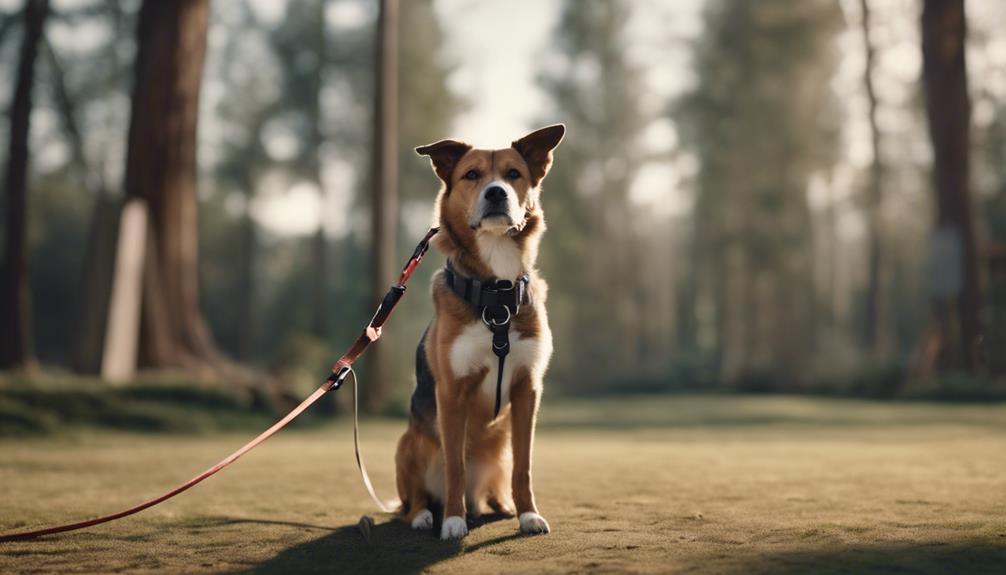
As you begin effective training for correction, you'll focus on teaching your pet calm behaviors to replace territorial aggression.
This approach helps your pet develop alternative responses to stimuli that previously triggered defensive behavior.
Teach Calm Behaviors
By incorporating calm behaviors into your dog's repertoire, you'll be better equipped to correct territorial behavior. This is because a calm dog is more receptive to training and less likely to exhibit territorial behavior.
Start by teaching your dog basic obedience commands, such as 'sit' and 'stay,' in a calm and relaxed environment. As your dog becomes more proficient, gradually introduce distractions and rewards to reinforce good behavior.
Reduced stress: A calm dog is less stressed, which means they're less likely to exhibit territorial behavior.
Improved focus: A calm dog can focus better, making them more receptive to training and correction.
Stronger bond: A calm dog is more likely to form a strong bond with you, leading to a more trusting and obedient relationship.
Manage Territorial Aggression
You're now ready to tackle managing territorial aggression, building on the calm foundation you've established with your dog.
This vital step involves recognizing and addressing warning signs of territorial aggression, such as growling, snapping, or stiffening, to prevent escalation.
It's important to note that territorial aggression can be triggered by potential threats, including people, animals, or even objects, entering your dog's perceived territory.
To manage these situations effectively, you'll need to stay calm and assertive, providing clear guidance and reassurance to your dog.
As you practice, your dog will learn to feel comfortable in the presence of potential threats, responding to your cues instead of reacting aggressively.
Frequently Asked Questions
How Do You Fix Territorial Behavior?
To fix territorial behavior, you'll need to implement a multi-faceted approach.
Start by establishing clear boundary setting strategies to define your dog's space.
Next, teach resource guarding techniques to reduce possessiveness.
Employ space management methods to control access to areas and items.
Practice calming exercise routines to reduce anxiety.
Finally, use redirected attention tactics to distract your dog from triggers, helping them focus on you instead.
What Is Territorial Behaviour Simple?
As you venture into the realm of canine behavior, you'll likely encounter the complex phenomenon of territorial behavior.
Fundamentally, it's when your pet claims ownership of resources, spaces, or even people, and defends them against perceived threats.
This can manifest as pet boundaries, resource guarding, territorial marking, and social hierarchy.
It's rooted in canine instincts, and understanding these underlying drives is key to addressing territorial behavior effectively.
What Is the Territorial Behavior Theory?
You're likely wondering what the territorial behavior theory is all about.
Fundamentally, it's based on animal instincts and the concept of natural boundaries.
According to this theory, animals, including humans, have a primal ownership instinct, which leads to resource guarding and spatial awareness.
This innate behavior drives individuals to mark and defend their territory, ensuring access to essential resources and maintaining a sense of safety and security.
Can Territorial Aggression in Dogs Be Cured?
You're wondering if territorial aggression in dogs can be cured.
Fundamentally, it's a complex issue rooted in dog psychology, breed instincts, and pack dynamics.
Fear triggers can exacerbate the problem, making it challenging to overcome.
While it may not be completely curable, understanding the underlying causes and addressing them through training and behavior modification can help alleviate territorial aggression.
Conclusion
As you stand at the threshold of your home, imagine a welcome mat that says 'Calm and Confident' instead of 'Territorial Turf.'
By following these steps, you've transformed your furry guardian into a gracious host.
With obedience training, calm behaviors, exercise, and trigger management, you've rewritten the script of territorial aggression.
Now, your home is a haven, where love and respect reign supreme, and anxiety and aggression are just distant memories.
- Advertisement -