
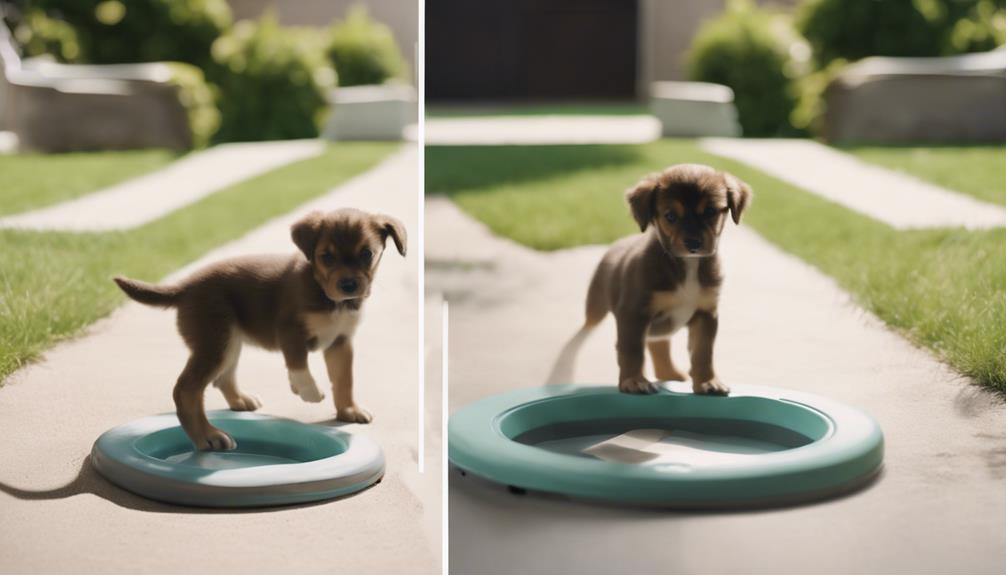
Potty Pads Vs Outdoor Training: Which Is Better?
- Advertisement -
When deciding between potty pads and outdoor training, consider your lifestyle and living situation. Potty pads offer convenience, especially for busy owners or those in small spaces, but may create a misconception that your dog is fully potty trained when they're only trained to use pads. Outdoor training, on the other hand, teaches your dog to eliminate in the right place, but requires consistency and supervision. Combining both methods can help your dog associate eliminating outside with positive reinforcement. Ultimately, a balanced approach that suits your situation is key; explore the pros and cons of each method to find the best fit for you and your dog.
Key Takeaways
- Consistency is key to successful potty training, whether using potty pads or outdoor training, or a combination of both.
- Potty pads are ideal for small spaces, busy owners, or weather-restricted areas, while outdoor training promotes bladder control and instinctual behavior.
- Combining potty pads with outdoor training helps puppies associate eliminating outside with positive reinforcement and avoids confusion.
- Pee pad training can hinder a dog's ability to learn bladder control, making it challenging to transition to outdoor elimination.
- Ultimately, the best approach depends on lifestyle, living situation, and the individual dog's needs and personality.
Understanding Potty Training Basics
Potty training is a crucial aspect of raising a well-behaved dog. It involves teaching your dog to eliminate in a specific area, whether on potty pads or outside. The goal is to create a habit where your dog associates eliminating with a particular location or surface.
To achieve this, you need to establish a routine and be consistent in your approach. Choose a designated area for your dog to go potty and stick to it. Consistency is key to successful potty training.
When deciding between potty pads and outdoor training, consider your lifestyle and living situation. If you live in an apartment or have limited outdoor space, potty pads might be the better option. If you have a yard or easy access to outdoor areas, outdoor training might be more suitable.
Regardless of which method you choose, understanding the basics of potty training is essential for success. By grasping the fundamentals, you'll be better equipped to teach your dog to go potty in the right place, every time.
Supervision and Scheduling Strategies
Establishing a consistent schedule is crucial for potty training. This routine helps your puppy learn when to eliminate and when to hold it in. Take your puppy outside frequently, especially after meals, naps, and playtime, to create opportunities for them to go potty in the right place.
Young puppies have small bladders and need frequent potty breaks. Provide ample opportunities for your puppy to go potty outside and praise and reward them when they do. Supervise closely during these breaks to intervene if your puppy starts to go potty in the wrong place. Observe your puppy's body language and behavior to learn their unique signs that they need to go.
A schedule helps you anticipate when your puppy will need to go potty, allowing you to plan ahead and prevent accidents. For example, if you know your puppy always goes potty within 15 minutes of eating, take them outside immediately after meals. Combining a consistent schedule with frequent potty breaks and close supervision is key to successful potty training.
Crate Training and Association Techniques
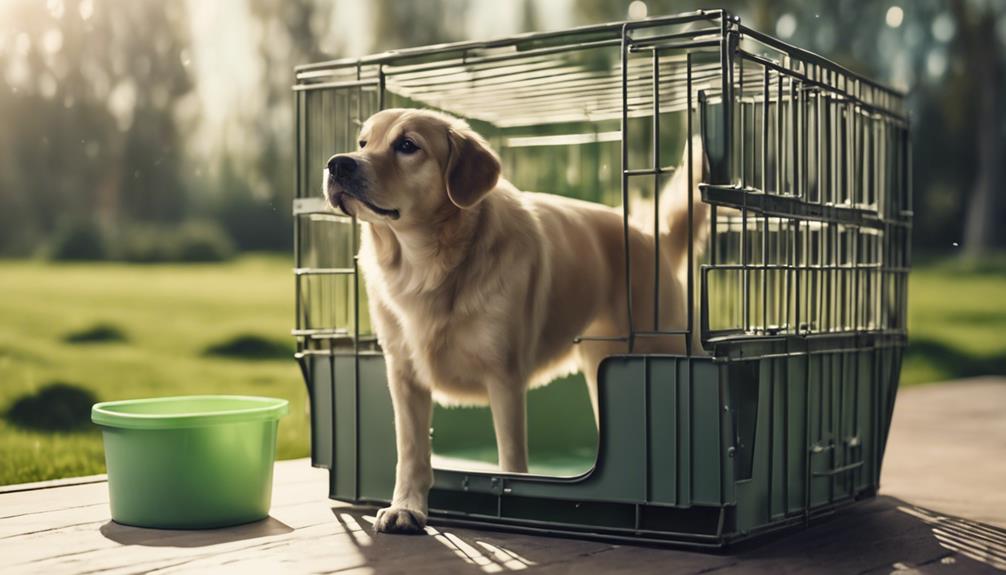
To set up a crate for your dog, consider factors like size, material, and ventilation to ensure it meets their specific needs. Associate the crate with positive experiences, such as treats and playtime, to guarantee successful crate training. Avoid linking the crate to punishment or confinement, as this will create a negative perception. By doing so, your dog will learn to view the crate as a safe and comfortable space, making potty training easier.
In the crate setup, prioritize your dog's comfort and safety. A well-ventilated crate with adequate space will help reduce anxiety and stress. When introducing the crate, start with short periods and gradually increase the duration to prevent overwhelming your dog. Reward calm behavior with treats and praise to create a positive association.
Crate Essentials
To achieve successful potty training, it's essential to create a positive association between the crate and comfort. Start by adding a soft bed or mat to the crate to make it a comfortable space. You can also place puppy pads in the crate to provide a convenient area for your puppy to do its business.
Choose a crate that's the right size for your puppy. It should be large enough for them to stand up, turn around, and lie down comfortably. Avoid making the crate too large, as this can lead to accidents and setbacks in potty training.
By creating a comfortable space, you'll help your puppy associate the crate with positive feelings. Consistency and patience are key to successful crate training. With the right approach, your puppy will learn to use the crate effectively and become a well-trained companion.
Crate Association Tips
Incorporating crate association techniques into your potty training routine sets your puppy up for success. Choose a crate that allows your puppy to lie down and turn around comfortably, but with no extra room. This creates a positive association with the crate.
Use dividers with a larger crate to make it adjustable as your puppy grows. Associate the crate with positive experiences by providing treats, food, and chew toys. When you let your puppy out of the crate, take them directly to their potty pad. Reward them for using the crate and potty pad correctly.
This creates a connection between the crate and potty pad. Combine crate association techniques with schedule-based potty breaks and outdoor training to promote good habits and successful potty training. By following these tips, you'll establish a solid foundation for raising a well-trained puppy.
Handling Accidents and Setbacks
When accidents happen during potty training, it's crucial to respond correctly to avoid setbacks. Here's how to handle accidents:
Immediately interrupt your dog and take them to the potty pad or outdoor toilet area. This association helps them learn where to go.
Avoid scolding or lecturing your dog after accidents. They don't understand punishment after the fact, and it can create anxiety and fear, hindering the training process.
Clean up accidents thoroughly and promptly using odor-destroying cleaners to remove all traces. This prevents repeat incidents, as dogs are attracted to previous scents.
Stay calm and patient when handling accidents. Punishing or scolding your dog creates negative associations and slows down the learning process. Instead, focus on interrupting accidents, cleaning up promptly, and encouraging your dog to use the potty pad or outdoor toilet area correctly. This approach helps your dog learn from mistakes and move forward in their potty training journey.
Effective Pee Pad Training Methods

Pee pads can be a valuable tool in potty training, especially for young puppies or in situations where outdoor access is limited. They provide a convenient and dry surface for your puppy to pee on when they can't get outside in time.
To use pee pads effectively, place them in areas where your puppy tends to go potty, such as near their bed or in high-traffic areas. This helps your puppy learn to eliminate away from where they play, sleep, and eat. As your puppy becomes more reliable with using the pads, you can gradually move them closer to the door, creating a clear path to the outdoors.
To transition your puppy to outdoor elimination, place pee pads outside and bring your puppy to pee/poo outside. This helps them associate the outdoors with going to the bathroom. Remove pee pads when your puppy has bladder control to prevent dependency on pads.
By following these steps, you can set your puppy up for potty training success. Remember to:
- Place pee pads in areas where your puppy tends to go potty
- Gradually move pads closer to the door as your puppy becomes more reliable
- Use outdoor pee pads to transition to outdoor elimination
- Remove pads when your puppy has bladder control
Switching to Outdoor Elimination
Switching to outdoor elimination is a crucial step in your pup's potty training. To make this transition smooth, follow these steps:
Phase out puppy pads by replacing them with outdoor trips to the designated potty area. Start by taking your pup outside after meals, naps, and playtime, when they're most likely to need to go.
Stick to a regular schedule and reward your pup with praise and treats when they successfully go to the bathroom outside. Consistency is key during this shift period.
Accidents will happen, so be patient and prepared. Don't scold or punish your pup if they have an accident. Instead, calmly take them to the designated potty area and encourage them to try again. Remember, setbacks are normal during this transition.
- Advertisement -
Concerns About Pee Pad Training
Pee pad training can be misleading, making owners believe their dog is fully potty trained when, in fact, they're only trained to use the pads. This misconception can cause frustration when taking your dog outside, as they may not know where to go. Using puppy pads may seem convenient, but it doesn't teach your dog to eliminate in the right place.
Another issue with pee pad training is that it can hinder your dog's ability to learn bladder control. Since your dog can go whenever they feel the urge, they don't need to learn to hold their pee. This can make it challenging to transition to outdoor elimination, as your dog may not have the same level of bladder control as a dog trained to go outside from the start.
Pee pad training can also create a designated potty area in your home, which may not be ideal. Your dog may associate your indoor bathroom with their toilet area, leading to accidents in the house even after you've shifted to outdoor training.
Considering these concerns, it's essential to weigh the pros and cons of pee pad training and decide whether it's the right approach for you and your dog.
Breeders' Practices and Owner Experiences
Pee pad training can be an effective tool for breeders and owners when used correctly. Many breeders start training puppies on pee pads at a young age, around 2-3 weeks, as a backup in case they can't get outside in time. This helps puppies learn to eliminate away from their living areas. Around the 6th week, breeders shift them to outdoor elimination.
To successfully transition puppies from pee pads to outdoor elimination, consistency and persistence are key. Breeders and owners should prioritize outdoor potty training, even in bad weather, to avoid confusion and dependency on pads. One effective approach is to gradually move the indoor potty area closer to the outside potty area, rewarding good behavior along the way.
Incorporating pee pads into potty training regimens can make the transition to outdoor elimination smoother. By doing so, breeders and owners can successfully potty train their puppies. Remember, consistency and persistence are crucial when switching to outdoor elimination.
Weighing Pee Pad Training Advantages
Pee pad training offers convenience, particularly for busy owners or those living in small spaces. You can place pee pads in a designated area, making it easy for your pet to do their business. Clean-up is straightforward: simply dispose of the soiled pad and replace it with a fresh one.
Pee Pad Convenience
Pee pads provide a convenient solution for pet owners with busy schedules. They allow for quick and easy potty breaks, regardless of the location or weather.
Using pee pads eliminates the need to go outside, making them ideal for rainy or snowy days. They also serve as a backup in case your puppy needs to go suddenly and can't get outside in time. This provides a convenient and dry surface for your pet.
Pee pads are portable, making them suitable for various locations, such as apartments, upper floors, or travel destinations. They offer a practical solution for pet owners who need to balance their schedules with their pet's potty needs.
Easy Clean-Up Options
Potty pad training offers a convenient clean-up process. Used pee pads can be simply thrown away or washed if they're reusable. Portable pee pads are also easy to use in various locations, such as apartments or upper floors, making them suitable for any setting. Some pee pads have built-in attractants that encourage puppies to potty in the right place, making clean-up more efficient.
For an affordable and eco-friendly option, consider making your own pee pads from newspaper or puppy training pads. Busy dog owners can benefit from auto-shipping services for pee pads, which provide a hassle-free clean-up solution.
Potty pad training provides various easy clean-up options. These convenient solutions simplify your life as a dog owner, allowing you to focus on training your puppy and building a strong bond with them.
Balancing Indoor and Outdoor Training
To achieve success in potty training, it's crucial to strike a balance between indoor and outdoor training. Combining potty pads with outdoor training helps puppies associate eliminating outside with positive reinforcement.
To balance indoor and outdoor training effectively:
Establish a schedule for potty breaks and crate training to promote consistency and routine.
Supervise and provide positive reinforcement during outdoor training sessions.
Gradually shift from potty pads to outdoor elimination to avoid confusion.
Frequently Asked Questions
Is It Better to Use a Training Potty or Toilet Seat?
Deciding between a training potty and a toilet seat? You have two popular options. A potty chair provides a comfortable, secure seat for your child. Alternatively, a child seat or training seat fits onto your toilet, helping your child get used to the real thing. Toilet trainers, with their smaller openings, can be a great intermediate step. Choose the option that best fits your child's unique needs and learning style.
Can You Use Puppy Pads and Outdoor Potty Training Together?
A significant percentage of dog owners, 70% to be exact, use a combination of puppy pads and outdoor training. This dual approach, known as the hybrid or combo method, offers flexibility in potty training. By providing your puppy with both options, you can make it easier for them to learn and adapt to different situations.
Using puppy pads and outdoor training together can lead to faster training and reduced accidents. This approach acknowledges that puppies may not always have access to the outdoors, and that puppy pads can serve as a convenient alternative. By incorporating both methods, you can provide your puppy with a sense of security and routines, which are essential for successful potty training.
Are Pee Pads Good for Potty Training?
Pee pads can be a convenient and easy-to-clean tool for potty training. Larger pad sizes can accommodate growing puppies, and high-quality pads can handle accidents. However, accidents will still happen, and you need to be prepared. While pee pads have benefits, they also have drawbacks. For example, they can create a two-step process, where puppies learn to go on the pad instead of outside, or lead to dependency on pads. It's essential to weigh the pros and cons before deciding to use pee pads for potty training.
How to Transition Dog From Pee Pad to Outside?
Transitioning your dog from pee pads to outside requires a gradual and consistent approach. Start by establishing a routine, taking your dog to the same outdoor spot at the same time each day. Supervise closely to catch any mistakes and provide patient encouragement as your dog adjusts.
Begin by taking your dog to the designated outdoor area immediately after meals, naps, and playtime, as these are times when they're most likely to need to go. Praise and reward your dog with treats and affection when they successfully go to the bathroom outside.
Be prepared for accidents, as they're a normal part of the transition process. If you catch your dog in the act of going to the bathroom inside, calmly say "outside" and quickly take them to the designated outdoor area. Avoid scolding or punishing your dog for mistakes, as this can create negative associations and slow the transition process.
Stick to your routine consistently, and with time, your dog will learn to go to the bathroom outside. Remember to stay patient and calm, as this will help your dog feel more comfortable and confident in their new habits.
In summary
When deciding between potty pads and outdoor training, consider your lifestyle, living situation, and dog's needs. A balanced approach that combines indoor and outdoor training is often the most effective. This helps you raise a well-trained and well-adjusted dog.
To make the right choice, evaluate your circumstances. For example, if you live in a small apartment, potty pads might be more convenient. On the other hand, if you have a yard, outdoor training could be a better option. Whichever method you choose, consistency and patience are key to successful training.
- Advertisement -