

Is Beef Jerky Safe for Dogs?
- Advertisement -
While beef jerky can be a tasty snack for you, it's not always a safe treat for your dog. Onions and garlic in beef jerky can cause anemia, while xylitol, a sugar substitute, can lead to a rapid drop in blood sugar and even liver failure. High-sodium content can cause dehydration and electrolyte imbalance, and choking hazards are also a concern. To guarantee your dog's safety, it's vital to choose healthy jerky options or consider alternative snacks, and if you're unsure, it's best to explore further to make an informed decision about what you feed your furry friend.
Key Takeaways
- Feeding beef jerky to dogs can be risky due to onions, garlic, xylitol, and high-sodium content, leading to anemia, dehydration, and foodborne illnesses.
- Look for low-sodium, single-source protein beef jerky with no added preservatives, artificial flavors, or fillers to minimize health risks.
- Homemade beef jerky made from lean cuts of beef, cooked to a safe temperature, and dehydrated at a low temperature is a safer option for dogs.
- Introduce beef jerky to a dog's diet in small amounts to monitor reaction, and watch for signs of food intolerance, such as vomiting, diarrhea, or lethargy.
- Commercial beef jerky products often contain unhealthy ingredients, so it's essential to research and choose a healthy, trustworthy brand or make your own.
Risks of Feeding Beef Jerky
Beef jerky can be a risky snack for your dog. Onions and garlic in beef jerky can cause anemia, leading to symptoms like lethargy, weakness, and pale gums. Some products also contain xylitol, a sugar substitute that can cause a rapid drop in blood sugar and even liver failure in dogs.
High-sodium content is another issue. Beef jerky can lead to dehydration and electrolyte imbalance in your dog. The jerky can also be a choking hazard, especially for small breeds or puppies. Furthermore, beef jerky can be contaminated with Salmonella or E. coli, causing foodborne illnesses in dogs.
The drying process involves adding a significant amount of salt, making beef jerky a high-sodium snack that can harm your dog's health. To make informed decisions about your dog's snacks, it's essential to understand these risks.
Choosing Healthy Jerky Options
When selecting a beef jerky for your dog, look for products made from single-source protein, such as plain beef, without added preservatives, artificial flavors, or fillers. Opt for jerky with low sodium content, less than 100mg per serving, and no added sugars. High-sodium content can lead to dehydration and electrolyte imbalance in dogs.
Jerky made from grass-fed, hormone-free beef is a better option. It tends to be lower in fat and higher in nutrients than grain-fed beef. Consider making homemade beef jerky using a dehydrator, which allows you to control the ingredients and cooking process.
Before giving your dog beef jerky, always check the expiration date and packaging for signs of spoilage. Contaminated jerky can cause foodborne illnesses in dogs. By choosing a healthy beef jerky option, you can provide your dog with a safe snack.
Dangers of Sodium in Jerky

Sodium in beef jerky poses a significant threat to your dog's health. Understanding the dangers of sodium in jerky is crucial to keeping your pet safe.
The Risks of Sodium in Jerky:
Excessive sodium intake is a major concern. A single piece of beef jerky can contain over 400mg of sodium, exceeding your dog's recommended daily intake of less than 100mg.
Feeding human jerky to dogs can lead to dehydration and electrolyte imbalance due to the high sodium content. This can cause severe health problems and even be toxic.
Sodium poisoning is another risk. A single piece of beef jerky can contain up to 25% of a dog's daily sodium allowance, making it a significant contributor to sodium poisoning.
Consuming high-sodium beef jerky can cause symptoms such as vomiting, diarrhea, lethargy, and seizures in dogs. In severe cases, it can be fatal.
To minimize these risks, choose jerky with low sodium content (less than 100mg per serving) or limit the amount given to dogs. Be mindful of sodium content in beef jerky to protect your dog's health.
Importance of Responsible Pet Ownership
As a responsible pet owner, you directly impact your dog's health through the food you choose. Healthy jerky options are crucial for your dog's well-being. Research is key to identifying healthy jerky options that provide a complete and nutritious meal.
When selecting jerky, consider the ingredients and nutritional content. Avoid jerky with added sugars, artificial preservatives, or unidentified meat sources. Opt for jerky made from named protein sources like chicken, beef, or fish.
A healthy jerky option should also be low in fat, salt, and calories. Ensure the jerky you choose is manufactured in a facility that follows proper food safety guidelines. By taking the time to research and choose a healthy jerky option, you can significantly improve your dog's overall health.
Healthy Pet Choices
As a responsible pet owner, it's crucial to prioritize your dog's health and well-being by making informed decisions about their diet. This includes choosing healthy treats like natural beef jerky.
Feeding your dog healthy treats is essential for their overall health and well-being. Healthy jerky options can help prevent health problems in dogs and support their digestive health. By making healthy choices, you're prioritizing your dog's well-being and taking responsibility for their health.
Prioritizing your dog's health can lead to a longer, happier life for your pet. Commercial beef jerky products often contain unhealthy ingredients and pose risks to your dog's health. Instead, opt for homemade or healthy alternative jerky options. Be aware of the ingredients and risks associated with commercial products to make informed decisions.
Prioritizing Dog's Health
Prioritizing your dog's health involves being mindful of the treats and snacks you provide, including beef jerky. This helps prevent health problems and ensures your dog leads a longer, happier life.
To make healthy choices for your dog, you need to be informed about the ingredients and potential risks associated with beef jerky. Look for high-quality products that are safe and nutritious. A balanced diet that meets your dog's nutritional needs is crucial.
When selecting beef jerky, consider the ingredients and potential risks. Some products may contain harmful preservatives, artificial flavorings, or other unhealthy additives. Opt for jerky made from natural, wholesome ingredients that meet your dog's nutritional requirements.
Healthy Alternatives to Jerky

Ditch beef jerky for healthier snack options that provide a nutritional boost for your dog. Beef jerky alternatives can be just as tasty and satisfying while benefiting your dog's overall health.
Sweet potato chews or carrots are a healthy, crunchy snack option, providing fiber and essential vitamins. Freeze-dried liver or chicken strips are a nutritious and protein-rich alternative, supporting dogs' overall health. Greenies dental chews or bully sticks can provide a satisfying chew, helping to reduce tartar and plaque buildup. Air-dried liver or chicken strips are a low-fat snack option, rich in protein and essential amino acids.
You can also make your own dog treats using healthy ingredients like peanut butter and bananas. These homemade treats can be a tasty and nutritious alternative to beef jerky. By choosing these healthy alternatives, you're providing your dog with a snack that's both delicious and beneficial for their health. A healthy snack is a great way to support your dog's well-being.
Beef Jerky Safety Precautions
When feeding your dog beef jerky, take these precautions to ensure their safety. Opt for low-fat, low-salt, and low-sugar jerky made from wholesome ingredients. This minimizes the risk of adverse reactions and keeps your dog healthy.
Healthy Jerky Options
- Advertisement -
When selecting a healthy beef jerky option for your dog, consider the following key factors:
Single-source protein is essential. Opt for beef jerky made from a single protein source (beef, chicken, or fish) without added preservatives. This ensures a higher quality snack for your dog.
Low sodium content is crucial. Choose jerky with less than 100mg of sodium per serving and no added sugars. This helps prevent dehydration and digestive issues in dogs.
Grass-fed and hormone-free beef jerky is a healthier option. It's higher in protein and lower in fat, making it a better choice for your dog's health.
If you're concerned about ingredients and control, consider making homemade beef jerky using a dehydrator. This allows you to ensure a safe and healthy treat for your dog.
Jerky Safety Guidelines
To ensure your dog's safety while consuming beef jerky, follow these guidelines:
First, verify the jerky's safety by checking its ingredients and production process. Choose jerky made from whole meat, without added preservatives or artificial flavorings. Avoid jerky high in sodium, as it can cause digestive issues.
Select jerky from a trusted manufacturer that adheres to pet food safety standards. When introducing jerky to your dog's diet, start with small amounts to monitor their reaction. Watch for signs of food intolerance, such as vomiting, diarrhea, or lethargy. If you notice any adverse reactions, discontinue jerky consumption immediately.
Properly store jerky in an airtight container and check expiration dates to maintain freshness. By following these guidelines, you can provide your dog with a safe and healthy treat that supports their overall well-being.
Making Safe Jerky for Dogs
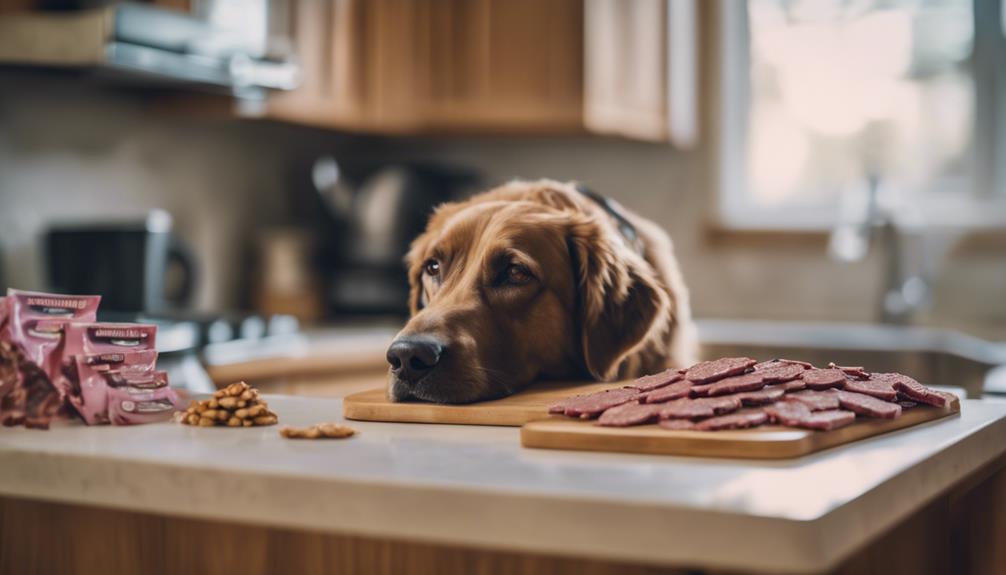
Making Safe Jerky for Dogs
To make healthy beef jerky for your dog, follow these guidelines to ensure a safe and nutritious snack.
Select the Right Cut of Beef
Choose lean cuts of beef, such as top round or flank steak, to minimize fat content and reduce the risk of pancreatitis.
Cooking and Dehydrating
- Cook the beef to an internal temperature of at least 160°F (71°C) to kill bacteria like Salmonella and E. coli.
- Slice the beef into thin strips, about 1/4 inch thick, to facilitate even drying and prevent bacterial growth.
- Dehydrate the beef strips at a low temperature (135°F/57°C) for an extended period (6-12 hours) to preserve nutrients and prevent overcooking.
Storage and Safety
Once the jerky is dry and slightly flexible, store it in an airtight container to maintain freshness and prevent contamination.
Frequently Asked Questions
What Happens if My Dog Eats Beef Jerky?
If your dog eats beef jerky, it can cause serious health problems. Beef jerky can lead to anemia, dehydration, and foodborne illnesses in dogs.
Recognize the signs of beef jerky poisoning, which include lethargy, vomiting, and diarrhea. If you suspect your dog has eaten beef jerky, seek immediate veterinary attention. Early treatment can help prevent serious complications and ensure your pet's safety.
Can I Give My Dog Human Beef Jerky?
Don't share human beef jerky with your dog. Instead, consider these safer options:
Make your own dog treats using healthy ingredients.
Choose dog treats specifically formulated for your pet's flavor preferences.
Human beef jerky often contains ingredients harmful to dogs. By opting for dog-friendly treats, you ensure your pet gets the nutrients they need without risking their health.
Is Jack Link's Beef Jerky Safe for Dogs?
Jack Link's Beef Jerky is not a safe or healthy option for dogs. The ingredients, including high sodium levels, onions, and garlic, can be toxic to dogs, causing anemia and digestive issues. The beef quality is formulated for human consumption, not canine nutritional needs. Additionally, flavor options may contain harmful preservatives and additives. Instead, choose dog-specific, naturally preserved beef jerky treats that cater to your dog's unique needs.
Can Jerky Cause Blockage in Dogs?
Yes, jerky can cause blockage in dogs. If your dog swallows a large piece of beef jerky, it can lead to intestinal obstruction or gastric impaction. This can cause severe digestive issues, including vomiting, diarrhea, and abdominal pain. In severe cases, it can even lead to peritonitis, a life-threatening condition that requires immediate veterinary attention and surgery.
In summary
Beef jerky can be risky for dogs. While some types may be safe, others can be toxic. To keep your dog safe, it's essential to understand the risks and choose healthy options.
The main concerns with beef jerky are:
- High sodium content, which can lead to sodium poisoning
- Added preservatives and seasonings that can be toxic to dogs
- Potential choking hazards from large or hard pieces
To minimize the risks, follow these guidelines:
- Opt for low-sodium, preservative-free beef jerky
- Choose jerky made from whole muscle meat, avoiding products with added ingredients
- Cut the jerky into small, manageable pieces to reduce choking hazards
- Limit the amount of jerky you give your dog, as it should not replace their regular meals
Remember, it's always better to err on the side of caution. If you're unsure about a particular product or your dog's sensitivity, consult with your veterinarian.
- Advertisement -