

How to Stop Shadow Chasing in Dogs
- Advertisement -
As you address your dog's shadow chasing behavior, it's essential to understand that reacting to it can reinforce the behavior, creating a cycle of obsession. Ignoring the behavior and removing attention rewards is vital. Increase mental stimulation through engaging activities and exercises, such as hiding treats or toys, using interactive puzzle toys, and training in scent work or trick training. Consistency is key in removing attention rewards. By redirecting your dog's attention to positive activities, you can stop shadow chasing. By exploring these strategies further, you'll gain a deeper understanding of the underlying causes and effective techniques to manage this behavior.
Key Takeaways
- Remove attention rewards by ignoring the behavior, avoiding eye contact, talking, and touching to stop encouraging shadow chasing.
- Increase mental stimulation through engaging activities and exercises to reduce the likelihood of shadow chasing.
- Teach dogs to respond to basic commands like "sit," "stay," and "leave it" to help them focus on the trainer instead of shadows.
- Use desensitization and counterconditioning to reduce reactivity to moving objects and stimuli that trigger shadow chasing.
- Consult a veterinarian or professional dog trainer to develop a customized behavior modification plan tailored to the dog's specific needs.
Understanding Shadow Chasing Behavior
Shadow chasing is a common behavior in dogs, particularly high-energy breeds like herding or hunting dogs. It's essential to recognize that this behavior is not just a quirk, but a symptom of a deeper issue. Shadow chasing can be a sign of Obsessive Compulsive Disorder (OCD), which can lead to distraction and decreased interaction with the environment.
High-energy dogs, especially those in adolescence, are more prone to shadow chasing. If left unchecked, this behavior can escalate and lead to additional compulsive behaviors. In some cases, it may be related to anxiety disorders, requiring evaluation by a veterinary behaviorist.
Dogs that exhibit shadow chasing behavior often focus on shadows to the point of neglecting other stimuli. This fixation can be a sign of a more serious underlying issue that needs attention. Addressing shadow chasing behavior early on is crucial to prevent complications.
In some cases, a change in diet can help alleviate shadow chasing behavior. Recognizing the signs of shadow chasing and seeking professional help from a veterinary behaviorist is the first step towards helping your dog overcome this obsessive behavior. Remember, OCD can lead to serious consequences if left unaddressed, so it's essential to take your dog's behavior seriously.
Consequences of Rewarding Obsessive Behavior
When you react to your dog's shadow chasing, you unintentionally encourage an obsessive pattern that can be hard to stop. By responding to their excitement or anxiety, you're reinforcing their behavior.
Reacting to shadow chasing associates it with attention and affection in your dog's mind. This creates a cycle where they continue to chase shadows to get a reaction from you. Over time, this can increase obsessive behavior, making it harder to manage and redirect their attention.
Shadow chasing can consume your dog's time, replacing more constructive and healthy activities. By rewarding this behavior, you create an environment that fosters obsession. This can lead to long-term consequences, including decreased socialization, reduced exercise, and increased anxiety.
It's crucial to recognize the consequences of rewarding obsessive behavior and take steps to redirect your dog's attention to positive activities. By doing so, you can break the cycle of shadow chasing and promote a healthier lifestyle for your dog.
To avoid encouraging shadow chasing, ignore the behavior and redirect your dog's attention to a toy or a treat. Consistently reinforce desired behaviors, and your dog will learn to focus on more productive activities.
Behavior Modification Exercises
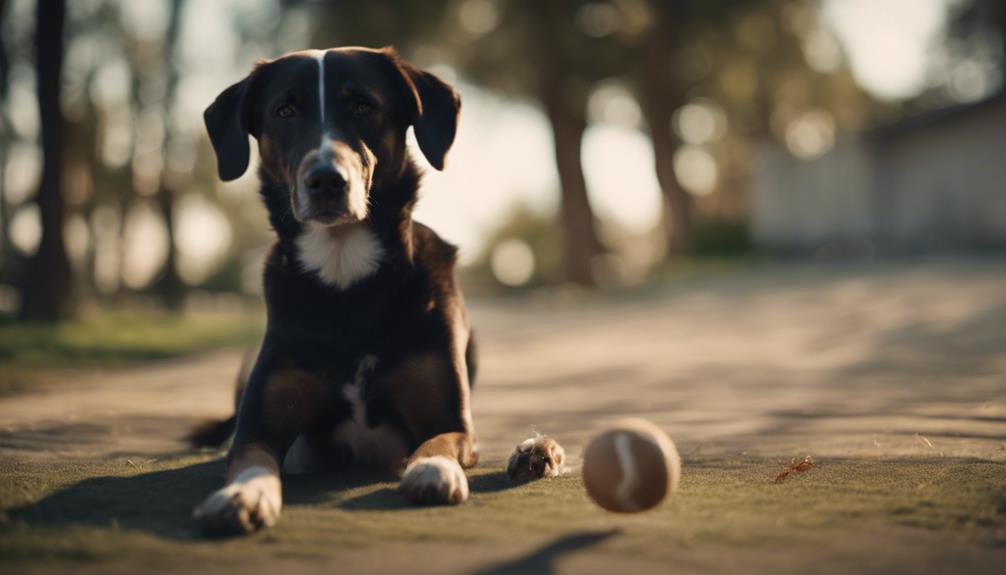
To address your dog's shadow chasing behavior, start by removing attention rewards that inadvertently encourage the behavior. Focus on increasing mental stimulation through engaging activities and exercises instead. This shift will create an environment that discourages obsessive behavior and promotes a healthier, more balanced mindset in your dog.
Remove Attention Reward
Remove the Attention Reward to Stop Shadow Chasing
When your dog starts chasing shadows, avoid reacting to their behavior. Scolding, laughing, or distracting them provides attention, which reinforces the behavior. Instead, remain calm and ignore your dog when they start chasing shadows. Avoid eye contact, talking, and touching. This removes the attention reward, which is essential to stopping the behavior.
Consistency is key. Inconsistent reactions can confuse your dog, making it harder to stop shadow chasing. By ignoring the behavior, you're taking away the reward, making it less likely to happen in the future.
Increase Mental Stimulation
Increase Mental Stimulation
Shadow chasing can be a sign of boredom or excess energy. To redirect your dog's attention, try behavior modification exercises that increase mental stimulation. Engaging your dog's mind reduces the likelihood of them chasing shadows. These exercises are fun, challenging, and improve obedience training.
Try these exercises:
- Hide treats or toys around the house or yard, encouraging your dog to use problem-solving skills to find them.
- Use interactive puzzle toys filled with treats that your dog must figure out how to get out.
- Train your dog in scent work, following specific scents like essential oils or treats.
- Set up obstacle courses with tunnels, cones, or jumps for your dog to navigate.
- Teach your dog new skills, such as "shake" or "roll over," through trick training.
These exercises provide mental stimulation, reducing the likelihood of shadow chasing.
Importance of Professional Guidance
If you've tried behavior modification exercises to stop your dog's shadow chasing, it's essential to know when to seek professional help. Consult your veterinarian to rule out underlying medical issues driving this behavior. A professional dog trainer or behaviorist can create a customized training plan tailored to your dog's specific needs. Their expertise will help you identify the root cause of the problem and develop an effective solution.
Vet Guidance Matters
Your veterinarian is essential in identifying the underlying causes of your dog's shadow chasing behavior. They can help you determine if the behavior is caused by anxiety, boredom, or other factors. With their guidance, you can develop a plan to address the root cause and start working on behavior modification.
Vet guidance matters for several reasons:
- Ruling out medical issues: Your vet will confirm whether your dog's behavior is not caused by an underlying medical issue, such as vision problems or neurological disorders.
- Identifying triggers: Your vet will help you identify what triggers your dog's shadow chasing behavior, such as specific shadows or lighting conditions.
- Developing a behavior modification plan: Your vet will provide a customized plan to help your dog stop chasing shadows, including training exercises and environmental changes.
- Providing support and guidance: Your vet will offer support and guidance throughout the behavior modification process, helping you stay on track and overcome challenges.
- Monitoring progress: Your vet will monitor your dog's progress and adjust the behavior modification plan as needed to ensure the best possible outcome.
Professional Help Needed
Shadow chasing behavior in dogs is a complex issue that often requires professional help. If you've tried to stop your dog from chasing shadows without success, a dog trainer can help. They will identify the underlying causes of this behavior and develop a customized training plan to address it.
Herding breeds, such as Border Collies and Australian Shepherds, are prone to shadow chasing due to their natural instinct to herd and chase. Shadow chasing can be a sign of boredom, anxiety, or excess energy. A professional dog trainer can help you channel your dog's energy into more productive activities and teach you how to redirect their attention away from shadows.
With the guidance of a trainer, you can develop a training plan that's tailored to your dog's specific needs. They will help you identify the underlying causes of shadow chasing and develop strategies to overcome it. Don't hesitate to seek professional help – it's often the key to stopping shadow chasing in dogs for good.
Prevention and Management Strategies
- Advertisement -

Shadow chasing can quickly escalate into a compulsive behavior, making early intervention crucial. Prevention and management strategies are key to preventing complications and reducing the likelihood of obsessive-compulsive disorder (OCD) behaviors in dogs.
To manage shadow chasing, try these strategies:
Provide daily physical exercise of at least an hour to reduce episode frequency and duration. Engage your dog in mentally stimulating activities to satisfy cognitive needs and reduce boredom. Consistency is vital when implementing behavior modification exercises; inconsistency can hinder progress and worsen the behavior.
When your dog starts chasing shadows, leave the room to remove the reward of attention. Minimize exposure to lights and shadows, especially in high-risk areas like hallways or rooms with few distractions.
Redirecting Attention and Exercise
Redirecting your dog's attention away from shadows is a crucial step in reducing shadow chasing episodes. Identify what stimulates their interest and use it to your advantage. For example, if your dog enjoys playing fetch, engage in this activity when you notice them fixating on shadows. This redirection strategy distracts them from the shadows and provides mental and physical exercise.
Engage your dog in activities they enjoy, such as playing fetch, tug-of-war, or going for a walk. Make these activities more appealing than the shadows to create a positive association. Consistency and patience are key when redirecting attention. Recognize the early signs of shadow chasing, such as staring or fixating, and intervene promptly.
To break the habit of shadow chasing, consistently redirect your dog's attention towards more desirable behaviors. This is an ongoing process that requires dedication and commitment. With time and effort, you can help your dog overcome shadow chasing and develop more constructive habits.
Remember to stay calm and patient when redirecting your dog's attention. Avoid scolding or punishing them for shadow chasing, as this can create anxiety and make the problem worse. Instead, focus on providing positive reinforcement and encouragement when they engage in desirable behaviors.
Training Fundamentals and Methods

Incorporating structured training sessions into your daily routine is crucial for addressing shadow chasing in your dog. This foundation is essential for establishing a strong bond and teaching your dog to respond to commands. Consistency and patience are vital in these training sessions, as they help your dog understand what is expected of them.
To tackle shadow chasing, focus on the following essential training fundamentals:
- Teach your dog to respond to basic commands like "sit," "stay," and "leave it."
- Use desensitization and counterconditioning to reduce your dog's reactivity to moving objects and stimuli.
- Practice focus exercises to teach your dog to ignore distractions and concentrate on you.
- Impulse control training helps your dog learn to control their impulses and not chase shadows.
- Reward-based training encourages good behavior and discourages shadow chasing through positive reinforcement.
Avoid using laser pointers, as they can exacerbate the problem. Instead, focus on building a strong foundation of training fundamentals and reinforcing good behavior. With consistent effort and patience, you can help your dog overcome shadow chasing and strengthen your bond with them.
Addressing Shadow Chasing in Deaf Dogs
Training a deaf dog to overcome shadow chasing requires adjustments to your approach. Since verbal commands are ineffective, you'll need to rely on hand signals to communicate with your dog. Consistency and patience are vital, as deaf dogs may require additional methods and time to learn.
Using vibration sensations on remote training collars can be an effective tool. These collars can be adjusted to avoid stressing the dog. High-quality stimulation collars with adjustable vibration settings, such as the EZ900 from e-collar technologies, can be particularly useful. When your dog is distracted by shadows, the vibration sensation can help refocus their attention on you.
Working with a professional trainer experienced in deaf dog training and obsessive behavior is essential. They can help you develop a customized training plan tailored to your dog's needs and learning style. With persistence, patience, and the right tools, you can help your deaf dog overcome shadow chasing and lead a happier, healthier life.
Combining hand signals, vibration sensations, and expert guidance can address shadow chasing in your deaf dog. This approach can also strengthen your bond with them. By understanding the unique needs of deaf dogs and adapting your training methods, you can help your dog overcome this behavior and thrive.
Frequently Asked Questions
Why Does My Dog Keep Chasing Shadows?
Your dog chases shadows due to a combination of factors. Shadows can trigger fear and anxiety in dogs, as they suddenly appear and disappear. This can stimulate their prey instinct, causing them to react. The movement and darkness of shadows can also be visually stimulating, leading to an obsessive reaction.
Additionally, some dogs may have a light obsession, fixating on shadows as a source of fascination. This is because dogs have a natural instinct to chase and investigate unusual visual stimuli.
To address this behavior, try to identify what triggers your dog's shadow chasing and remove or minimize the stimulus. You can also redirect their attention to a toy or treat to distract them from the shadow. With patience and consistency, your dog can learn to ignore shadows and focus on more constructive activities.
How to Stop Border Collies Chasing Shadows?
Border Collies chase shadows due to their natural instincts, which are triggered by visual stimulation. To stop this behavior, try redirecting their focus with training exercises. Use positive reinforcement techniques like clicker training to teach your dog to ignore shadow triggers and engage in alternative activities.
How Do I Get My Dog to Stop Chasing Dogs?
If your dog is chasing other dogs, it's likely due to social cues, breed traits, and environmental factors. Some breeds, like herding dogs, have an instinct to chase. To address this, use training methods that promote calm behavior around other dogs.
Desensitize your dog to the presence of other canines through gradual exposure. Start by exposing your dog to other dogs at a safe distance, then reward calm reactions. Gradually increase the proximity and duration of the exposure. Consistency is key, so make sure all family members are using the same training methods.
Positive reinforcement is essential. Reward your dog with treats, praise, and affection when they remain calm around other dogs. Avoid punishing or scolding your dog for chasing, as this can create anxiety and make the problem worse.
With consistent training and positive reinforcement, your dog can learn to coexist peacefully with other dogs. Be patient and persistent, as it may take time for your dog to adjust to new behaviors.
How to Reverse Laser Pointer Syndrome in Dogs?
To reverse laser pointer syndrome in dogs, you need to address the underlying issues of obsession, anxiety, and fixation. Start by exposing your dog to the laser pointer in a controlled environment, gradually reducing the stimulation to break the trance-like state.
Redirect your dog's attention to alternative stimuli, such as toys or activities, to alleviate the fixation. Consistency and patience are key in helping your dog overcome this compulsion.
Remember to provide a calm and stable environment during the process. Avoid sudden movements or loud noises that might exacerbate the situation. With time and effort, your dog can learn to ignore the laser pointer and focus on more constructive activities.
In summary
To stop your dog from chasing shadows, consistency is crucial. You've started the process by redirecting their attention to more productive activities. Now, it's essential to stay committed and vigilant. With time, patience, and practice, your dog will learn to ignore shadows and focus on you instead.
- Advertisement -