

Effective Service Dog Guide Training Methods
- Advertisement -
When training a service dog, you'll need a multi-faceted approach that includes selecting the right breed, mastering fundamental skills, and task-specific training. Start by choosing a breed that matches your lifestyle and needs, then teach basic obedience commands using positive reinforcement techniques. Socialize your dog to various environments and situations to guarantee calm behavior in public. Break down complex tasks into manageable components and gradually build complexity using reward-based training. As you progress, you'll need to focus on public access and certification to guarantee your dog can assist you in daily life, and exploring these topics further will reveal the full range of possibilities.
Key Takeaways
- Master basic obedience commands like "sit," "stay," and "come" using positive reinforcement techniques such as treats and praise.
- Socialize the dog to various environments, people, and situations to ensure calm and focused behavior in public.
- Establish a clear and consistent training schedule with regular practice and review to prevent regression.
- Use reward-based training methods to encourage desired behaviors and strengthen the bond with the dog.
- Break down complex behaviors into smaller components and gradually build complexity through positive reinforcement techniques.
Understanding Service Dogs
Service dogs are trained canines that assist individuals with disabilities, providing them with the support they need to navigate daily life. Under the Americans with Disabilities Act, service dogs are recognized as service animals, granting them access to public spaces that might otherwise be off-limits.
The training process for service dogs is rigorous and requires a professional trainer. These dogs are taught to perform specific tasks that have a direct impact on their owner's disability. For example, a service dog might be trained to alert its owner to a medical emergency or provide physical support during a seizure.
It's essential to distinguish service dogs from Emotional Support Dogs, which provide comfort and companionship but are not trained to perform specific tasks. Service dogs are protected under the law, allowing them to accompany their owners in public spaces, including restaurants, stores, and transportation.
To work effectively with service dogs, it's vital to understand their role and the training they undergo. Recognizing the unique abilities of these canines enables you to better support individuals with disabilities and promote greater inclusivity in your community.
Selecting the Right Breed
Selecting the right breed for service dog training is crucial. The ideal breed must possess the necessary temperament, intelligence, and trainability to match the individual's lifestyle and needs. Popular breeds for service dog roles include Labrador Retrievers, Golden Retrievers, and German Shepherd Dogs due to their strong work ethic, intelligence, and loyalty. Poodles are also versatile and can be trained for various tasks.
When choosing a breed, consider factors such as energy level, size, and temperament. Breeds with high energy levels, like Border Collies and Australian Shepherds, may be suitable for service dog work that requires high levels of activity. Golden Retrievers, Labrador Retrievers, and Labradoodles are popular breeds due to their intelligence, trainability, and calm temperament.
Any breed can be trained as a service dog if it has a good temperament, is willing to comply, and can remain calm in public. The key is to match the breed's temperament, energy level, and size to the individual's needs and lifestyle. This ensures the service dog is set up for success and provides the necessary support.
Training Fundamentals and Methods

Teaching your dog fundamental skills and methods is the most critical phase of service dog guide training. This phase sets the stage for your dog's future success as a service dog.
To achieve this, focus on the following essential components:
Master basic obedience commands like "sit," "stay," and "come" using positive reinforcement techniques such as treats and praise.
Socialize your dog to various environments, people, and situations to ensure calm and focused behavior in public.
Establish a clear and consistent training schedule with regular practice and review to prevent regression.
Use reward-based training methods to encourage desired behaviors and strengthen your bond with your dog.
Develop clear and consistent communication, including verbal cues and hand signals, to guarantee successful training outcomes.
Task-Specific Training Approaches
Task-specific training approaches involve breaking down complex behaviors into smaller, manageable components and gradually building complexity through positive reinforcement techniques. This type of training allows you to teach your service dog to perform specific tasks tailored to an individual's specific needs and disability.
For example, training a service dog to retrieve a phone involves teaching the dog to retrieve a toy, then a mock phone, and finally the actual phone in various locations and situations. Similarly, training a seizure response dog involves teaching the dog to respond to simulated seizures, gradually increasing the duration and intensity of the simulation.
In autism service dog training, task-specific approaches focus on teaching the dog to provide emotional support and comfort in response to specific cues, such as a child's tantrum or anxiety. To ensure effective task-specific training, work with a professional trainer to develop a structured and systematic training plan with clear goals and criteria for each stage of training. This will ensure your service dog is proficient in performing the specific task and providing targeted support and assistance for individuals with disabilities.
Public Access and Certification
- Advertisement -
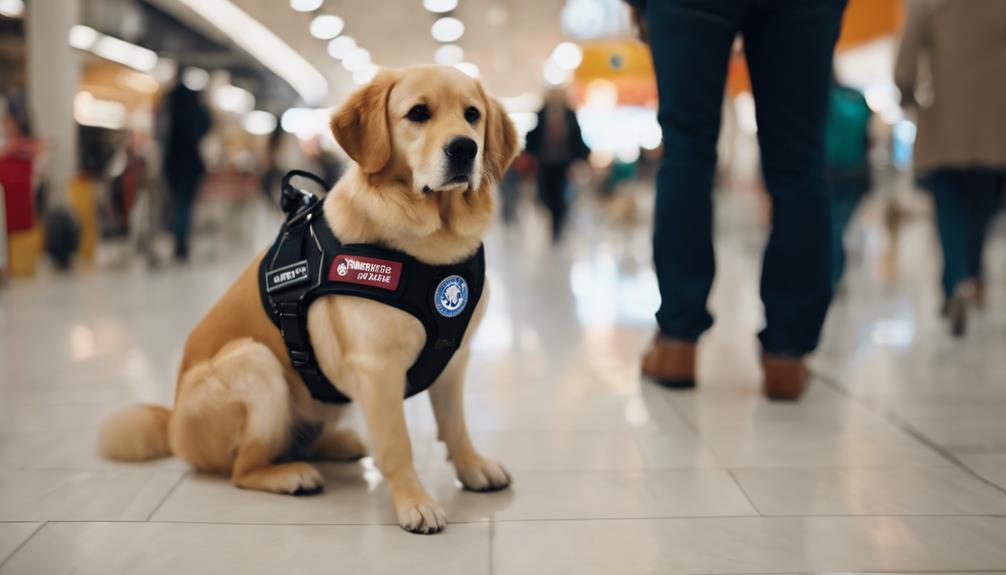
To ensure your service dog can accompany you in public, three key elements must come together: task-specific training, public access, and certification. Now that you've invested time in training your service dog, it's time to focus on public access and certification.
Public access is critical, as it allows your service dog to assist you in various settings. A Public Access Test, typically administered by a professional dog trainer, evaluates your dog's behavior in real-life scenarios. This test assesses their ability to remain calm and focused in the presence of distractions, such as loud noises, strangers, and other animals.
Key aspects of public access and certification include:
Understanding the Americans with Disabilities Act (ADA) is crucial, as it provides the foundation for service dog owners' rights. However, the ADA does not require Service Dog Certifications.
Fake service dogs are a growing concern, and legitimate certification is essential to distinguish trained service dogs from impostors.
Collaborating with a professional dog trainer ensures your service dog receives the necessary training and socialization.
Public access training is an ongoing process, requiring continuous practice and reinforcement to maintain your dog's access skills.
Researching and exploring various Service Dog Certifications, such as those offered by Assistance Dogs International or the International Association of Assistance Dog Partners, is vital to understanding your options.
Frequently Asked Questions
What Are the Training Methods for Guide Dogs?
Training guide dogs involves a combination of Positive Reinforcement, Socialization Techniques, and Task Training. Puppies start by learning Basic Commands and Clicker Training. As they progress, they receive Advanced Training in various environments. Breed Selection is crucial, and Puppy Raising programs help socialize them. As they mature, they undergo Public Access training, preparing them for life as a guide dog.
In more detail, Breed Selection focuses on choosing breeds with the right temperament and physical characteristics for guiding. Puppy Raising programs help socialize puppies by exposing them to different sights, sounds, and experiences. Basic Commands and Clicker Training teach puppies to respond to commands and associate rewards with good behavior. Advanced Training takes place in various environments, such as streets, parks, and public transportation, to prepare dogs for real-life situations. Public Access training teaches dogs to navigate through crowded areas and respond to commands in distracting environments.
What Is the Best Method of Dog Obedience Training?
Positive reinforcement is the most effective method of dog obedience training. This approach focuses on rewarding good behavior with treats, praise, and affection. Clicker training, a subset of positive reinforcement, promotes rapid learning and strong bonds. By using a reward system, you build trust and confidence in your dog.
To get started, set clear goals and establish a consistent routine. Break complex behaviors into smaller steps and reward each achievement. Use positive reinforcement to teach basic commands, house manners, and leash walking. Consistency is crucial, so be patient and clear in your communication.
What Factors Are Associated With Success in Guide Dog Training?
Several factors contribute to success in guide dog training. Breeding selection is crucial, as certain breeds like Golden Retrievers and Labradors excel due to their high intelligence and suitable temperament. Socializing puppies between 8-11 weeks old is also vital. Handler experience and training duration play key roles, as do consistency, positive reinforcement, and clear communication. Additionally, individual temperament, breed characteristics, and a strong bond between dog and handler are essential for successful training.
What Are the First Five Things That Need to Be Taught to Your Service Dog Candidate?
Teaching your service dog candidate requires a solid foundation. Start with puppy socialization to build confidence and reduce fear. This is crucial for a well-adjusted service dog.
Next, teach basic commands like "sit" and "stay". These obedience skills are essential for a service dog's training.
Crate training comes third. This helps with house etiquette, impulse control, and reduces separation anxiety.
Fourth, focus on leash manners. Teach your dog to walk by your side without pulling on the leash. This is vital for a service dog's safety and effectiveness.
Lastly, work on canine communication. This involves recognizing and responding to your dog's body language and vocal cues. This lays the groundwork for a successful service dog partnership.
In summary
Training a service dog requires a structured approach to build trust and a strong bond between you and your dog. Each training session should focus on achieving specific goals, overcoming obstacles, and mastering tasks. By following effective service dog guide training methods, you can establish a reliable and supportive partnership with your dog.
A well-trained service dog provides invaluable assistance and confidence in navigating daily life. To achieve this, it's essential to set clear goals, use positive reinforcement techniques, and gradually increase training complexity. Consistency, patience, and positive rewards are key to developing a strong and loyal service dog.
By breaking down the training process into manageable steps and staying committed to your training plan, you can create a strong foundation for a successful service dog partnership.
- Advertisement -