

Effective Fear Aggression Treatment for Dogs
- Advertisement -
You're likely searching for effective fear aggression treatment for your dog because one in five canines are affected by this common behavioral issue, which can manifest in growling, snapping, and biting. Fear aggression is often triggered by traumatic past experiences, and recognizing the warning signs of fear is crucial in addressing this behavior. A combination of desensitization techniques and medication options can be particularly effective in managing a dog's behavior. Working with dog trainers or seeking professional help provides personalized guidance on implementing reward-based training. By understanding the underlying causes of fear aggression, you'll be well on your way to helping your dog overcome this issue and develop a more confident and calm demeanor.
Key Takeaways
- Desensitization techniques, involving gradual exposure to feared stimuli, are a crucial component of effective fear aggression treatment in dogs.
- A combination of desensitization, positive reinforcement training, and medication can be particularly effective in managing fear aggression in dogs.
- Consistency, patience, and a calm demeanor are essential when working with fearful dogs to help them overcome fear aggression.
- A veterinarian's guidance is necessary to rule out underlying medical issues and develop a personalized treatment plan for fear aggression.
Understanding Fear Aggression
When you notice your dog exhibiting aggressive behavior, such as growling or snapping, it's essential to understand that this reaction often stems from a deep-seated fear that drives their actions.
This fear-based response is a common issue in dogs, affecting one in five canines, regardless of breed or genetics. Fear aggression is a learned behavior, typically triggered by traumatic past experiences, and is distinct from other forms of canine aggression.
As a dog owner, it's vital to recognize that your dog's aggressive behavior isn't a deliberate attempt to be aggressive, but rather a response to a perceived threat to their safety or security.
This underlying fear can manifest in various ways, from growling to biting, and can be caused by numerous factors, including health issues, genetics, and upbringing.
It's essential to understand that your dog may have learned that aggression is an effective strategy to increase distance from a threat, leading to fear aggression becoming a defense mechanism.
Causes and Triggers of Fear
Your dog's fear, which drives their aggression, can stem from a combination of genetic, environmental, and experiential factors that have shaped their perception of the world. This complex interplay can lead to fear and anxiety, causing your dog to react aggressively in certain situations.
Understanding the underlying causes of your dog's fear is vital in addressing their fear aggression.
Genetic predispositions can play a role, with some breeds being more prone to fear-based behaviors. Environmental factors, such as loud noises or chaotic environments, can also contribute to your dog's fear response. Additionally, past experiences, like traumatic events or negative social interactions, can shape their perception of the world and lead to aggressive behaviors.
It's essential to recognize the warning signs of fear in your dog, such as changes in body language or avoidance behaviors. When your dog feels threatened or scared, they may exhibit aggressive reactions, like growling or snapping.
Signs and Symptoms of Fear
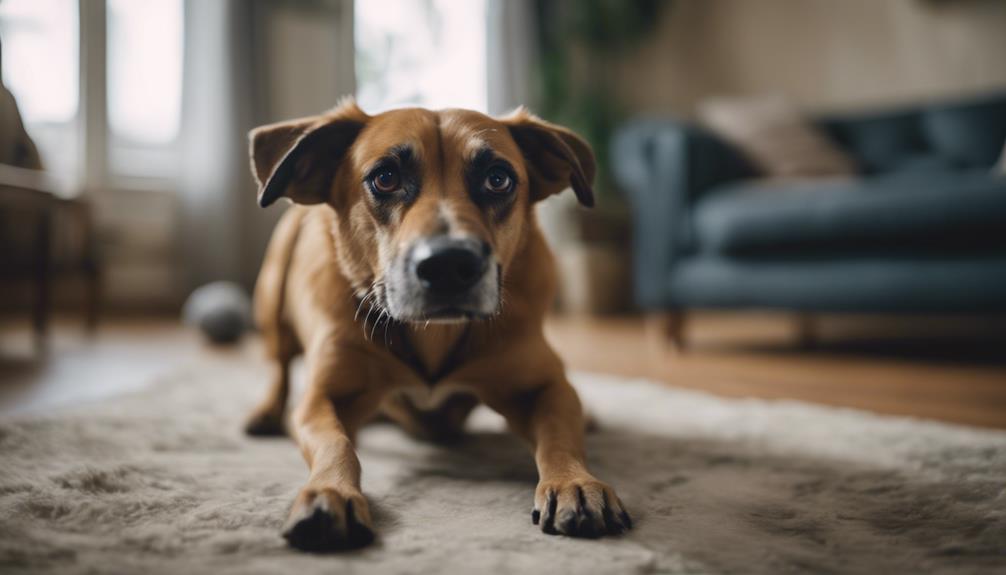
Recognizing the physical and behavioral cues of fear in your dog is essential, as they often precede aggressive reactions. As a responsible dog owner, it's necessary to be aware of the signs and symptoms of fear in your dog to prevent fear aggression.
Dogs exhibit fear through various physical and behavioral cues, which can be subtle or overt.
Common signs of fear in dogs include a tail tucked between the legs, lowered posture, avoidance behaviors, and panting. Your dog may also display aggressive behavior, such as growling, snapping, or biting, as a result of fear.
It's imperative to differentiate between fear-based aggression and other forms of canine aggression. Fearful dogs often display a range of body language cues, including a lowered head, avoiding eye contact, and a tense, stiff posture.
If you notice your dog exhibiting these signs, it's necessary to remain calm and composed. Avoid punishing or scolding your dog, as this can exacerbate the fear and aggression.
Instead, focus on providing a safe and comforting environment, allowing your dog to feel secure and relaxed. By recognizing the signs and symptoms of fear in your dog, you can take proactive steps to address the underlying causes of fear and aggression, ultimately reducing the risk of fear-based aggressive responses.
Diagnosis and Treatment Options
To accurately diagnose and treat fear aggression in your dog, a veterinarian will typically start by collecting information for a behavioral history, including your dog's sex, age, and breed. They'll also ask about the circumstances leading up to any aggressive episodes, as well as any changes in behavior after the incident.
This information helps them understand the underlying causes of your dog's fear aggression.
A physical examination, including standard diagnostic tests, may also be performed to rule out underlying medical issues that could be contributing to the fear aggression.
For instance, your veterinarian may want to rule out underlying medical conditions such as pain or hypothyroidism.
Once the diagnosis is confirmed, a treatment plan can be developed.
This may involve working with a professional dog trainer to implement positive reinforcement techniques, such as desensitization and obedience training.
Desensitization involves exposing your dog to the stimuli that trigger fear aggression in a controlled, gradual manner, while rewarding calm behavior with treats and praise.
Regular obedience training can also help mitigate fear and anxiety, reducing the likelihood of aggression.
In some cases, anti-anxiety or antidepressant medications may be prescribed to calm your dog and reduce anxiety.
Effective Treatment and Management
As you work to help your dog overcome fear aggression, you'll need to develop a thorough treatment plan that incorporates multiple strategies.
You'll find that a combination of desensitization techniques and medication options can be particularly effective in managing your dog's behavior.
Desensitization Techniques
You can help your dog overcome fear aggression by gradually exposing them to the feared stimuli in a controlled, gentle manner, starting from a distance or with a low intensity that doesn't trigger an aggressive response.
This desensitization technique allows your dog to associate the stimuli with positive experiences, reducing their anxiety and fear.
Working with dog trainers or seeking professional help can provide you with personalized guidance on implementing reward-based training.
As your dog becomes more comfortable, you can increase distance, intensity, or duration of the exposure.
It's essential to monitor your dog's body language, avoiding eye contact if it seems to increase their stress.
Create a safe space for your dog to retreat to when feeling overwhelmed.
With patience and consistency, desensitization techniques can help your dog learn to cope with fear-inducing stimuli, leading to a more confident and calm demeanor.
Medication Options
In cases where desensitization techniques alone aren't enough to alleviate fear aggression, your veterinarian may recommend exploring medication options to help calm your dog and reduce anxiety.
Antianxiety or antidepressant medications, such as fluoxetine, can be employed in some cases to calm the patient and reduce fear aggression, but with caution and under the guidance of a veterinarian.
It's essential to remember that medications for psychological imbalances take several weeks to show effectiveness, and your veterinarian needs to know all medications your dog is taking.
Dosages of medications vary based on your dog's specific response, and your veterinarian should be consulted to determine the appropriate dosage and treatment plan.
Medication may be necessary to manage anxiety and fear, but it should be used in conjunction with behavioral training and desensitization techniques to address the underlying causes of fear aggression.
Regular veterinary check-ups are necessary to monitor your dog's response to medication and adjust the treatment plan as needed to guarantee your dog's safety and well-being.
Recovery and Progress Timeline
As you work with your dog to overcome fear aggression, it's essential to understand the recovery and progress timeline.
You'll want to know when to expect significant improvements and how long it may take for medication to take effect.
Recovery Timeline Expectations
Your dog's recovery timeline for fear aggression treatment will unfold uniquely, with significant progress emerging within a few months of consistent training and management.
- Advertisement -
As you work with a professional dog trainer or behaviorist, you can expect noticeable improvements in your dog's behavior and reduced fear responses within 2-3 months.
With continued training and management, most dogs can achieve significant recovery within 6-12 months, although some may take longer or require ongoing support to maintain progress.
Factors such as your dog's age, breed, and individual temperament can influence the recovery timeline.
Some dogs may respond more quickly to treatment than others.
It's essential to remember that every dog is different, and patience and consistency are key to achieving positive results.
Medication Effectiveness Timeline
When incorporating medication into your dog's fear aggression treatment, you can expect noticeable improvements in their behavior within 4-6 weeks, with the full therapeutic effect typically taking 8-12 weeks to achieve.
It's essential to remember that every dog responds differently to medication, and your veterinarian will work closely with you to monitor progress and adjust dosages as needed.
Medications for psychological imbalances typically take several weeks to show effectiveness, with noticeable improvements seen around 4-6 weeks into treatment. Dosages may need to be adjusted every 2-4 weeks to achieve peak results.
It's pivotal to inform your veterinarian about all medications your dog is taking to guarantee safe and effective treatment. Regular check-ins with your veterinarian are indispensable to monitor progress and adjust medication as needed.
With patience and consistency, you can expect to see significant improvements in your dog's fear aggression response over time.
Managing Environments and Stress
By taking steps to manage your dog's environment, you can substantially reduce stress and anxiety, creating a sense of security and control that's essential for treating fear aggression.
A calm environment can help your dog feel more secure and in control, which is vital in reducing their aggression. To achieve this, it's pivotal to identify and mitigate triggers that contribute to your dog's aggression.
By creating a safe space and avoiding known triggers, you can prevent escalation and reduce your dog's aggression.
Consistency and clear communication are key in training and management. A predictable environment can help reduce stress and anxiety in dogs, making them more receptive to treatment.
Structured socialization is also highly beneficial, involving controlled meet-and-greets in neutral settings to help your dog build confidence and trust.
Gradual exposure to feared stimuli can help reduce fear and anxiety in dogs. However, it's essential to do this in a controlled and gentle manner to avoid exacerbating the problem.
Cost and Resources for Treatment
Treating fear aggression in dogs can be a pricey venture, requiring a significant investment of time, money, and resources. As you ponder treatment options for your dog, it's essential to factor in the financial expenses involved.
Working with a certified dog trainer can be pricey, with prices ranging from $30 to $100 per session, but it's often necessary for effective fear aggression treatment.
When budgeting for treatment, don't forget to ponder the following:
- Veterinary care and potential medication costs, which can range from $50 to $200 per visit
- Pet insurance premiums, which can range from $20 to $100 per month, depending on the provider and coverage
- Online resources, such as articles and training guides, which can be helpful and often free or low-cost
- The cost of working with a professional trainer, which can be a substantial investment
While the costs may seem overwhelming, remember that investing in your dog's treatment is vital for their well-being and your own.
Prevention and Early Intervention
You can substantially reduce the likelihood of fear aggression in your dog by focusing on prevention and early intervention, as it allows you to shape their social skills and coping mechanisms from an early age. By identifying temperament issues early on, you can mold your dog's social skills and coping mechanisms in a positive direction, reducing the risk of fear aggression.
Creating a schedule that incorporates consistent socialization practices is vital for laying the groundwork for a well-behaved pet. Socialization between 8-16 weeks of age is particularly critical, as it allows puppies to form positive associations with new experiences and environments. Observing your dog's reactions during socialization is essential for understanding their comfort thresholds and preventing fear aggression.
Teaching transferable skills, such as 'drop it' or 'leave it,' in a rewarding fashion can replace possessive tendencies with cooperative behavior and reduce fear aggression. By doing so, you can help your dog develop positive coping mechanisms and social skills.
Consistent socialization and early intervention can markedly reduce the likelihood of fear aggression in your dog. By focusing on prevention and early intervention, you can set your dog up for success and create a strong foundation for a lifetime of positive behavior. Remember, prevention is key in managing fear aggression, and identifying temperament issues early on provides a unique window of opportunity to shape your dog's social skills and coping mechanisms in a positive direction.
Frequently Asked Questions
How to Treat Fear-Based Aggression in Dogs?
When treating fear-based aggression in dogs, you'll need to identify and address fearful triggers that spark aggressive behaviors.
Socialization techniques and environmental changes can help reduce anxiety.
Counterconditioning methods, such as gradual exposure, can desensitize your dog to triggers.
Positive reinforcement training rewards calm behavior, while redirected attention helps refocus their energy.
How Do You Desensitize a Fear Aggressive Dog?
You'll want to desensitize a fear-aggressive dog by gradually exposing them to fearful triggers in calm environments, using gentle handling and slow movements.
Soft voices and peaceful interactions help build trust.
Start below their threshold, where they show signs of fear or aggression, and reward relaxed behavior.
Gradually increase exposure, always maintaining a peaceful atmosphere, to help them associate the trigger with positive outcomes.
What Is the Best Calming Aid for Aggressive Dogs?
What's the secret to calming your aggressive dog?
When it comes to choosing the best calming aid, you're spoiled for choice!
Calming pheromones, like Adaptil, can mimic a mother's soothing presence.
You can also try calming treats, natural supplements, or aromatherapy oils to reduce anxiety.
Calming collars, wraps, and gentle petting can provide comfort, while soothing music and calming toys can distract from triggers.
Experiment to find what works best for your furry friend.
How Do You Build Confidence in a Fear Aggressive Dog?
When building confidence in a fear-aggressive dog, you'll want to focus on fearless interactions, calm exposure, and a gentle approach.
Positive reinforcement and socialization techniques can help boost confidence, while emotional support and trust building are vital.
Gradually expose your dog to new situations, starting with small steps, and reward desired behaviors.
Conclusion
As you navigate the complex landscape of fear aggression treatment for your dog, remember that patience, persistence, and a tailored approach are key.
Like a puzzle, each piece – understanding, diagnosis, treatment, and management – must fit together seamlessly to reveal progress.
By embracing this thorough approach, you'll be well on your way to helping your dog overcome fear aggression, and in doing so, strengthen the bond you share.
- Advertisement -