

Dog Pack Behavior Management Explained
- Advertisement -
As you explore dog pack behavior management, you'll discover that debunking dominance theories is key to understanding your dog's behavior. Wolf pack behavior reveals a cooperative, parental structure, not a dominant hierarchy. Effective training and obedience rely on clear communication, consistency, and positive reinforcement. By establishing a clear pack structure, you'll minimize stress and anxiety caused by unclear roles and boundaries. Recognizing pack behavior issues is vital to addressing underlying problems that can lead to aggression, fear, and anxiety. By continuing to explore these principles, you'll decipher the secrets to a harmonious relationship with your canine companion and a well-balanced household.
Key Takeaways
- Effective dog pack behavior management involves clear communication, consistency, and positive reinforcement to establish a clear pack structure and minimize stress.
- A clear pack structure should resemble a ladder, with adults at the top, followed by teenage children, then the dog, and finally young children.
- Ignoring pack behavior issues can lead to aggression, fear, and anxiety in dogs, causing devastating effects on the household and human-dog bond.
- Consistency in commands, hand signals, tone of voice, and body language helps dogs understand their role and reduces behavioral problems.
Debunking Dominance Theories
As you explore into the domain of dog behavior, it's essential to separate fact from fiction, and one of the most pervasive myths to debunk is the dominance theory, which has been widely disproven by scientific research.
This theory suggests that dogs are trying to dominate their human pack, leading to aggressive behavior. However, this notion is far from the truth.
In reality, dogs don't aim to be the dominant force in the pack. Rather, they learn by evaluating what works and what doesn't in each interaction.
The idea that dogs are trying to take over the pack or be in charge is a myth with no scientific backing. Wolf biologists have also found that alpha wolves don't control through aggression and relentless management, making this theory unsuitable for dogs as well.
Punishment, deference, and fear-based training methods, often rooted in dominance theories, don't foster a mentally, emotionally, and behaviorally sound dog.
Instead, positive reinforcement and clear interactions are recommended. By understanding that dogs respond to clear communication and consistent boundaries, you can develop a stronger, more respectful bond with your furry friend.
It's time to shift away from outdated dominance theories and towards evidence-based training methods that prioritize your dog's well-being and happiness.
Wolf Pack Behavior Insights
Observing wolf pack behavior reveals a stark contrast to the dominant hierarchy model, with leaders taking a more parental role in guiding and caring for their pack members. Instead of dominating their pack, wolf pack leaders prioritize the well-being of their members, demonstrating a cooperative pack structure.
When traveling, seasoned pack leaders survey from near the back, allowing others to take the lead, rather than asserting dominance. In times of scarcity, they even let the young eat first, showcasing their parental instincts.
This behavior debunks the outdated dominance hierarchy model, which suggests that pack leaders rule through aggression and fear. In reality, wolf pack behavior is characterized by cooperation, mutual respect, and a lack of aggression towards each other.
Wolf offspring mature, leave the pack, find a mate, and start a family of their own, rather than competing to overthrow the pack leader. This peaceful shift of power is a demonstration to the effective pack behavior and leadership of the wolf pack.
As you explore further into wolf pack behavior, you'll discover that the role of the pack leader is more akin to a parent, guiding, teaching, and caring for their pack members.
This understanding can inform your approach to dog pack behavior management, helping you create a more harmonious and cooperative pack structure. By recognizing the importance of mutual respect and cooperation, you can foster a more positive and productive relationship with your dogs.
Common Misconceptions About Dogs
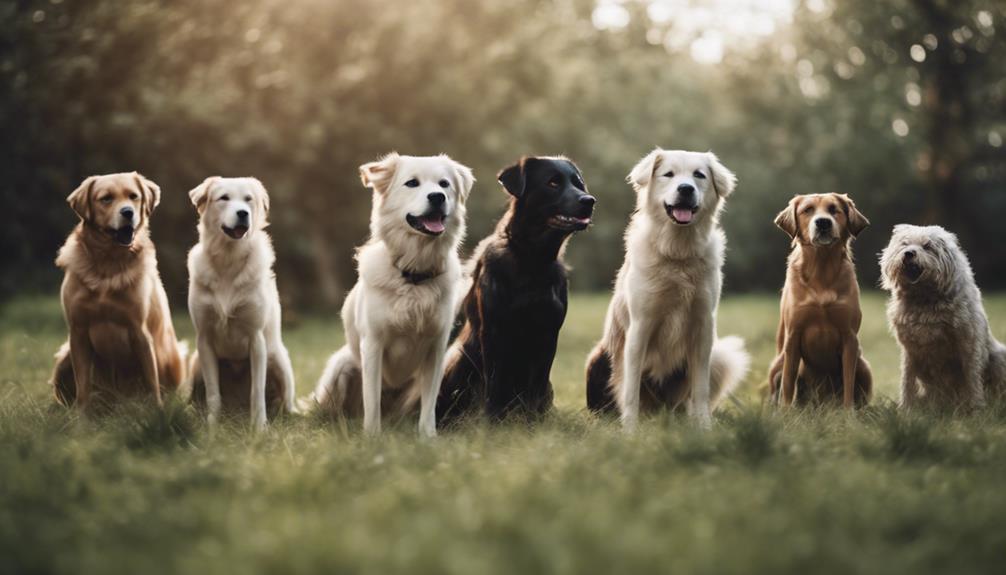
As you work to manage your dog's pack behavior, it's essential to separate fact from fiction.
You may have heard that dominant dogs need to be 'put in their place' or that a tired dog is a well-behaved dog, but these myths are just that – myths.
Debunking Dominance Myths
Let's shed some light on the outdated notion that dogs are driven by a desire to dominate their human family members, a concept that has been disproven by scientific research and observation. You may have been led to believe that your furry friend is plotting to take over the household, but that's just not the case.
Wolf biologists have refuted the theory that alpha wolves control through aggression and relentless management, making it an outdated and unsuitable concept for understanding dog behavior.
Dominance hierarchy-based training methods assume dogs are committed to a battle of supremacy with family members, which is incorrect and not supported by scientific study.
Trainers advising families to take charge of the pack by eating first, walking through doors first, occupying a higher position, and pinning dogs into submission are ignoring current scientific research.
Decades of observation by wildlife biologists of free-ranging wolf packs have revealed that wolf pack leaders don't take the lead position, but rather survey from near the back of the pack when traveling.
It's time to move away from these myths and focus on building a strong, loving relationship with your dog based on mutual respect and trust. By doing so, you'll be able to create a harmonious household where everyone thrives.
Wolf Pack Behavior
Decades of research on wolf packs have shattered the myth that alpha wolves lead from the front, revealing a more nuanced understanding of their social dynamics.
You might assume that alpha wolves dominate their pack members, but in reality, they prioritize their well-being. When traveling, seasoned leaders survey from near the back of the pack, rather than taking the lead position.
During times of scarcity, they even allow the young to eat first, demonstrating a selfless approach to leadership. Wolf behavior experts describe the role of wolf leaders as parents guiding, teaching, and caring for their pack members, rather than dominating and controlling them through aggression and fear.
This cooperative nature of wolf pack dynamics is essential to their survival. By understanding how wolf packs function, you can better appreciate the social dynamics of dogs and develop more effective management strategies.
Effective Training and Obedience
As you work on managing your dog's pack behavior, you'll need to focus on effective training and obedience techniques.
To achieve this, you'll want to prioritize clear communication, positive reinforcement methods, and a consistent training approach.
Clear Communication
By harnessing the power of clear communication, you can effectively train and obey your dog, fostering a strong bond built on trust, understanding, and mutual respect.
As a dog owner, it's essential to understand that clear communication is key to successful training and obedience. This is especially important in a family setting, where multiple people may be interacting with the dog.
Effective communication involves several key elements:
Consistency: Use consistent commands and hand signals to avoid confusing your dog.
Clarity: Use a clear and firm tone of voice when giving commands.
Body Language: Be aware of your body language and guarantee it's consistent with your verbal cues.
Positive Reinforcement: Reward desired behaviors with treats, praise, and affection.
Positive Reinforcement Methods
Positive reinforcement methods are a powerful tool for effective training and obedience, allowing you to tap into your dog's natural desire to please and learn.
By focusing on rewarding desired behaviors, you can encourage good habits and create a strong bond with your dog.
Unlike punishment-based methods, positive reinforcement fosters a mentally, emotionally, and behaviorally sound dog.
This approach is grounded in scientifically-based principles of operant conditioning and classical conditioning, making it a reliable and effective way to teach your dog new skills.
With positive reinforcement, you can teach your dog obedience commands, socialization skills, and even address underlying behavioral issues.
Research has shown that dogs can learn to watch a person's face on cue, helping to prevent behavior problems, and comprehend human pointing gestures, making them more receptive to training.
Consistent Training Approach
To achieve effective training and obedience, it's essential to establish a consistent training approach that sets clear expectations and boundaries for your dog.
This helps to establish a clear pack structure, where you're the pack leader, and your dog understands its role and responsibilities.
A consistent training approach involves:
- Advertisement -
Positive Reinforcement: Using rewards and praise to encourage desired behaviors.
Clear Communication: Clearly conveying what you want your dog to do, without confusion or ambiguity.
Boundary Setting: Establishing clear rules and limits, and consistently enforcing them.
Individualized Training: Tailoring your training approach to your dog's breed, temperament, and individual needs.
Recognizing Pack Behavior Issues

Recognizing pack behavior issues in your household is the first step towards addressing the underlying problems that can lead to aggression, fear, and anxiety in your dogs. As a dog owner, it's essential to identify the signs of pack behavior issues to prevent them from escalating into more severe problems.
Failure to establish groundwork, adding dogs to the family pack, or moving to a new home can exacerbate these issues.
You may notice that your dogs exhibit aggression towards each other or strangers, display fear or anxiety in certain situations, or engage in fights with other dogs in the household. These behaviors can be indicative of underlying pack behavior issues.
If left unaddressed, these issues can worsen over time, leading to a breakdown in the human-dog bond and a decline in your dog's overall well-being.
Recognizing pack behavior is vital to addressing underlying issues, as it can lead to various behavioral problems in dogs, including aggression towards other dogs or humans, resource guarding, and territorial behavior.
By acknowledging these issues, you can take the necessary steps to establish a clear pack structure and provide guidance on how to address underlying behavioral issues. Consider consulting a professional dog trainer or behaviorist to help you identify and address pack behavior issues in your household.
Consequences of Ignoring Pack Behavior
Ignoring pack behavior consequences can have devastating effects on your household, putting both humans and animals at risk of physical and emotional harm. As a responsible dog owner, it's essential to acknowledge the importance of addressing pack behavior issues promptly. Failure to do so can lead to severe consequences that can impact the well-being of both humans and dogs.
Unaddressed pack behavior can lead to aggressive dogs that may attack humans or other animals, resulting in injuries or fatalities.
Ignoring pack behavior can cause stress and anxiety, leading to a decline in the human-dog bond, which is essential for a happy and healthy relationship.
Unchecked pack behavior can result in physical and mental health problems, making dogs unhappy and unfulfilled.
If left unchecked, pack behavior issues can escalate into severe conflicts between dogs in the household, leading to fights and even death.
Establishing a Clear Pack Structure

By setting clear boundaries and rules, you're taking the first step in establishing a clear pack structure that helps your dog feel secure and reduces the likelihood of behavioral problems. This structure should resemble a ladder, with adults at the top, followed by teenage children, then the dog, and finally young children.
As the pack leader, it's essential to assert your dominance in a calm and gentle manner, guaranteeing your dog understands their role within the family.
A clear pack structure helps to minimize stress and anxiety caused by unclear roles and boundaries. When family members understand their position within the pack, they can work together to provide a stable and secure environment for your dog.
This, in turn, reduces the likelihood of behavioral problems, such as resource guarding, territorial behavior, and fear or anxiety in certain situations.
As you work to establish a clear pack structure, remember that consistency and patience are key. Certify all family members are on the same page, using positive reinforcement techniques to reinforce desired behaviors.
If you're struggling to establish a clear pack structure or address underlying behavioral issues, consider seeking guidance from a professional dog trainer or behaviorist.
With their expertise, you can develop a tailored training plan that meets your dog's unique needs, leading to a stronger, more loving bond between you and your furry friend.
Implementing Pack Structure Successfully
Now that you've established a clear pack structure, it's time to implement it successfully by setting clear expectations and boundaries for your dog.
This will help your dog understand its role within the family and reduce the likelihood of behavioral issues. To achieve this, you must be consistent and calm in your interactions with your dog, providing a sense of security and stability.
Establish a routine: Dogs thrive on routine, so create a schedule for feeding, exercise, and playtime to provide a sense of structure and predictability.
Set clear boundaries: Clearly communicate what's and isn't acceptable behavior, and be consistent in enforcing these boundaries.
Provide positive reinforcement: Reward desired behavior with treats, praise, and affection to encourage good habits.
Be patient and calm: Avoid reacting to misbehavior with anger or frustration, as this can create anxiety and undermine your authority.
Frequently Asked Questions
How Does Dog Pack Hierarchy Work?
Dog pack hierarchy is based on Canine Dominance, where dominant dogs lead submissive ones.
Hierarchy Dynamics come into play as dogs establish roles, with alphas making decisions and omegas deferring.
Pack Instincts drive this social structure, ensuring stability and cooperation within the group.
How Does Pack Behavior Work?
Imagine a orchestra conductor guiding musicians to create harmony; similarly, pack behavior works through social learning, where dogs observe and adapt to their environment.
As descendants of wolves, dogs exhibit instinctual behavior, responding to cues and establishing a hierarchy.
You'll notice that pack behavior isn't about dominance, but rather cooperation and mutual respect.
What Is Pack Behavior in Dogs?
Fundamentally, pack behavior in dogs is a social structure that stems from canine instincts inherited from wolf ancestors.
Dogs learn to thrive in groups through social learning, adapting to hierarchies and roles.
This behavior is fundamental to their nature, driving them to form close bonds and communicate effectively within their pack.
How to Break Pack Mentality in Dogs?
To break pack mentality in dogs, you'll need to focus on individual training and separation from the group.
Start by addressing separation anxiety, which can exacerbate pack behavior. Gradually increase alone time, rewarding calm behavior.
Next, work on individual training sessions, teaching basic obedience commands.
Conclusion
You've learned that pack behavior management isn't about dominating your dogs, but about establishing a clear structure where they can thrive.
Ironically, by relinquishing the need for dominance, you'll become the leader your dogs need.
By recognizing and addressing pack behavior issues, you can prevent conflicts and create a harmonious household.
Remember, a well-structured pack isn't about being the 'alpha,' but about being a responsible, informed owner who provides guidance and care.
- Advertisement -