

Can Dogs Eat Melon
- Advertisement -
You can safely feed your dog melon in moderation, as long as you remove the seeds and rind, introduce it gradually, and monitor their response to avoid digestive upset. Melon can be a nutritious snack option rich in vitamins, minerals, and antioxidants, supporting healthy digestion and hydration. However, it's vital to take precautions to prevent potential health concerns, such as gastrointestinal upset and allergic reactions. By following these guidelines, you can provide your dog with a healthy and invigorating treat, and exploring further will help you better understand the benefits and risks of feeding melon to your furry friend.
Key Takeaways
- Dogs can eat melon in moderation, but remove seeds and rind to avoid obstruction or digestive problems.
- Introduce melon gradually to prevent upsetting the digestive system, and monitor the dog's response.
- Melon provides a nutritious snack option rich in vitamins, minerals, and antioxidants, supporting overall health.
- However, eating melon can cause gastrointestinal upset if consumed in large quantities, especially in dogs not accustomed to high-water content foods.
- Consult a veterinarian if unsure about introducing melon into the dog's diet to ensure a balanced and healthy nutrition plan.
Can Dogs Eat Melon Safely?
Dogs can eat melon safely, but with precautions. Melons like watermelon are okay for dogs to eat in moderation. However, their high sugar content is a concern. Dogs don't need a lot of sugar in their diet, and too much can cause digestive issues.
Watermelon is particularly high in sugar and water, making it a refreshing but potentially problematic snack. Remove the seeds and rind, as they can cause obstruction or digestive problems.
To introduce melon into your dog's diet, do it gradually to avoid upsetting their digestive system. Start with small amounts and monitor their response. If you notice signs of discomfort, such as diarrhea or vomiting, stop feeding them melon immediately.
Benefits of Feeding Melon to Dogs
Feeding melon to your dog provides a nutritious snack option that is rich in vitamins, minerals, and antioxidants. The high water content in melon helps with hydration and supports healthy digestion. By adding melon to your dog's diet, you can increase their vitamin intake and promote overall health. Melon is particularly rich in vitamin A and C, potassium, and fiber, making it a healthy addition to their meals.
Nutrient-Rich Snack Option
Melon is a nutritious snack option for dogs, especially during hot summer months. It's rich in vitamins, minerals, and antioxidants that provide various health benefits. One of melon's key advantages is its high water content, making it an excellent way to keep your dog hydrated and refreshed. With around 90% water content, melon is perfect for hot summer days.
When serving melon to your dog, choose a ripe and fresh one, and remove any seeds or rinds. This is a safe and healthy treat that can be used as a reward or simply as a nutritious snack. Incorporating melon into your dog's diet provides a tasty and nutritious snack that supports their overall health and wellbeing.
Hydration and Digestion Benefits
Melon's high water content makes it an excellent snack for keeping your dog hydrated, especially during hot summer days. This is particularly crucial for dogs that are prone to overheating or engage in high-energy activities.
In addition to its hydration benefits, melon is a good source of fiber, which supports healthy digestion. Fiber can help prevent common issues like constipation and support a balanced diet. This can be especially beneficial for dogs struggling with obesity, as a diet with adequate fiber can aid in weight management.
Incorporating melon into your dog's diet provides hydration benefits and supports a healthy digestive system. This can contribute to your dog's overall health and well-being.
Boosts Vitamin Intake
Feeding melon to your dog can boost their vitamin intake, making it a healthier alternative to traditional treats. Melons are rich in essential vitamins A and C, potassium, and fiber.
Vitamin A supports:
- Healthy vision
- Immune function
- Skin health
Vitamin C supports:
- Immune function
- Collagen production
- Iron absorption
Potassium helps:
- Regulate blood pressure
- Support healthy heart function
- Aid in muscle recovery
Fiber supports:
- Healthy digestion
- Bowel regularity
When feeding melon to your dog, remember to:
- Remove seeds and rinds, including watermelon rinds, as they can cause digestive issues
- Only serve the fleshy part of the melon as a treat, not as a replacement for their daily meals
Incorporating melon into your dog's diet provides a nutritious and healthy snack that supports their overall health.
How to Prepare Melon for Dogs
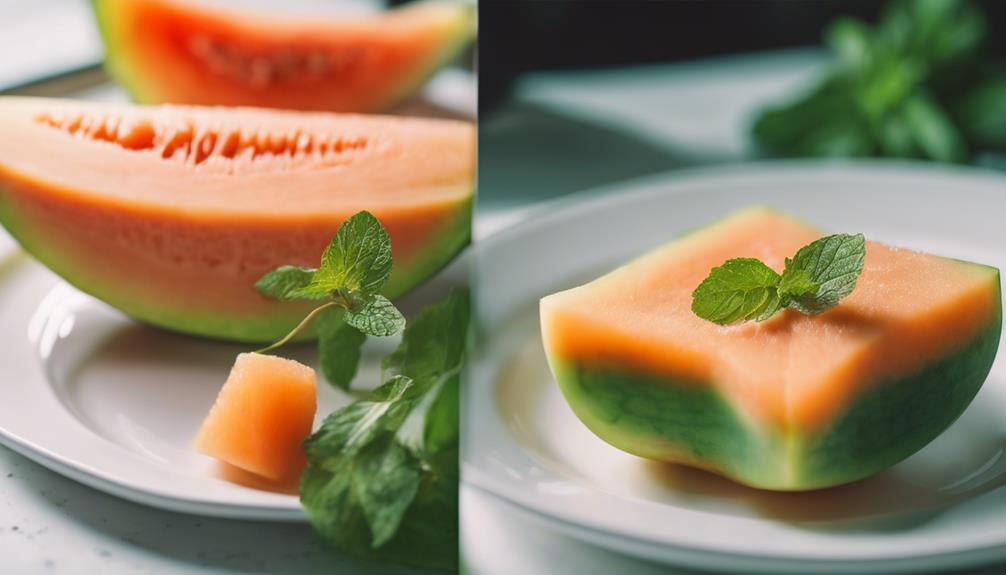
Remove the seeds and rind from the melon, as they can cause digestive issues in dogs. Cut the melon into small, manageable chunks to prevent choking hazards and make it easier for your dog to eat. Before serving, observe your dog's reaction to ensure they can tolerate melon without an adverse response. This will help you identify any potential allergic reactions or sensitivities.
Remove Seeds and Rind
To ensure your dog's safety, remove the seeds and rind from melon before feeding it to them. This step is crucial in preventing potential health risks.
Removing seeds eliminates the risk of intestinal blockage or obstruction, which can be life-threatening. Melon seeds also pose a choking hazard, making it essential to remove them.
The rind is extremely fibrous and can cause gastrointestinal upset, diarrhea, and vomiting in dogs. Leaving it on can lead to digestive issues.
Only feed your dog the soft, fleshy part of the melon to safeguard their safety and health.
Cut Into Small Chunks
Cut the melon into small, bite-sized chunks to ensure your dog's safety. Aim for pieces about 1 inch long, 1 inch tall, and one-fourth inch thick or smaller. This reduces the risk of choking hazards and digestive issues, making it easier for your dog to eat and digest the melon.
Cutting melon into small pieces is crucial for your dog's health and safety. It eliminates the risk of choking and makes digestion easier. If you're unsure about introducing melon into your dog's diet, consult a veterinarian. By taking these precautions, you'll create a safe experience for your dog.
Monitor for Reaction
- Advertisement -
Monitor your dog's reaction when introducing melon into their diet. Watch for signs of adverse effects, and stop feeding melon immediately if you notice any of the following:
- Vomiting or diarrhea: These symptoms indicate gastrointestinal upset. Consult your veterinarian if they occur.
- Excessive itching or scratching: These are signs of an allergic reaction.
- Lethargy or decreased appetite: If your dog becomes lethargic or loses interest in food after eating melon, discontinue feeding it to them.
- Choking hazards: Always supervise your dog while they're eating melon to prevent choking on chunks.
- Signs of intestinal obstruction: Monitor your dog for abdominal pain, vomiting, or lack of appetite, which can indicate a blockage.
Remember to prioritize your dog's health and adjust their diet accordingly.
Melon Nutrition Facts for Dogs
Melons are a nutritious snack for dogs, providing several health benefits. A single cup of cubed melon contains only 45 calories, making it an excellent addition to your dog's diet, especially for overweight or obese dogs. The high water content (about 90%) helps keep your dog hydrated and full, which can be beneficial for dogs that overeat.
Melons are also a good source of natural antioxidants, which combat free radicals in your dog's body. These antioxidants can help regulate blood sugar levels, making them particularly beneficial for diabetic dogs. However, melons do contain natural sugars, so they should be consumed in moderation.
Incorporating melon into your dog's diet can provide a healthy and revitalizing snack that's rich in nutrients and low in calories. You can also consider dog foods that incorporate melon as a nutritious ingredient. Just remember to consume melons in moderation due to their natural sugar content.
Potential Risks and Health Concerns

Feeding your dog melon can be a nutritious snack, but it's crucial to be aware of the potential risks and health concerns.
Eating melon can cause gastrointestinal upset in dogs if they consume large quantities or are not accustomed to high water content foods. The preparation and handling of the fruit also play a significant role in safe consumption.
Consider the following health concerns:
The outer skin and seeds of melons can be a choking hazard, especially for small breeds, so remove them before serving.
Eating melon rinds or seeds can cause gastrointestinal upset, so only feed your dog the fleshy part of the fruit.
Melons are high in water content, which can lead to gastrointestinal upset if your dog is not used to eating foods with high water content.
Some dogs may be allergic to melons, causing gastrointestinal upset, itching, or other health issues.
Feeding your dog melon regularly can lead to an imbalanced diet if it replaces more nutritious foods, so feed it in moderation.
Safe Consumption and General Precautions
To ensure safe and healthy melon consumption for your dog, follow these guidelines:
Cut melon into small, bite-sized pieces to reduce the risk of choking. Remove seeds and rind, as they can cause choking hazards and digestive issues.
Monitor your dog's behavior and health after feeding them melon. Since dogs have different nutritional needs, they may react differently to melon consumption. Research and understand your dog's specific needs and limitations to guarantee safe consumption.
Do not replace a balanced diet or veterinary-recommended nutrition plan with melon. Prioritize your dog's health and nutritional needs by providing a well-rounded diet that meets their requirements. Melon can be a healthy snack in moderation, but avoid overfeeding and maintain a balanced diet.
Frequently Asked Questions
Are Any Melons Toxic to Dogs?
When it comes to feeding melons to dogs, some types can be toxic. Watermelon rinds and Canary melon rinds can cause intestinal blockages, so they should be avoided. Certain melon parts, such as Crenshaw melon seeds, Charentais melon pits, and Casaba melon leaves, contain a toxic compound called cucurbitin. This can lead to vomiting and diarrhea in dogs. On the other hand, the flesh of Galia melons, the skin of Sharlyn melons, and Piel de sapo melons are generally safe for dogs to eat. To ensure your dog's safety, always remove seeds, rinds, and leaves before serving melons.
Can a Dog Eat Honeydew?
Dogs can eat honeydew, but with some precautions. Fresh honeydew chunks or ripe slices provide essential vitamins and antioxidants. Remove seeds and rinds, as they can cause digestive issues. Honeydew juice is also safe, but avoid overfeeding to prevent stomach upset.
When serving honeydew, keep the following in mind:
- Remove seeds and rinds to prevent digestive issues.
- Fresh honeydew chunks or ripe slices are a healthy snack.
- Avoid overfeeding to prevent stomach upset.
- Honeydew juice is safe in moderation.
Is Cantaloupe Ok for Dogs?
Cantaloupe can be a nutritious treat for dogs when served correctly. Ripe cantaloupe supports digestive health and provides antioxidants. However, cantaloupe seeds, rind, and juice can cause stomach upset, so they should be avoided.
To serve cantaloupe safely, remove seeds and rind, and introduce it gradually to prevent adverse reactions. A moderate serving size is one to two tablespoons per 10 pounds of body weight. This allows your dog to enjoy the benefits of cantaloupe without risking digestive issues.
What Fruit Can't Dogs Eat?
Feeding your dog fruits can be risky if you don't choose the right ones. Apple seeds contain cyanide, making them toxic. Banana peels can cause intestinal blockages, so avoid those too. Other fruits to keep away from your dog include Cherry pits, Fig fruits, Grape skins, Kiwi skins, Orange seeds, and Pear cores. These fruits can cause serious health issues or even death if eaten. Stick to dog-safe fruits to keep your pet healthy.
In summary
Dogs can eat melon, but it's essential to do so in moderation. Melon is a sweet and refreshing treat, but its seeds, rind, and excessive sugar content can be harmful. Here's what you need to know:
Remove seeds and rind: These can cause intestinal blockages or obstruction, which can be life-threatening. Only feed your dog the fleshy part of the melon.
Watch sugar intake: Melon is high in natural sugars, which can contribute to weight gain, dental issues, and other health problems. Limit the amount of melon you give your dog.
Choose the right type: Some melons, like watermelon and cantaloupe, are safer for dogs than others, like honeydew. Opt for the former, and avoid giving your dog melon juice or canned melon.
Serve in moderation: Treat melon as an occasional snack, not a replacement for your dog's regular meals. A few chunks or slices (about 1/4 cup) per 10 pounds of body weight is a suitable serving size.
By following these guidelines, you can safely share melon with your dog and enjoy the benefits of a healthy and happy bond.
- Advertisement -