

Can Dogs Eat Carrots
- Advertisement -
You can safely feed carrots to your dog in moderation, as long as you follow proper preparation and feeding guidelines. Cut them into bite-size pieces to avoid choking hazards, wash and peel them to remove dirt and pesticides, and introduce them gradually to prevent digestive issues. While carrots provide essential vitamins, minerals, and fiber, they should make up no more than 10% of your dog's diet. By following these guidelines, you can reap the benefits of carrots for your dog's health, including supporting eye health, immune function, and healthy digestion. Discover more about the benefits and nuances of feeding carrots to your dog.
Key Takeaways
- Dogs can eat carrots, but they must be cut into bite-size pieces to prevent choking hazards and intestinal blockages.
- Carrots provide essential vitamins, minerals, and antioxidants that support eye health, immune function, and skin and coat health in dogs.
- Feed carrots in moderation, making up no more than 10% of a dog's diet, to avoid digestive issues and stomach upset.
- Introduce carrots gradually, starting with small amounts and increasing the serving size, to prevent digestive upset in dogs.
- Consult with a vet before introducing carrots to a dog's diet, especially if they're puppies or have health conditions.
Can Dogs Eat Carrots Safely?
Feeding your dog carrots can be a healthy and safe option, but only if you take precautions.
First, cut the carrots into bite-size pieces to avoid choking hazards or intestinal blockages. Both raw and cooked carrots are okay, but cooking increases their nutritional value. Steaming or minimally microwave-cooking preserves the most nutrients.
Wash and peel the carrots to remove dirt and pesticides before feeding them to your dog. Consult with your vet before introducing carrots to your dog's diet, especially if they're puppies or have health conditions.
Feed carrots in moderation, making up no more than 10% of your dog's diet. Excessive consumption can lead to weight gain and other health issues.
Carrots provide essential vitamins and minerals like vitamin A, potassium, and fiber, which support eye health, immune system, and skin and coat health. By following these guidelines, you can provide your dog with a safe and healthy treat.
Health Benefits of Carrots for Dogs
Carrots provide several health benefits for dogs. As a nutrient-rich snack, carrots support overall health and well-being.
The high content of beta-carotene in carrots converts to vitamin A in dogs, which supports eye health, immune function, and skin and coat health. Antioxidants and fiber in carrots also help regulate blood sugar levels, promote healthy digestion, and support healthy weight management.
Carrots are a low-calorie, low-fat snack option for dogs, with only about four calories per baby carrot. Chewing on carrots can help reduce anxiety and stress in dogs, and also supports dental health by gently scraping teeth and preventing plaque buildup. The fiber content in carrots helps support healthy bowel movements and prevents constipation in dogs.
Preparing and Feeding Carrots Correctly
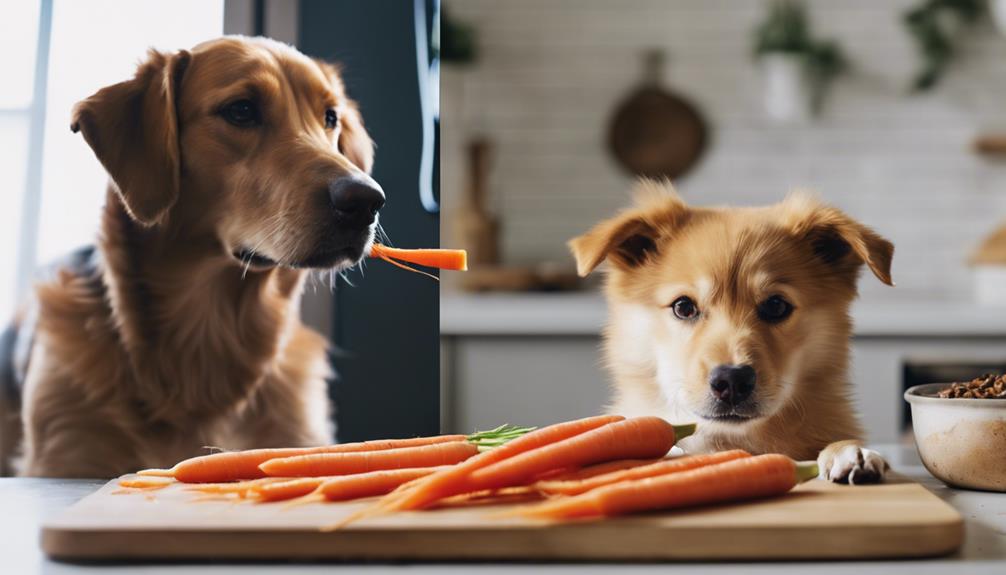
To prepare carrots for your dog, cut them into bite-sized chunks or slices to prevent choking and make them easy to digest. Cooking or steaming carrots can increase their nutritional value and digestibility. Grating or shredding carrots adds flavor and nutrients, but do so in moderation to avoid digestive upset.
Freezing whole carrots provides a healthy snack or teething aid, especially for puppies. When introducing carrots to your dog's diet, do so slowly and in moderation to prevent digestive issues or blockages. Start with small amounts and gradually increase the serving size to allow your dog's digestive system to adjust. Always supervise your dog while they eat carrots to ensure their safety.
Remember to introduce carrots gradually to prevent digestive upset or blockages. Start with small amounts (about 1/4 teaspoon per 10 pounds of body weight) and gradually increase the serving size over several days or weeks. Monitor your dog's behavior and adjust the amount accordingly.
Common Mistakes to Avoid With Carrots
Avoid These Common Mistakes When Feeding Carrots to Your Dog
Carrots can be a healthy snack for dogs, but only if you serve them correctly. Make sure to avoid these common mistakes to keep your dog safe and healthy.
Whole carrots can be a choking hazard, especially for puppies. Always cut them into small, bite-sized pieces to prevent this risk.
Don't overfeed your dog carrots. While they're safe in moderation, too many can cause stomach upset. Consult your veterinarian to determine the right serving size for your dog.
Introduce carrots gradually to prevent digestive issues. Add them to your dog's diet slowly, monitoring their reaction to prevent adverse effects.
Carrot Safety Precautions for Dogs
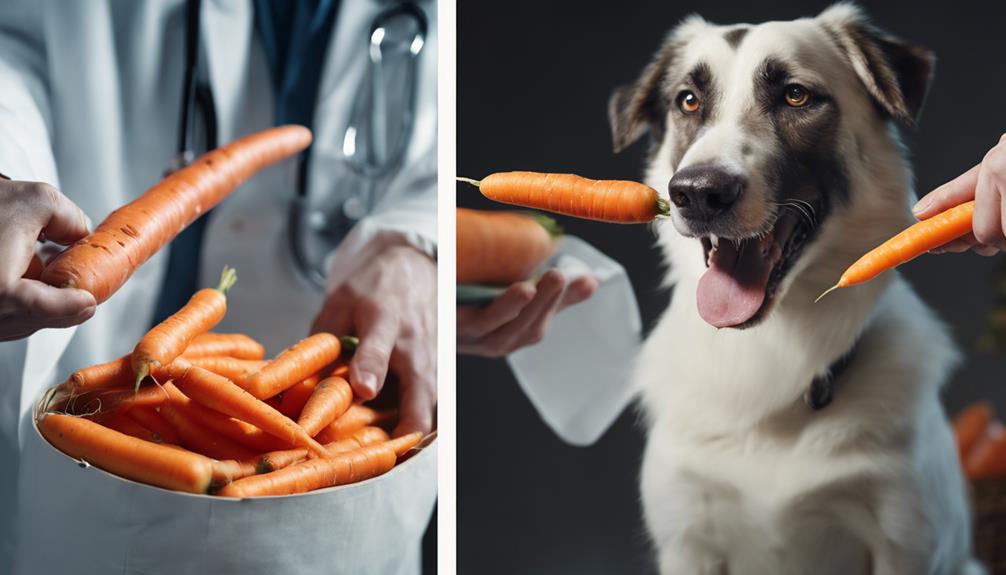
When introducing carrots into your dog's diet, take the following precautions to ensure their safety:
First, prevent choking hazards by:
- Cutting carrots into bite-sized pieces or sticks
- Avoiding giving whole carrots or large chunks to small dogs
Next, prepare carrots correctly by:
- Washing them thoroughly to remove dirt and bacteria
- Peeling or scrubbing them to remove any pesticide residue
Finally, follow feeding guidelines to avoid potential health risks:
- Start with small amounts (about 1-2 baby carrots per 10 pounds of body weight) and gradually increase the serving size
- Monitor your dog's digestive health and adjust the serving size accordingly
- Avoid overfeeding, as carrots are high in fiber and can cause digestive upset if consumed in excess.
Choking Hazard Risks
Whole carrots can be a choking hazard for dogs, especially small breeds, if not prepared properly. As a dog owner, it's crucial to understand the risks associated with feeding carrots.
Choking and intestinal blockages are real concerns if whole carrots are swallowed. To minimize these risks:
- Cut frozen carrots into bite-size chunks to prevent choking.
- Supervise your dog while they eat carrots to prevent obstruction.
- Cut carrots into small, manageable pieces to prevent choking hazards. Never leave your dog unattended while they're eating carrots.
Feeding carrots in moderation and cutting them into small pieces reduces the risk of choking hazards and intestinal blockages. By taking these precautions, you can provide your dog with a healthy and safe snack. Always err on the side of caution when introducing new foods into your dog's diet.
Carrot Preparation Tips
- Advertisement -
To ensure your dog gets the most out of carrots while minimizing risks, follow these guidelines. Cut carrots into bite-size chunks to prevent choking, especially for small breeds and puppies. While whole frozen carrots can serve as cheap and edible chew toys, large ones can be a choking hazard. Before feeding carrots, wash and peel them to remove dirt and pesticides. Consult a vet before introducing carrots to your dog's diet, especially for puppies, to determine the ideal serving size and potential health concerns. Feed carrots in moderation to avoid digestive upset or blockages. Provide plenty of fresh drinking water to assist fiber digestion. By following these steps, you'll ensure your dog reaps the benefits of carrots while staying safe and healthy.
Feeding Safety Guidelines
Feeding carrots to your dog requires caution to ensure their safety. Follow these essential guidelines to avoid potential risks:
Cut carrots into bite-sized pieces to prevent choking, particularly for small breeds and puppies. This reduces the risk of obstruction in their airways.
Wash and peel carrots before feeding them to your dog. This removes dirt and pesticides, reducing the risk of gastrointestinal upset.
Consult a vet before introducing carrots to your dog's diet, especially for puppies. This ensures a safe and healthy snack that meets your dog's nutritional needs.
Nutritionist-Approved Carrot Feeding Tips
To feed carrots to your dog safely and effectively, follow these expert-approved tips. Carrots provide nutritional benefits, but it's essential to understand their benefits, guidelines, and precautions to ensure your dog's health and happiness.
Carrots offer several nutritional benefits, including fiber, vitamins, and minerals. However, it's crucial to feed them correctly to minimize health risks. Here's what you need to know:
- Follow feeding guidelines to avoid overfeeding or underfeeding your dog.
- Take health precautions to prevent choking hazards, digestive issues, and allergic reactions.
Carrot Nutrition Benefits
Carrots are a nutritious treat for dogs, with only four calories per baby carrot. They provide several health benefits, including:
Carrots are rich in beta-carotene, a precursor to Vitamin A that supports eye health, immune function, and skin and coat health. They are also a good source of potassium, vitamin K, and antioxidants, which contribute to overall health and well-being. The high fiber content in carrots helps regulate bowel movements and supports digestive health.
Carrot Feeding Guidelines
Feeding carrots to your dog requires careful planning to ensure nutritional benefits while minimizing risks.
Carrots should make up no more than 10% of your dog's diet. The ideal serving size depends on your dog's weight and breed size, so consult with a veterinarian to determine the correct portion.
Both raw and cooked carrots are safe for dogs, but they must be cut into bite-sized pieces to avoid choking hazards and intestinal blockages. You can mix carrots with dog-safe ingredients like rice or vegetables, or use them as a stuffing for dog toys like KONGs to provide mental stimulation and satisfy your dog's urge to chew.
When introducing carrots into your dog's diet, do it slowly to prevent digestive upset. Carrots should never be seasoned with butter, oils, fats, or spices, which are unhealthy for dogs.
Carrot Health Precautions
When adding carrots to your dog's diet, be aware of potential health precautions to ensure their safety and nutritional benefits. While carrots are good for dogs, improper feeding can cause health issues.
To maintain a healthy and balanced diet, follow these guidelines:
Feed carrots in moderation, making up no more than 10% of their diet. This prevents weight gain and other health conditions.
Use raw or cooked carrots, cutting them into bite-size chunks to prevent choking hazards. Steaming or minimally microwave-cooking carrots preserves their nutritional value.
Balance carrot intake with a complete and balanced dog food diet. Excessive carrot consumption can lead to health problems due to their natural sugar content.
Frequently Asked Questions
Can Dogs Eat Carrots Raw?
Dogs can eat raw carrots as a healthy snack. Raw carrots provide antioxidants, vitamins, and minerals, making them a nutritious addition to their diet. To serve, simply rinse and cut them into bite-sized pieces or sticks to prevent choking hazards. Feed in moderation to satisfy their urge to chew and support overall well-being.
How Many Carrots Can You Give a Dog?
Determine the ideal carrot serving size for your dog based on their weight and breed. A general guideline is to provide 1-2 baby carrots per 10 pounds of body weight daily. However, consult a veterinarian to determine the perfect carrot consumption for your dog's specific needs.
What Vegetables Can Dogs Not Eat?
Vegetables to Avoid Feeding Your Dog
Onions and garlic are toxic to dogs and can cause red blood cell rupture and anemia. Mushrooms are poisonous and should never be given to your dog. Rhubarb, beets, and potatoes can cause digestive issues, so it's best to avoid them as well.
Spinach is safe in small amounts, but its high oxalic acid content means it shouldn't be a regular part of your dog's diet. Corn and leeks also pose hazards, so they're best avoided.
Before feeding your dog any vegetables, research them thoroughly to ensure their safety and health.
What Foods Are Toxic to Dogs?
Over 100,000 cases of pet poisoning are reported annually in the US. Toxic foods can be harmful or even fatal to your dog.
Garlic and onions cause severe anemia. Chocolate, macadamia nuts, and avocados pose significant health risks. Grapes and raisins are highly toxic. Xylitol, found in sugar-free gum, can be deadly. Caffeine and mushrooms can also be harmful or fatal if ingested.
It is essential to keep these toxic foods out of your dog's reach to ensure their safety.
In summary
Feeding your dog carrots can be beneficial, but overdoing it can lead to an imbalance of vitamins and minerals in their diet. Carrots should be treated as an occasional treat, not a staple. A balanced diet is essential, and carrots should be given in moderation to avoid causing more harm than good.
- Advertisement -