

Can Dogs Eat Cucumbers
- Advertisement -
You can safely offer cucumbers to your dog as a low-calorie snack option, and in moderation, they can provide a healthy and hydrating treat. Cucumbers are low in calories and fat, and high in water content, making them a nutritious choice for dogs, especially those that need to lose weight. While cucumbers can be a healthy addition to your dog's diet, it's essential to introduce them slowly and in small amounts to prevent gastrointestinal upset. By following some simple guidelines, you can enjoy watching your dog crunch on a revitalizing and healthy snack, and discover even more benefits they can provide for your furry friend.
Key Takeaways
- Dogs can eat cucumbers in moderation as a low-calorie snack option, supporting healthy weight management.
- Cucumbers are low in sodium and fat-free, making them a healthy snack option for dogs.
- Feeding cucumber slices can help reduce the risk of obesity and related health issues in dogs.
- Whole cucumbers can cause choking, so cut them into small, manageable pieces to ensure easy digestion.
- Introduce cucumbers slowly to monitor for potential allergies or reactions, and avoid overconsumption to prevent digestive upset.
Can Dogs Have Cucumbers?
Dogs can eat cucumbers in moderation. One-half cup of cucumber slices contains only 8 calories, making them a low-calorie snack option. They're also low in sodium and fat-free, making them a healthy choice for dogs, especially those that need to lose weight.
When introducing cucumbers into your dog's diet, do it slowly and monitor for negative reactions. Start with small amounts and observe your dog's response before increasing the serving size. Eating too much of any food item, including cucumbers, can cause gastrointestinal upset in dogs.
Cucumbers have a high water content of 96%, making them a hydrating summer treat for dogs. They're a crunchy and healthy snack that can help improve your dog's overall health and well-being.
Before making changes to your dog's diet, consult with your veterinarian if you have any concerns or questions about adding cucumbers. This will ensure your dog enjoys the benefits of cucumbers while maintaining a balanced and healthy diet.
Benefits of Cucumbers for Dogs
Cucumbers can be a healthy snack for dogs. They're low in calories and rich in water, making them a great option for hot summer days. Adding cucumbers to your dog's snack routine can help with weight control and provide a nutritious treat. This snack is particularly beneficial because cucumbers are:
- Low in calories, which supports healthy weight management
- Rich in water, which helps keep your dog hydrated
- A crunchy texture, which can help reduce boredom and satisfy your dog's natural urge to chew
Incorporating cucumbers into your dog's diet can have a positive impact on their overall health.
Crunchy Low-Calorie Snack
Crunchy Low-Calorie Snack for a Healthy Dog Diet
As a dog owner, you want to provide a healthy diet for your pet. A crunchy snack that's safe and low in calories is an excellent addition to their meals. Cucumber slices fit the bill, with only 8 calories per half cup serving. This makes them an ideal snack for dogs, especially those that need to lose weight.
Cucumbers are also hydrating and nutrient-rich, providing essential vitamins and minerals like potassium and magnesium. Their high water content makes them a refreshing treat. By feeding your dog cucumber slices, you can help reduce the risk of obesity and related health issues.
Use cucumber slices as a reward during training sessions or as a topper on regular meals. They provide a healthy alternative to traditional dog treats. This crunchy snack is a great way to promote a healthier lifestyle for your furry friend.
Hydrating Summer Treat
During the hot summer months, it's crucial to keep your dog cool and hydrated. Cucumbers can be a valuable addition to your dog's summer routine as a hydrating treat. With 96% water content, cucumbers can help keep your dog cool and revitalized. They're a low-calorie snack suitable for dogs of all sizes. You can serve them sliced as a reward during training or as a healthy snack.
Cucumbers are an excellent way to keep your dog hydrated, especially during summer when they need it most. They're also a nutrient-rich snack, containing essential vitamins and minerals like vitamin K, vitamin C, and potassium. By including cucumbers in your dog's diet, you can improve their overall health and well-being.
Incorporating cucumbers into your dog's summer routine can have a significant impact on their health. They're easy to serve and can be a refreshing addition to their daily snacks. So, consider adding cucumbers to your dog's diet to help them stay cool, hydrated, and healthy during the summer months.
Healthy Weight Control
Maintaining a healthy weight is essential for your dog's overall health. Cucumbers can be a useful tool in their weight management plan. With only 8 calories per half-cup serving, cucumbers are a low-calorie, high-water-content snack that can support weight loss.
When combined with regular exercise and a balanced diet, cucumbers can help your overweight dog achieve a healthy weight and reduce the risk of obesity-related health problems. By replacing traditional treats with cucumbers, you can significantly reduce your dog's calorie intake.
Cucumbers can also improve your dog's overall health and well-being by promoting weight loss and a healthy lifestyle. Incorporating cucumbers into your dog's weight management plan can help ensure their long-term health and happiness.
Nutritional Value of Cucumbers
Cucumbers make a nutritious snack for dogs, providing several health benefits.
They are a good source of vitamins and minerals, including vitamins K, C, and B, as well as potassium.
As a low-calorie treat, cucumbers contain only 8 calories per half-cup serving, making them an ideal option for dogs.
Cucumbers are also hydrating and high in fiber. They consist of 96% water, which supports digestion, kidney function, and overall health. The soluble fiber in cucumber skin promotes good digestion and gut health in dogs.
While cucumbers offer some nutritional benefits, they should not replace a well-balanced dog food diet. Consult with a veterinarian to ensure your dog is receiving a complete and balanced diet. Cucumbers can be a healthy and nutritious occasional snack, supporting your dog's overall health and wellbeing.
How to Offer Cucumbers Safely
To feed cucumbers to your dog safely, follow these steps:
First, wash the cucumbers thoroughly to remove dirt, bacteria, and pesticide residues. Then, pat them dry with a clean towel to remove excess moisture. Next, chop or slice the cucumbers into small, manageable pieces to reduce the risk of choking.
When introducing cucumbers into your dog's diet, start with small amounts and monitor their reaction. Watch for signs of digestive upset, such as vomiting or diarrhea. If you notice any adverse reactions, stop feeding cucumbers immediately and consult your veterinarian.
Only feed plain, raw cucumbers to your dog. Avoid adding seasonings, oils, or other toppings, as these can be toxic. Also, don't overfeed cucumbers, as this can lead to an imbalance in your dog's diet.
Remember to prioritize your dog's safety above all when introducing new foods, including cucumbers. If in doubt, consult your veterinarian for guidance.
Important Considerations for Owners

Introducing cucumbers into your dog's diet requires careful consideration. To ensure a safe and healthy experience, you need to be aware of the potential risks and take necessary precautions.
When feeding cucumbers to your dog, remember the following:
- Advertisement -
- Begin with small amounts to prevent digestive upset or allergic reactions.
- Consider your dog's age and size. Puppies can eat cucumbers in small, thin pieces, but quantities should be monitored to avoid choking hazards or digestive issues.
- Avoid giving your dog pickled or seasoned cucumbers, as they contain high amounts of salt and toxic ingredients like garlic, making them harmful.
Are Cucumbers Good for Dogs?
Cucumbers can be a healthy and safe addition to your dog's diet when fed in moderation. They are low in calories and rich in water content, making them an excellent treat for dogs that need to lose weight. Cucumbers can help hydrate your dog, especially during the summer months, and support weight loss when combined with exercise and a balanced diet.
As a low-calorie snack, cucumbers can be used as a reward during training. They are a healthier alternative to high-fat and sugary human foods, which can harm your dog if fed excessively. Cucumbers are particularly beneficial for overweight and diabetic dogs because they are low in sugar and can help regulate blood sugar levels.
When feeding cucumbers to your dog, remember to do so in moderation and as part of a balanced diet. This will help your dog reap the benefits of this healthy and hydrating treat. Cucumbers can be a nutritious and healthy component of your dog's meal plan, but it's essential to maintain a balanced diet to avoid nutritional deficiencies.
Risks of Feeding Cucumbers to Dogs
Feeding cucumbers to dogs requires caution to avoid potential risks. While cucumbers can be a nutritious snack, they can cause harm if not consumed in moderation.
There are three potential risks to consider:
- Choking hazard: Whole cucumbers can cause choking, especially in small breeds. Slice or chop them into manageable pieces to prevent this risk.
- Gastrointestinal upset: Eating too many cucumbers can lead to diarrhea, vomiting, and stomach cramps. Monitor your dog's intake and adjust accordingly.
- Intestinal blockage: Ingesting large pieces of cucumber can cause a life-threatening intestinal blockage. Be vigilant and ensure your dog is not eating large chunks.
Additionally, dogs may be allergic to cucumbers, causing symptoms like itching, hives, and swelling. Excessive cucumber consumption can also lead to an imbalance of fiber and water in a dog's diet, resulting in digestive issues and potentially more severe health problems.
To feed cucumbers safely, be aware of these potential risks and take steps to prevent them.
Tips for Feeding Cucumbers to Dogs
To safely feed cucumbers to dogs, follow these guidelines:
Cut cucumbers into small pieces to prevent choking. Introduce them slowly to monitor for potential allergies or reactions. Remember, treats, including cucumbers, should not exceed 10% of your dog's daily diet, with the remaining 90% coming from a well-balanced dog food.
When deciding how many cucumbers to feed your dog, consider their size. For dogs between 2 and 20lbs, 1-2 slices are suitable, while dogs between 25 to 50lbs can eat 4-5 slices. Always wash cucumbers thoroughly to remove dirt, bacteria, or pesticides before offering them to your dog. This ensures a clean and healthy treat.
Preparing Cucumbers for Dogs
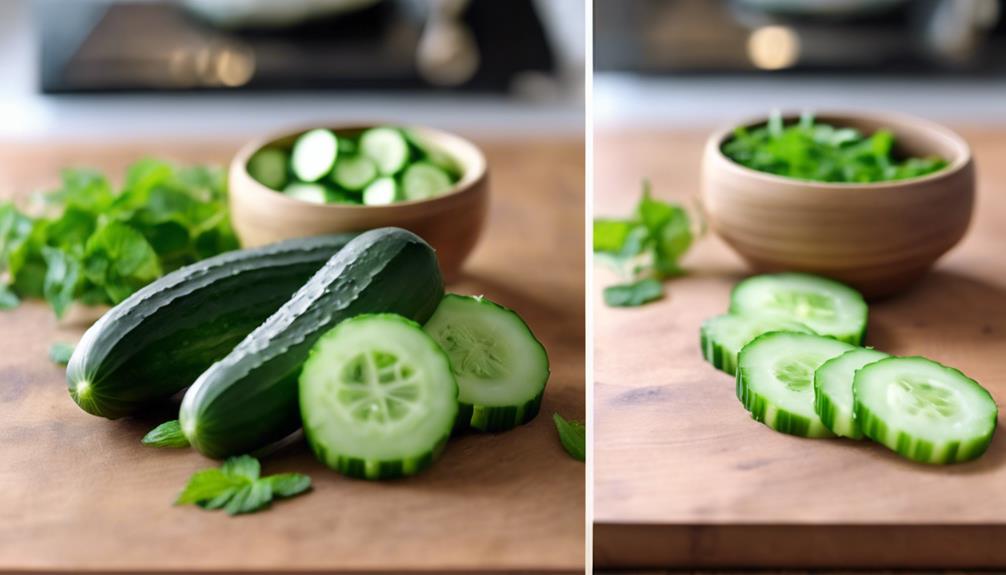
When selecting cucumbers for your dog, choose fresh, firm ones without bruises or soft spots, which can indicate over-ripeness or decay.
To prepare cucumbers safely and enjoyably for your dog, follow these steps:
Cut cucumbers into thin slices to reduce the risk of choking and make them easier to digest. Remove the ends, as they can be difficult for your dog to chew and swallow. Consider peeling the cucumber, especially if your dog has digestive issues, since the skin and seeds can be hard to digest.
Remember to wash the cucumber thoroughly before preparing it to remove dirt, bacteria, or pesticides. Never let your dog eat cucumber seeds, as they can cause intestinal blockages.
Cautions When Feeding Cucumbers
Feeding cucumbers to your dog can be a healthy treat, but it's crucial to be aware of potential issues. While dogs can eat cucumbers, overconsumption can cause digestive upset, including diarrhea and vomiting, especially if they're not used to eating them.
Monitor your dog's behavior and stool quality after introducing cucumbers to their diet. If you notice any adverse reactions, stop feeding them cucumbers immediately. Additionally, avoid feeding your dog pickled cucumbers, as they contain added salt and other harmful ingredients.
Cucurbitacin, a naturally occurring compound in cucumbers, can cause gastrointestinal problems in some dogs. Although the amount in cucumbers is generally not toxic, it's still essential to monitor your dog's reaction.
To minimize the risk of adverse reactions, start by introducing small amounts of cucumber to your dog's diet and gradually increase the quantity. Choose fresh, ripe cucumbers, and remove any seeds or peels, which can be difficult for your dog to digest.
Frequently Asked Questions
Can Dogs Eat Cucumbers With Skin?
Dogs can eat cucumbers with skin, but there are some considerations to keep in mind. Cucumber peel is rich in fiber, vitamins, and minerals, making it a nutritious snack for your dog's digestive system. To minimize pesticide exposure, choose organic cucumbers. Remove the seeds, as they can cause digestive issues. Freshness is crucial, so wash and slice the cucumber just before serving. By following these guidelines, you can safely offer your dog cucumbers with skin as a healthy snack.
Is It OK for Dogs to Eat Raw Cucumbers?
Dogs can eat raw cucumbers, but it's essential to exercise caution. Raw cucumbers are a nutritious snack, providing vitamins, minerals, and aiding digestion. However, monitor your dog for signs of an allergic reaction or digestive upset.
Choose fresh, crunchy cucumbers to support nutrient absorption. Freshness is critical, so select cucumbers that are firm and free of bruises or mold.
If you notice any adverse reactions, stop giving your dog cucumbers immediately. Consult with your veterinarian if you have any concerns or questions.
Why Do Dogs Like Cucumbers so Much?
Dogs are drawn to cucumbers due to their natural curiosity and desire for novelty. The cucumber's high water content and mild flavor make it a refreshing and palatable snack. Chewing and crunching on cucumbers also provide mental stimulation, satisfying their instinct to engage in these behaviors.
Cucumbers are a safe and healthy treat option for dogs. They are low in calories and rich in water, making them a great snack for hot days or as a reward during training. Additionally, cucumbers are easy to digest, reducing the risk of stomach upset.
Offering cucumbers as a treat can be a fun and engaging experience for dogs. Try slicing them into thin rounds or sticks to make them more appealing. Just be sure to introduce them gradually to prevent overwhelming your dog's senses.
What Vegetables Can Dogs Eat?
Dogs can safely eat certain vegetables as healthy treats. Green beans, carrot sticks, and sweet potatoes are all good options. You can also offer fresh peas, yellow squash, and zucchini slices in moderation. When introducing new veggies, do it slowly and in small amounts to prevent digestive upset. These vegetables provide essential vitamins, minerals, and fiber, supporting your dog's overall health.
In summary
Feeding cucumbers to your dog can be a healthy treat. To ensure they can be safely digested, introduce them gradually, remove seeds and peels, and chop them into small pieces. This will help your dog reap the benefits of cucumbers, including improved digestion and hydration. By following these guidelines, you can add cucumbers to your dog's snack list as a crunchy, nutritious option.
- Advertisement -