

Can Dogs Eat Seaweed
- Advertisement -
While some types of seaweed can be a nutritious addition to your dog's diet, others can pose significant health risks, including gastrointestinal blockages and poisoning. You should research the type of seaweed and its potential effects before letting your dog eat it, and monitor their intake to avoid overconsumption. Be aware of signs of seaweed poisoning, such as vomiting, diarrhea, and lethargy, and choose pet-specific seaweed products that provide the right amount of nutrients for dogs. To safeguard your dog's safety, it's vital to understand the benefits and risks of seaweed consumption, and what you can do to provide a balanced and healthy diet for your pet.
Key Takeaways
- Some types of seaweed are safe for dogs to eat in moderation, while others can cause gastrointestinal blockages or poisoning.
- Research the type of seaweed and its potential effects before letting dogs eat it to avoid harmful consequences.
- Consuming wild seaweed can pose significant health risks to dogs, including salt toxicosis, a life-threatening condition if left untreated.
- Choose pet-specific seaweed products that provide the right amount of nutrients for dogs, and avoid human seaweed products with added seasonings or salt.
- Monitor dogs' intake of seaweed to avoid overconsumption, and be aware of signs of seaweed poisoning, such as vomiting, diarrhea, and lethargy.
Seaweed Safety for Dogs
Dogs and Seaweed: What You Need to Know
Taking your dog to the beach can be a fun experience, but it's essential to be aware of the potential dangers of seaweed. While some types of seaweed are safe for dogs to eat in moderation, others can cause gastrointestinal blockages or even poisoning.
The reason dogs eat seaweed is often due to curiosity or because they think it's a tasty snack. However, it's crucial to differentiate between safe and unsafe varieties. Seaweed snacks can be a healthy option, but only if they're specifically formulated for canine consumption.
Before letting your dog eat seaweed, research the type and its potential effects. It's always better to err on the side of caution and consult with your veterinarian. Some key things to keep in mind:
- Monitor your dog's intake of seaweed to avoid overconsumption.
- Only allow your dog to eat seaweed from trusted sources.
- Be aware of the signs of seaweed poisoning, such as vomiting, diarrhea, and lethargy.
Nutritional Benefits of Seaweed
Seaweed is a nutrient-rich food that provides several benefits for dogs. It is an excellent source of protein, iron, iodine, magnesium, and Omega-3 fatty acids. These nutrients support canine brain development, immune system health, and alleviate arthritis symptoms. Additionally, they promote healthy skin, a shiny coat, and a healthy metabolism.
Seaweed Nutrients
Seaweed is a nutrient-rich food that provides essential vitamins and minerals for dogs. It's an excellent source of protein, iron, and magnesium. Iron is necessary for healthy red blood cells, while magnesium supports immune and nerve systems, contributing to overall well-being.
Seaweed is also rich in Omega-3 fatty acids, which support brain development, immune system health, and alleviate arthritis symptoms. Additionally, it contains vitamins C and E. Vitamin C supports the immune system, and vitamin E acts as an antioxidant. The polysaccharides in seaweed have anti-inflammatory properties, benefiting dogs with joint issues or skin allergies.
Incorporating seaweed into your dog's diet provides essential nutrients that support their overall health.
Omega-3 Benefits
Omega-3 fatty acids are essential for a healthy dog diet, and seaweed is a rich source of these nutrients.
Omega-3 fatty acids support brain development and immune system health in dogs. They also have anti-inflammatory properties, which can help reduce joint pain and inflammation, alleviating arthritis symptoms.
In addition to these benefits, Omega-3 fatty acids promote heart health in dogs by reducing the risk of cardiovascular disease and promoting healthy blood flow. They also support healthy skin and coat, reducing shedding and promoting a shiny coat.
Seaweed is a nutritious addition to a dog's diet due to its high antioxidant content and ability to support thyroid hormone production. With its high levels of Omega-3 fatty acids, seaweed is an excellent choice for dogs that can eat it.
Feeding Guidelines for Seaweed
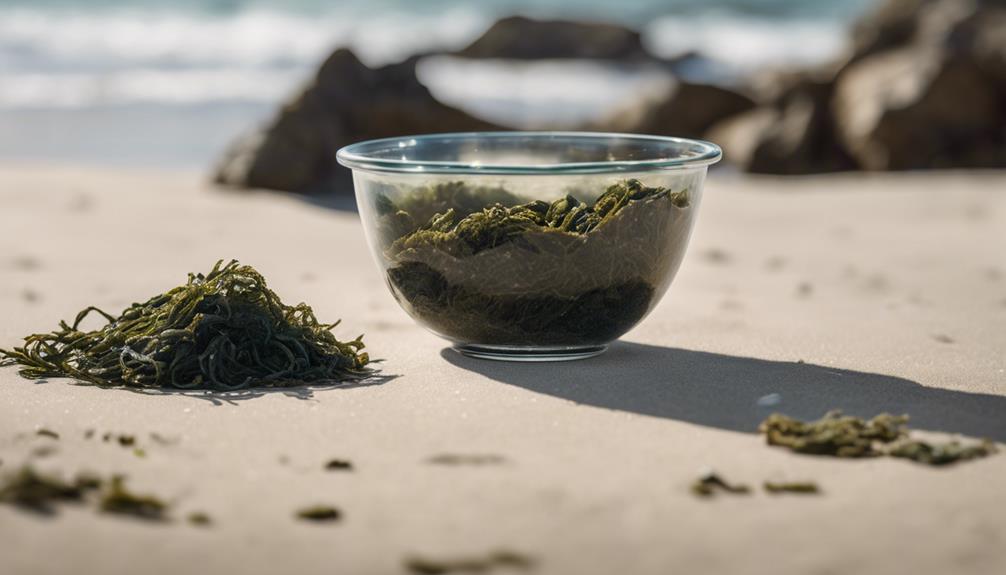
When feeding your dog seaweed, follow these guidelines to ensure their safety and reap the benefits.
Choose pet-specific seaweed products that provide the right amount of nutrients for dogs. Avoid human seaweed products with added seasonings or salt, as they can be harmful.
Before introducing seaweed into your dog's diet, consult your vet. They will provide personalized advice on the correct serving size and type of seaweed suitable for your dog.
Always follow the serving size directions on the packaging. Start with small amounts to monitor your dog's reaction. Unseasoned seaweed is the best option, as it eliminates the risk of added salt or other harmful ingredients.
Remember to monitor your dog's reaction and adjust the serving size accordingly. By following these guidelines, you can provide your dog with a healthy and safe source of fiber.
Risks of Seaweed Consumption
Consuming wild seaweed can pose significant health risks to your dog. Eating too much of it can lead to salt toxicosis, a severe condition. Wild seaweed also harbors hidden dangers, including long strands that can get stuck in their intestines and parasites that can cause harm.
Salt Toxicosis Risks
Salt Toxicosis Risks
When walking your dog on the beach, be aware of the seaweed scattered on the sand. While seaweed can be healthy for dogs in moderation, eating wild seaweed can lead to salt toxicosis, a life-threatening condition if left untreated.
Consuming large amounts of seaweed can cause:
Vomiting, diarrhea, and dehydration, which can lead to electrolyte imbalances and even death.
Electrolyte imbalances due to high sodium content, resulting in muscle weakness, seizures, and even death if not addressed promptly.
- Advertisement -
Cardiovascular issues in dogs with pre-existing heart conditions, making them more susceptible to the negative effects of added salt.
Additionally, small breeds and dogs with pre-existing health conditions are more vulnerable to salt toxicosis, even from small amounts of seaweed. It is crucial to monitor their consumption and weigh the potential risks.
Wild Seaweed Dangers
Eating wild seaweed poses several health risks to your dog. When your dog consumes raw seaweed found on the beach, it can lead to various health problems.
One major concern is the type of seaweed itself. Certain species can be toxic to dogs, causing symptoms such as vomiting, diarrhea, and abdominal pain.
Wild seaweed can also harbor harmful bacteria, parasites, and other contaminants that can make your dog sick. Moreover, there is a risk of your dog ingesting sharp shells, rocks, or other beach debris, which can cause internal injuries.
Another potential issue is intestinal blockages or obstructions if the seaweed accumulates in your dog's digestive system.
To keep your dog safe, it's essential to avoid letting them eat wild seaweed. Instead, consider providing them with seaweed-based treats or supplements that are safe and regulated.
Choosing the Right Seaweed

When choosing seaweed for your dog, quality matters. You want to ensure the seaweed provides essential nutrients without putting your dog's health at risk.
Opt for pet-friendly or dog-safe seaweed products that don't contain added salt, seasonings, or other harmful ingredients. These products are specifically designed for canine consumption and are safer for your dog.
Look for certified products from reputable organizations like the National Animal Supplement Council (NASC) or the International Fish Oil Standards (IFOS). These organizations guarantee quality and purity, giving you peace of mind.
Avoid seaweed harvested from lakes or oceans, as it may contain harmful bacteria, algae, or other contaminants. These contaminants can cause illness or even death in dogs.
Before introducing seaweed into your dog's diet, consult with a veterinarian, especially if your dog has pre-existing health conditions or is taking medications. Your veterinarian can help you make an informed decision and ensure the seaweed complements your dog's diet safely.
Healthy Alternatives to Seaweed
Healthy Alternatives to Seaweed for Your Dog
If you're looking for nutritious alternatives to seaweed for your dog, consider adding broccoli, Brussels sprouts, spinach, green beans, and peas to their diet. These vegetables provide essential vitamins and minerals.
Broccoli is rich in fiber, vitamins C and K, and folate. Brussels sprouts are a good source of vitamins A, C, and K, as well as fiber. Spinach contains calcium, iron, magnesium, and potassium. Green beans are low in calories and add bulk and fiber to meals. Peas are a nutritious snack, rich in protein, fiber, and vitamins A, C, and K.
Incorporating these vegetables into your dog's diet can provide the nutrients they need to thrive. They offer a healthy alternative to seaweed and can be added to meals or served as snacks.
Frequently Asked Questions
Can Dogs Eat Dried Seaweed?
Dogs can safely eat dried seaweed as a healthy snack alternative. Seaweed strips provide a crispy treat that boosts nutrition. You can choose store-bought options or make your own using homemade recipes. These dried snacks offer benefits for your dog's health.
Why Is My Dog Obsessed With Seaweed?
Your dog's fascination with seaweed can be attributed to their innate attraction to the ocean environment. When they encounter seaweed during beach walks, their primal instincts are triggered, driven by ancestral memory and a foraging instinct. The unique smell and novelty of seaweed captivate their senses, leading to their enthusiastic behavior.
In essence, your dog is reverting to their natural instincts, drawn to the unexplored territory of the sea. This behavior is a result of their evolution from wild ancestors who relied on foraging for survival. The combination of the ocean's salty smell and the unusual texture of seaweed stimulates their curiosity, causing them to become fixated.
It's essential to remember that your dog's obsession with seaweed is a natural response to their environment. By understanding the underlying reasons for this behavior, you can better appreciate your dog's instincts and provide them with a more enriching experience during beach walks.
Which Seaweed Is Best for Dogs?
When selecting a seaweed for your dog, consider the unique benefits of each type. Kombu adds moisture to dry food, while Wakame is a rich source of omega-3 fatty acids. Dulse makes a tasty, smoky-flavored treat, and Nori provides a crunchy snack. Bladderwrack powder and Irish moss support overall health, and Kelp supplements can be beneficial as well. Hijiki is a good source of fiber. To determine the best seaweed for your dog, consider their individual needs and consult with a veterinarian.
Are Dogs Allergic to Seaweed?
Dogs can be allergic to seaweed, although it's rare. Seaweed can trigger allergic reactions in dogs, causing symptoms like itching and skin irritation. In severe cases, an ocean allergy can lead to a life-threatening reaction called anaphylaxis. Other marine-related reactions include kelp intolerance, dog hypersensitivity, and seafood sensitivity.
If you suspect your dog has an allergy, watch for signs and consult a veterinarian for a proper diagnosis and treatment.
In summary
Adding seaweed to your dog's diet can be beneficial, but it's crucial to be aware of the potential risks. If not chosen or prepared correctly, seaweed can harm your dog. It's essential to prioritize your dog's health and safety when considering seaweed as a food option.
Before making a decision, weigh the pros and cons carefully. Ensure you understand the potential benefits and risks of feeding your dog seaweed. This will help you make an informed decision that suits your dog's needs.
Remember, your dog's health and safety should always be your top priority. If you're unsure about adding seaweed to their diet, consult with a veterinarian for personalized advice.
- Advertisement -