
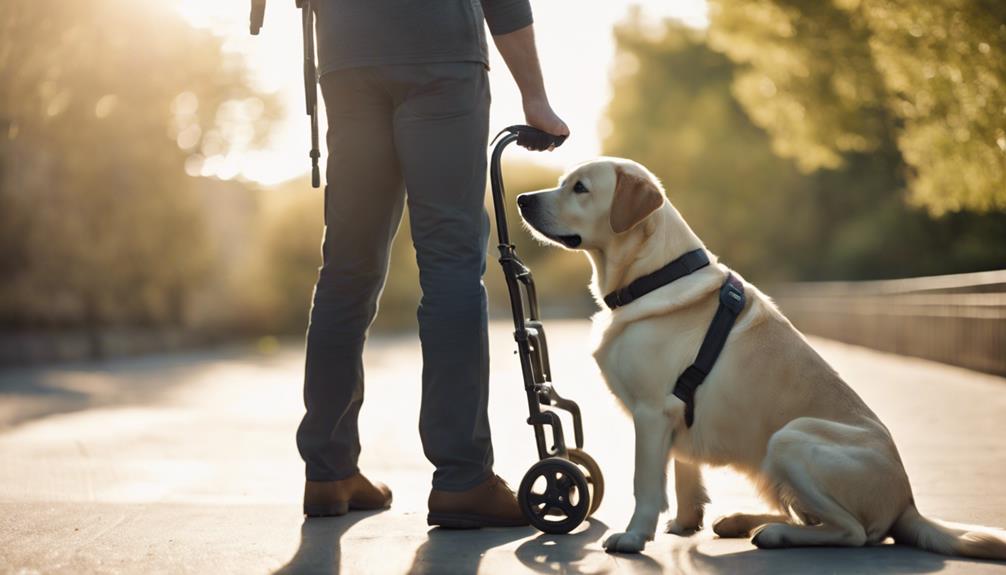
Effective Mobility Service Dog Training Techniques
- Advertisement -
You're looking for effective mobility service dog training techniques to equip your dog with the skills needed to support individuals with physical, mental, neurological, or cardiac disabilities. An exhaustive training approach involves socialization, obedience training, and task-specific exercises tailored to the handler's unique needs. Positive reinforcement methods, like clicker training and reward markers, develop a strong bond between dog and handler. Consistency and clear communication are vital for effective training. By focusing on these essential techniques, you'll be well on your way to training a confident and obedient mobility service dog that can provide life-changing support – and there's more to learn about the specific exercises and training principles that can help you achieve that goal.
Key Takeaways
- Consistency and positive reinforcement are crucial for effective communication and building trust between dog and handler.
- Task-specific training, tailored to the handler's unique needs, enables dogs to assist with daily tasks like opening doors or providing balance support.
- Socialization and desensitization are essential components of mobility service dog training, helping dogs become confident and calm in public.
- Short, fun training sessions with clear objectives and reward markers, such as clicker training, facilitate successful task learning.
- A solid foundation in basic obedience commands like "Come", "sit", and "down" is necessary for advanced task training and public access.
Understanding Mobility Service Dogs
Mobility service dogs are trained to assist individuals with physical, mental, neurological, and cardiac disabilities. These dogs enable their handlers to move around safely and independently. Their training includes basic obedience and advanced task training, which focuses on developing a stable temperament, intelligence, and good personality. Puppy socialization programs also play a crucial role in shaping their behavior and social skills.
Mobility dogs are trained to provide support and assistance tailored to their handler's unique needs. They learn to respond to specific commands and perform tasks that ensure maximum assistance and independence. These dogs must be physically strong, with a minimum height of 23-24 inches and a weight of at least 55lbs, to support their handler's weight and movements.
The training process for mobility dogs focuses on developing a stable temperament, intelligence, and good personality, as well as physical abilities such as strength, balance, and coordination. This training enables mobility dogs to provide essential support to their handlers, including:
- Balance support
- Pulling wheelchairs
- Helping handlers sit or stand
- Protecting them during seizures or blackouts
Mobility service dogs have a significant impact on their handler's quality of life, providing them with the assistance and independence they need to thrive.
Tasks and Responsibilities Defined
Mobility service dogs are trained to perform various tasks to support their handlers' daily needs. These tasks may include providing balance support, fetching items, opening doors, or helping their handlers get up from a fall. To address specific needs, service dogs undergo training in techniques such as desensitization and counterconditioning to build confidence and calmness in the presence of distractions.
One crucial task is providing a steady brace, which requires the dog to stand firmly beside its handler, offering support and balance. This task demands extensive training, as the dog must remain composed in different situations and environments.
During training, service dogs learn to respond to verbal cues, navigate through crowded areas, and ignore distractions. The goal is to equip them with the skills necessary to assist their handlers in daily life, enabling independence and community participation.
As you work with your service dog, you'll develop a strong bond based on trust and communication. Understanding your service dog's tasks and responsibilities will help you work together effectively, achieving greater mobility and independence.
Breeds and Health Conditions

When choosing a breed for mobility service dog training, consider breeds with a sturdy build and strong bones, as they are better suited to perform tasks like pulling a wheelchair or providing balance support. Breeds like Retrievers and German Shepherds are well-suited for mobility support due to their physical structure and task performance.
A dog's health condition is also crucial, as any health issues can impact their ability to assist you. Effective service dog training programs, such as Basic Obedience Training, can prepare dogs for mobility support. Puppy socialization programs can expose puppies to various experiences and environments, which is essential for their development.
Understanding the importance of puppy socialization and behavior modification training can help you make an informed decision when selecting a breed for mobility service dog training.
Ideal Breed Characteristics
When selecting a breed for mobility service dog training, consider the following key characteristics:
A calm and gentle temperament is essential, as the dog will need to remain focused in public settings. A sturdy build is also necessary, as the dog will be providing physical support and mobility assistance. High intelligence and trainability are vital, as the dog will need to learn complex tasks and commands to assist you effectively.
Additionally, consider a breed's energy level, as a dog with excessive energy may not be suitable for mobility support work. A breed with a moderate energy level that can adapt to your unique needs is ideal.
Early socialization is critical for any breed, especially those that require socialization to become confident and calm in public settings. Many service dog training programs offer puppy socialization programs to help develop positive behaviors and social skills in puppies.
Breeds for Mobility Support
When selecting a breed for mobility support, consider the following characteristics: strong physical structure, intelligence, and loyalty. German Shepherds, Golden Retrievers, and Labradors are popular breeds for mobility support due to these traits. They have a sturdy build, making them well-suited for tasks like providing balance assistance and pulling wheelchairs.
Breeds with a minimum height of 23-24 inches and weighing at least 55lbs are ideal for mobility support, as they can provide adequate support and stability for their handlers. Bloodhounds, for example, have a robust bone structure and strong legs that aid in tracking, making them a suitable breed for mobility support. Their calm and gentle nature also makes them a good choice for families with children or elderly individuals.
Other breeds, like Poodles and Border Collies, may require more training and socialization due to their high energy levels and strong herding instincts. However, with proper training, they can still make excellent mobility support dogs. When selecting a breed, consider their temperament and health status. Mobility support dogs should be calm and free from health issues like hip dysplasia that can affect their ability to perform tasks effectively.
Health Condition Considerations
When selecting a Mobility Support Dog, it's crucial to consider the health condition of the breed. Health certificates are necessary to verify the dog's health, as genetic illnesses or conditions can impact its ability to perform tasks effectively. Certain breeds are more prone to specific health issues. For example, Labrador Retrievers are susceptible to hip dysplasia, Progressive retinal atrophy (PRA), and Exercise-induced collapse (EIC). German Shepherds are prone to hip dysplasia, Degenerative myelopathy, and Exocrine pancreatic insufficiency (EPI).
A dog's health condition directly affects its ability to perform tasks successfully. Health issues can arise from over-breeding, making it essential to choose a reputable breeder. When selecting a breed, consider the dog's size. A minimum height of 23-24 inches and weight of 55lbs is recommended for mobility service dogs.
Training Process and Organizations
Mobility service dog training involves more than just teaching basic obedience commands. It focuses on training assistance dogs to perform specific tasks that aid individuals with mobility impairments, such as opening doors or picking up items. A solid foundation in basic obedience commands like "Come", "sit", and "down" is essential to keep a dog calm and focused during training. Understanding canine body language is also vital to recognize emotional cues and respond appropriately, ensuring a strong bond between dog and handler.
Specialized task training is crucial, and it's essential to work with organizations that meet accreditation standards. This guarantees you receive a well-trained service dog that can assist you effectively. Look for organizations that follow rigorous training protocols and have a proven track record of producing high-quality service dogs. By doing so, you can ensure you get a service dog that meets your specific needs and improves your quality of life.
Mobility Dog Training
To train a mobility service dog, you need to take a comprehensive approach that covers socialization, obedience, and task-specific training. Socialization helps your dog interact calmly with people, animals, and various environments. Obedience training is essential as it forms the basis for advanced training. Task-specific training teaches your dog to assist you with daily tasks like opening doors, picking up items, or providing balance support.
Consistency and positive reinforcement are crucial for effective communication. Advanced training techniques can strengthen your bond with your dog. By building trust and clear communication, you can develop a strong relationship with your dog, making the training process more effective.
Specialized Task Training
Mobility service dogs require specialized task training to excel in specific areas that directly impact their handler's daily life. As a mobility support dog, you'll learn to provide customized assistance tailored to your handler's unique needs. This assistance may include retrieving dropped items, pulling a wheelchair, or providing stability through brace and mobility support.
Effective training techniques, such as positive reinforcement, are crucial in developing a strong bond between dog and handler. Consistency is key in achieving successful outcomes. Training sessions should be kept short and fun to maintain the dog's engagement and focus.
Organizations like Medical Mutts and 4Paws For Ability offer specialized task training, working closely with occupational therapists, physical therapists, and other healthcare professionals to develop customized training plans. The training process typically involves three stages:
- Basic obedience and socialization
- Task-specific training
- Advanced training in real-world settings
This comprehensive approach ensures that you can respond to cues in various environments and situations, providing reliable support to your handler in different contexts. Through specialized task training, you'll become an invaluable partner, empowering your handler to live a more independent and fulfilling life.
Organizational Accreditation Matters
When selecting a Service Dog training program, it's crucial to ensure the organization meets certain standards. Look for trainers who are highly trained and experienced in teaching Assistance Dogs, such as Mobility Support Dogs. One way to verify this is by checking for organizational accreditation from reputable organizations. This accreditation guarantees that the training process meets specific standards, resulting in highly trained dogs that can provide reliable support.
Accreditation ensures that the training adheres to strict guidelines, covering aspects such as public access training programs. This is essential for individuals with disabilities who need assistance navigating public settings. Many top local service dog training programs hold accreditation, which indicates their commitment to providing high-quality training.
Handler Responsibilities and Care

As a handler, it's crucial to prioritize your mobility service dog's overall well-being. This includes regular veterinarian visits, healthy food, and adequate exercise. A well-cared-for dog is more likely to perform tasks effectively.
Basic obedience training is essential for establishing a strong foundation for your dog's development as a mobility service dog. Public access training programs can help your dog navigate various public settings with confidence.
Mobility dogs need time to rest and recover from their physically demanding work. Regular supervision ensures their health and happiness, allowing you to identify potential issues early on. This close bond between you and your dog enhances task performance, as they're more likely to respond to commands and cues.
- Advertisement -
Positive reinforcement with treats and toys is necessary to encourage desired behaviors and maintain motivation. As a handler, you're responsible for your dog's care, and their well-being directly impacts their ability to assist you.
Socialization and Desensitization
Socialization and desensitization are crucial components of a mobility service dog's training. These elements help your dog develop confidence and calmness in public, enabling them to provide emotional support and physical assistance to individuals with disabilities.
Socialization involves exposing your dog to various environments, people, and situations to help them become confident and calm in public. This can include introducing them to different sights, sounds, and smells, as well as teaching them to interact with people of different ages, genders, and abilities.
Desensitization is a key aspect of socialization that helps your dog gradually become comfortable with stimuli that may be overwhelming or distracting. This can include loud noises, crowded spaces, and unfamiliar objects. By gradually introducing your dog to these stimuli, you can help them learn to focus and remain calm in the face of distractions.
To effectively socialize and desensitize your dog, start training early and use a structured and controlled approach. Tailor your training to your dog's individual needs and the specific tasks they will be required to perform as a mobility service dog. For example, if your dog will need to navigate busy streets or access public transportation, make sure to incorporate these elements into their training.
Incorporating scent training techniques, such as scent discrimination training, can also enhance your dog's focus and ability to remain calm in the face of distractions. Bloodhounds, for instance, can benefit from scent training due to their exceptional sense of smell and tracking abilities.
Remember to keep your training sessions short and engaging, and to reward your dog for good behavior. By following these guidelines, you can help your dog develop the confidence and calmness they need to provide emotional support and physical assistance to individuals with disabilities.
Positive Reinforcement Methods

To train your mobility service dog, use positive reinforcement methods that focus on task-oriented training. Break down complex behaviors into smaller, manageable parts to build a strong foundation for your dog's skills. This approach helps your dog perform tasks reliably in various situations.
Reward-based learning encourages your dog to repeat desired behaviors, strengthening your bond and creating a well-trained companion. Clear and concise commands are essential for effective communication, avoiding confusion and ensuring your dog understands what behavior is being reinforced. Consistency in rewards and commands helps your dog learn faster and more efficiently.
Positive reinforcement training methods create a clear understanding of what's expected, making it easier for your dog to learn and grow. Techniques like clicker training and reward markers can be particularly effective in this process.
Task-Oriented Training
Mobility service dog training involves breaking down complex tasks into manageable steps. This approach allows your dog to learn and build upon each step, gradually mastering the task. Task-oriented training focuses on teaching your mobility service dog specific tasks that aid your daily life, such as pulling a wheelchair or providing balance support.
By using positive reinforcement methods, your dog will develop the skills and confidence to provide essential support and independence. This approach also fosters a strong bond between you and your dog.
Incorporating puppy socialization programs and behavior modification training helps your dog become confident and calm in various environments. Public access training, for instance, prepares your dog to perform tasks effectively in different situations.
Through high-value rewards and gradual task progression, your dog will learn to perform tasks in a variety of contexts. This ensures that your dog can provide support and independence in different environments, ultimately enhancing your quality of life.
Reward-Based Learning
Reward-based learning is a crucial component of mobility service dog training. This approach focuses on rewarding desired actions with treats, praise, and affection, rather than punishing undesired ones. This method promotes a positive learning environment, which is essential for training a confident and obedient dog.
By using reward-based learning, you can build trust and strengthen the bond between dog and handler. This is critical for successful task performance and public access. Effective reward-based learning involves mastering target training techniques, which help dogs overcome fear and build confidence.
Consistency is key in reward-based learning. It helps dogs understand what behavior is being reinforced and creates a strong bond based on trust and respect. Customized training plans can be created to cater to the individual needs and learning styles of each dog, leading to faster and more effective learning outcomes.
Research has shown that reward-based learning can lead to increased obedience, reduced anxiety, and improved problem-solving skills in dogs. This makes it an ideal approach for training a Service Dog or Assistance Dog. By incorporating reward-based learning into your training routine, you can achieve better results and raise a well-trained companion.
Task-Specific Training Exercises
Task-specific training exercises are crucial for your mobility service dog to learn tasks that directly address your disability. As a Mobility Support Dog, they need training on specific tasks tailored to your unique needs. For example, if you use a wheelchair, your dog should learn pulling exercises. This involves teaching them to respond to verbal cues like "pull" or "walk" and maintain a steady pace while pulling your wheelchair.
Balance support exercises are also essential if you need help with balance. Your dog should learn to provide physical support, such as standing beside you or offering a shoulder to lean on, to prevent falls. These exercises help your dog understand their role in supporting you and build trust between you two.
To address aggressive behavior in mobility service dogs, it's important to understand canine aggression causes and identify underlying issues. Consistency and patience are key to successful training and management of mobility service dogs. By incorporating these exercises into your training routine, you can develop a strong bond with your mobility service dog and empower them to provide the support you need.
Public Access Training Essentials

Public Access Training Essentials
When training your mobility service dog for public access, desensitizing them to distractions is crucial. This phase ensures your dog remains focused on you in public spaces. To achieve this, expose your dog to various stimuli, including loud noises, crowds, and unexpected movements. Recall training techniques, such as positive reinforcement, play a key role in guaranteeing your dog's reliability in responding promptly to commands.
In public access training, teach your dog to respond promptly to commands like "heel" and "stop" in different environments, such as busy streets, shopping malls, and restaurants. Consistency and patience are vital in training, rewarding desired behavior and avoiding punishment. This helps your dog generalize its learning and respond consistently in various contexts. Also, expose your dog to different surfaces, like carpets, tile, and hardwood floors, to ensure they can navigate various terrain confidently.
To simulate real-life scenarios, incorporate role-playing exercises into your training, such as having strangers approach you or dropping items on the floor, to test your dog's obedience and composure. Conduct training in multiple locations and at varied times of day to help your dog generalize its training and respond consistently. By prioritizing these essential training elements, you'll develop a well-behaved Mobility Support Dog that can provide you with the support you need in challenging public spaces.
Certification and Registration Requirements
Certification and registration are crucial steps in verifying your mobility service dog's legitimacy and your rights as a handler. In the United States, there is no centralized certification or registration process for service dogs. However, registering your dog with organizations like the United States Service Dog or the States Service Dog Registry can provide additional credibility.
Mastering basic obedience commands and housebreaking is essential for advanced training and certification. Consistency and positive reinforcement are key to successful housebreaking, requiring patience and constant supervision. Certification involves training and testing your dog to confirm they meet specific standards, including obedience, task-specific skills, and public access skills. Organizations like Assistance Dogs International offer certification programs for mobility support dogs.
Registration involves listing your dog's information in a database, which can be used to verify their legitimacy. While certification and registration are not mandatory, they offer several benefits. They can help you avoid disputes with businesses or landlords who may be unfamiliar with service dog laws. Additionally, certification and registration can provide peace of mind, knowing that your dog has met specific standards and is recognized as a legitimate service dog.
Frequently Asked Questions
What Are the 3 P's of Dog Training?
The 3 P's of dog training are patience, persistence, and positivity. Patience allows your dog to learn at its own pace, which is essential for effective training. Persistence is crucial for consistent training and helps you stay on track. Positivity is achieved through positive reinforcement, reward marking, and clear communication, which encourages good behavior. By following these principles, you'll establish a consistent routine, handle your dog with care, and maintain focused attention.
What Are FF Methods for Dog Training?
Force-free (FF) methods for dog training focus on positive reinforcement, avoiding punitive techniques that can cause fear or anxiety. These methods have proven effective, with 85% of dog owners reporting improved behavior in their pets after making the switch. One popular FF approach is clicker training, a form of reward marking that leverages operant conditioning and positive reinforcement principles. This approach promotes a safe and enjoyable learning environment, fostering trust and respect between you and your dog. As a result, you can expect more effective training outcomes.
What Is Mobility Training for Dogs?
Mobility training for dogs teaches them to assist individuals with physical limitations. This type of training focuses on helping dogs support their handlers' mobility goals, such as climbing stairs, avoiding falls, or walking steadily.
Dogs learn specific tasks through tailored training strategies, like retrieving items, providing balance support, or helping with daily activities. When selecting a dog for mobility training, breed considerations are crucial. Certain breeds excel in service roles due to their temperament, intelligence, and physical build.
To initiate a successful mobility training journey, it's essential to understand these key aspects. By doing so, you can help your dog become a reliable mobility assistant.
What Is the Weight Ratio for a Mobility Service Dog?
For a mobility service dog, the weight ratio between the dog and handler is crucial. A general guideline is a 1:10 to 1:15 ratio. This means the dog should weigh at least 55 pounds to effectively assist an adult handler. For smaller handlers, a dog around 25-30 pounds can be suitable, while larger handlers may require a dog weighing 70 pounds or more. The right dog size, weight, and proportion are essential to ensure the dog can provide sufficient support and counterbalance without fatigue or injury.
In summary
Effective mobility service dog training requires understanding the tasks, breeds, and health conditions involved. By focusing on positive reinforcement, task-specific exercises, and public access training, you can create a highly effective mobility service dog team.
Positive reinforcement is key to successful training. This approach encourages desired behaviors by rewarding good performance. Task-specific exercises help dogs master specific skills, such as opening doors or picking up items. Public access training prepares dogs to behave well in public, which is crucial for their role as mobility service dogs.
With the right training and certification, mobility service dog teams can enjoy greater independence and freedom. By following these techniques, you can develop a strong and effective partnership with your dog.
- Advertisement -