
Learn Dog Calming Techniques
- Advertisement -
You can help your dog overcome anxiety and stress by recognizing the subtle signs of rising arousal, such as increased energy, restlessness, or avoidance behaviors, and teaching calm default behaviors through positive reinforcement techniques. By understanding your dog's body language cues, you can reward calm behaviors, like sitting or lying down quietly, and create a solid foundation for good behavior. Consistent practice and positive reinforcement can help your dog develop calm default behaviors, and by identifying triggers and managing distractions, you can refine your approach. As you explore these techniques further, you'll uncover even more ways to support your dog's relaxation and well-being.
Key Takeaways
- Recognize signs of rising arousal, such as body language changes, to calm your dog effectively.
- Teach calm default behaviors, like sitting or lying down quietly, using positive reinforcement techniques.
- Identify and manage distractions, triggers, and unwanted behaviors to create a calm environment.
- Build relaxation through practice, using exercises like the Coaching Calm Game, to teach calm behavior on cue.
Understanding Your Dog's Arousal
As you observe your dog's behavior, you'll notice that their arousal levels can fluctuate rapidly, influenced by internal and external stimuli that trigger a range of emotional responses. This arousal can manifest in various ways, such as increased energy, restlessness, or even aggression.
To effectively calm your dog, it's essential to understand these emotional responses and recognize the signs of rising arousal.
When your dog becomes aroused, their body language may change, exhibiting signs like raised hackles, a tense posture, or avoidance behaviors. It's vital to remain calm and composed in these situations, as your dog takes cues from your emotions.
By doing so, you can help your dog regulate their arousal levels and respond more effectively to calming techniques.
Arousal can be triggered by internal stimuli, such as anxiety or fear, or external stimuli, like loud noises or unfamiliar environments.
As you become more attuned to your dog's emotional responses, you'll better understand what triggers their arousal and can develop strategies to mitigate these reactions.
Teaching Calm Default Behaviors
When teaching your dog calm default behaviors, you'll want to start by establishing calm foundations that help your dog relax in everyday situations.
You can do this by rewarding calm behaviors and encouraging default relaxation actions, such as sitting or lying down quietly.
Calm Default Foundations
By incorporating calm default behaviors into your dog's repertoire, you can create a solid foundation for a more relaxed and well-behaved pet.
Teaching your dog to associate a designated spot, such as a mat or dog bed, with calm behavior is an excellent starting point. This environmental cue helps your dog learn to remain calm in a specific area.
You can achieve this by using exercises like 'Go to mat' and rewarding your dog with treats when they calmly approach the spot. As your dog becomes more comfortable with this behavior, you can gradually phase out treats and replace them with praise or petting.
Clicker training is another effective method to identify and reward desired calm behaviors, such as sitting or stopping jumping.
By randomizing rewards and replacing them with belly rubs or toys, you can solidify the behavior. Remember to keep training sessions short and fun, and be patient with your dog as they learn these new skills.
With consistent practice, your dog will develop calm default behaviors, leading to a more relaxed and well-behaved companion.
Calm Behavior Rewards
You can reinforce calm behavior in your dog by consistently rewarding desired actions, thereby encouraging them to adopt these behaviors as their default response in stressful situations.
By doing so, you're teaching calm default behaviors that will help your dog remain calm in the face of stimuli that would otherwise trigger anxiety or excitement.
When your dog exhibits calm behaviors, such as sitting quietly or calmly walking beside you, reward them with treats, praise, and affection.
This positive reinforcement will help them associate calmness with desirable outcomes, leading to improved impulse control and reduced anxiety.
Be consistent in your rewards, and your dog will learn to rely on these calm behaviors in situations that would otherwise cause them distress.
By teaching calm default behaviors, you're empowering your dog to manage their emotions and respond to stimuli in a more balanced way.
With patience, practice, and consistency, you can help your dog develop the skills they need to remain calm and composed in any situation.
Default Relaxation Actions
One effective way to teach your dog calm default behaviors is to focus on default relaxation actions, such as sitting, which can be achieved through consistent rewarding of desired actions.
By doing so, you can solidify these behaviors and help your dog generalize calmness in different situations.
Clicker training is a great tool to identify and reward desired calm behaviors, like sitting or stopping jumping, by associating the clicker with treats and reinforcing desired actions.
As your dog becomes more comfortable with these behaviors, you can randomize rewards and replace treats with praise or petting to help solidify them.
This approach is particularly effective because default calm behaviors, such as sitting, are incompatible with over-the-top behavior, making them a great way to teach calmness.
By teaching your dog to default to calm behaviors, you can help them respond to cues in a more relaxed manner and reduce anxiety in various situations.
With patience, consistency, and positive reinforcement, you can help your dog develop calm default behaviors that will benefit them for years to come.
Managing Distractions and Triggers

Identifying the triggers that set your dog off is essential to developing an effective calming strategy. You must understand what causes your dog to become anxious or agitated, whether it's loud noises, strangers, or other environmental factors.
Once you've identified these triggers, you can take steps to manage them and create a calm environment for your dog.
Managing distractions is a pivotal part of this process. Distractions can come in many forms, such as other dogs, people, or even squirrels.
To help your dog stay calm, you can try to minimize these distractions or desensitize your dog to them. For example, if your dog is afraid of loud noises, you can start by exposing them to gentle, calming music and gradually increase the volume over time.
Creating a calm environment is also essential. This can involve making changes to your home, such as reducing clutter or using calming aids like pheromone diffusers.
You can also try to establish a consistent routine, which can help your dog feel more secure and calm.
By identifying and managing triggers, minimizing distractions, and creating a calm environment, you can help your dog feel more relaxed and centered.
Building Relaxation Through Practice
With your dog's triggers and distractions under control, it's time to focus on building relaxation through practice, starting with exercises that teach calm behavior in a distraction-free environment.
The Coaching Calm Game is an excellent tool for this, where you quietly ignore your dog and observe for signs of calm behavior, rewarding with treats when calm behavior is exhibited. Gradually increase the time between treats without decreasing the quality of the behavior to evaluate your dog's ability to generalize the behavior and settle in different situations.
Teaching your dog to associate a specific spot, such as a mat or dog bed, with calm behavior can help them learn to relax on cue. Add the mat to the Coaching Calm Game and reward your dog for calm behavior on the mat.
Randomizing treats and replacing them with belly rubs or toys can solidify default behaviors, such as sitting, which is an incompatible behavior with being over the top. Clicker training can also help identify and reward desired behaviors, such as calm behavior, by clicking a second of calm behavior, followed by a treat. This can take around 10 repetitions to teach your dog to associate the clicker with treats.
- Advertisement -
Through consistent training and practice, you can help your dog build relaxation and calmness in a distraction-free environment. As you progress, you can gradually introduce distractions and increase the time spent on the mat, solidifying your dog's ability to remain calm in various situations.
With patience, time, and effective training, you can help your dog develop a strong foundation for relaxation and calm behavior.
Evaluating Progress and Adjusting

You regularly evaluate your dog's progress, tracking how well they generalize calm behavior in different situations and respond to distractions. As you examine their progress, you'll identify areas where they excel and those that require more work. By doing so, you can adjust your training strategy to better meet their needs.
To refine your approach, focus on gradually building your dog's tolerance to stimuli. For instance, if you're teaching your dog to lie calmly in the presence of loud noises, start by increasing the volume incrementally. Reward them with treats for remaining calm, then gradually build up the duration and intensity of the noise. Increase the distance between your dog and the noise source to simulate real-life scenarios.
Keep your dog engaged by varying the time in between treats. This will help them understand that calm behavior is rewarded, not just the act of sitting or lying down. Be patient and consistent, as adjusting to new stimuli takes time. Celebrate small victories and don't be afraid to revisit earlier steps if your dog struggles with certain exercises. By continually evaluating and adapting your training, you'll help your dog become more confident and calm in a variety of situations.
Body Language and Behavior Cues
As you refine your training approach, it's vital to recognize the subtle cues your dog's body language conveys, since rewarding calm behavior starts with understanding what it looks like. Dogs communicate with their bodies, and recognizing calm body language helps in teaching relaxation.
You'll notice signs of relaxing, such as sighing, weight shifting, and head resting, which indicate your dog is calming down.
Arousal can lead to over-the-top behavior, even hours later, making it essential to understand body language to identify and reward desired behaviors.
It's important to remember that calm on the outside doesn't always mean calm on the inside. Paying close attention to body language and behavior helps you teach settling and calm behavior.
The Family Dog's video 'Dogs don't speak with words. They speak with their bodies. They're talking ALL the time' emphasizes the importance of understanding canine body language.
By recognizing and rewarding specific signs of relaxation, such as a soft gaze or a relaxed posture, you encourage repetition and help your dog associate calm behavior with positive outcomes.
This understanding enables you to tailor your training approach to your dog's unique needs, promoting a deeper connection and more effective calming techniques.
Reinforcing Calm Behavior Patterns
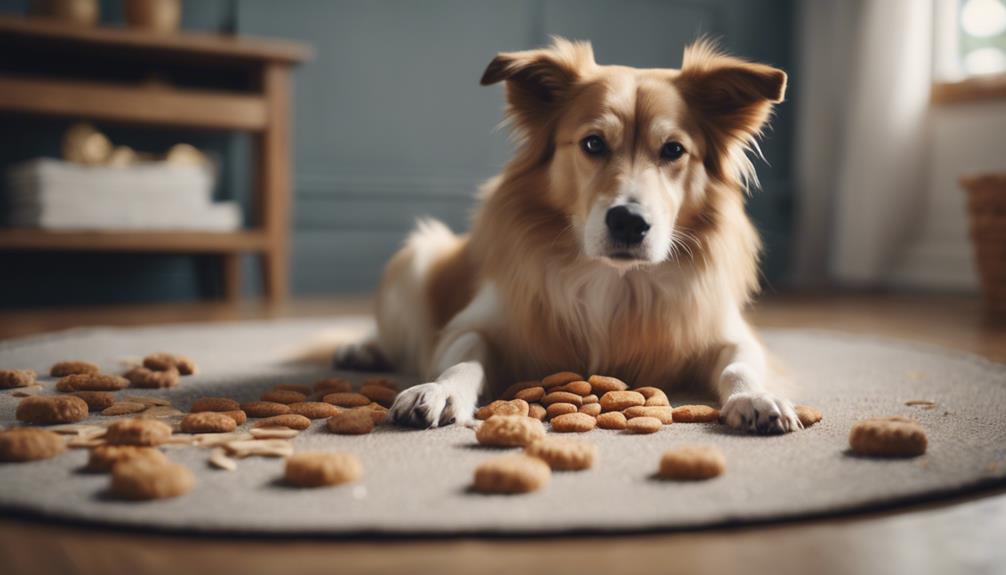
Recognize and reward desired calm behaviors in your dog by using positive reinforcement techniques, such as treats, belly rubs, or toys, to encourage repetition and solidify the behavior.
As a positive reinforcement trainer, you can teach your dog calm behavior patterns by reinforcing desired actions. For instance, when teaching your dog to sit, reward desired actions with treats, and then click a second of calm behavior, followed by a treat, to make it a default behavior.
- Randomize rewards: Deliver a treat randomly after your dog exhibits calm behavior, making it unpredictable and exciting.
- Gradually phase out treats: Replace treats with belly rubs or toys to solidify the behavior and make it less dependent on rewards.
- Increase settling time: Reward your dog for remaining calm for longer periods, and then introduce distractions to help them generalize the behavior.
Preventing Unwanted Behaviors
Three common unwanted behaviors in dogs – barking, jumping, and digging – can be prevented by identifying and addressing underlying causes, such as anxiety, boredom, or excess energy. By understanding what drives your dog's behavior, you can take steps to prevent these unwanted actions from occurring in the first place.
When your dog starts to exhibit unwanted behavior, it's essential to remain calm and composed. Telling your dog to calm down or stop the behavior can sometimes escalate the situation. Instead, go at your dog's pace, and try to identify the underlying cause of the behavior. Is your dog seeking attention or trying to release pent-up energy? Once you understand the motivation, you can develop a plan to address the root cause.
Preventing unwanted behaviors requires patience, consistency, and positive reinforcement. By providing your dog with adequate exercise, mental stimulation, and attention, you can reduce the likelihood of unwanted behaviors occurring. When your dog stays relaxed and calm in situations that would normally trigger unwanted behavior, be sure to reward and praise them. This positive reinforcement will help your dog to associate calm behavior with positive outcomes, making it easier for them to be calm in the long run. By following these steps, you can help your dog to be calm and well-behaved, even in challenging situations.
Frequently Asked Questions
How Do I Teach My Dog to Be Calm?
To teach your dog to be calm, start by recognizing calming signals, such as a relaxed posture or slow breathing.
Create a calm environment by minimizing distractions and using calming aids like treats or toys.
As you build trust, introduce gentle petting and emotional support exercises to help your dog relax.
How Do I Teach My Dog to Settle Down and Relax on the Cue?
As you sit quietly with your dog, you envision a peaceful scene where they settle down and relax on cue.
To achieve this, establish a relaxation routine by creating a calming atmosphere with a quiet command, such as 'settle.'
Your peaceful presence and soothing touch will help your dog associate the cue with calmness.
Gradually increase the time they must remain settled before rewarding, and they'll learn to relax on cue in various situations.
How Long Does It Take to Train a Dog to Be Calm?
You're wondering how long it takes to train a dog to be calm.
The calming process depends on several factors, including your dog's breed, age, and temperament.
Generally, the training timeline can range from a few weeks to several months, requiring daily practice and reinforcement.
Your patience level and owner consistency play a vital role in achieving success.
Where Do You Touch a Dog to Calm Down?
When calming a dog, you'll want to focus on specific touch therapy spots.
Apply gentle pressure to calming pressure points, such as the base of the ears, to reduce anxiety.
Soothing ear rubs and gentle chest strokes can also promote relaxation.
Don't forget relaxing belly rubs, which can be especially calming.
By targeting these areas, you'll help your dog feel more at ease.
Remember to approach calmly and move slowly to avoid startling them.
Conclusion
As you master dog calming techniques, imagine a symphony of serenity, with your dog as the harmonious maestro.
By understanding their arousal, teaching calm defaults, and managing distractions, you'll orchestrate a peaceful coexistence.
Through practice and evaluation, you'll refine your approach, reinforcing calm behavior patterns and preventing unwanted ones.
With patience and persistence, your dog will become a tranquil oasis, radiating calmness in the midst of life's chaos.
- Advertisement -