

Overcoming Fear-Based Behavior Correction in Dogs
- Advertisement -
As you work to overcome fear-based behavior in your dog, it's essential to recognize the early signs of fear, such as avoidance, cowering, or physiological changes like increased heart rate or panting. Fearful behaviors can escalate if left unchecked, so identifying triggers, like loud noises or separation anxiety, is vital. To build your dog's confidence, you'll need to develop a strategy that involves desensitization, counterconditioning, and positive reinforcement training. By understanding the underlying causes of fear and developing a customized plan, you can help your dog replace fearful responses with calm, relaxed behaviors, and, by exploring further, you'll discover more effective techniques to achieve this goal.
Key Takeaways
- Recognize early signs of fear, such as body language and physiological changes, to prevent escalation into more severe fear-based behaviors.
- Identify and address the specific stimulus triggering the fear response, and begin desensitization and counterconditioning to build confidence.
- Gradually expose the dog to the feared stimulus, associating it with a positive outcome, to reduce their fearful response.
- Use positive reinforcement training methods, such as clicker training, to help the dog associate desired behaviors with rewards and build confidence.
Recognizing Fear in Dogs
When interacting with your dog, it's essential to recognize the subtle signs of fear, as they can quickly escalate into more pronounced fear-based behaviors if left unchecked.
Fearful dogs often exhibit behaviors that are easily overlooked, such as ears pulled back, tail tucked, or avoidance. These early signs of fear are pivotal to identify, as they can lead to more severe fear-based behaviors if ignored.
As you spend time with your dog, pay attention to their body language and physiological changes. A fearful dog may display a crouching posture, lie down, or freeze in place.
They may also exhibit defensive aggression while still showing signs of fear. Take note of any whining, barking, or distress vocalizations, as these can indicate fear.
Fearful dogs may also display a 'whale eye' expression, where the whites of their eyes are visible. Additionally, they may pant, have an increased heart rate, or rapid breathing.
Common Fears and Causes
As you venture into the domain of canine fears, you'll discover that loud or sudden noises, separation anxiety, and unfamiliar people, objects, or environments are common triggers that can send your dog into a tailspin of fear.
These triggers can cause your dog to exhibit fearful behaviors, such as cowering, barking, or hiding. Separation anxiety, in particular, can lead to destructive behavior, barking, or whining when your dog is left alone.
Some dogs may develop specific fears, such as men in hats, umbrellas, or strollers, due to negative associations or lack of socialization.
Genetics can also play a role in fearfulness, with some breeds or lines being more prone to fear-based behaviors. Early socialization is critical in preventing fearfulness in dogs.
It's essential to recognize that every dog is unique, and what may trigger fear in one dog may not affect another.
Coping With Fearful Behavior

As you work to overcome your dog's fear-based behavior, it's essential to learn how to cope with fearful situations effectively.
You'll need to recognize the signs of fear in your dog and develop strategies to build their confidence.
Managing Fearful Situations
You'll need to carefully manage fearful situations to help your dog overcome their anxiety, and that starts with identifying the specific stimulus that triggers their fear response.
Once you've pinpointed the stimulus, you can begin desensitization and counterconditioning, which involve gradually exposing your dog to the feared stimulus while associating it with a positive outcome.
This process helps your dog learn to respond calmly to the stimulus, reducing their fearful response.
To guarantee success, it's essential to control the stimulus, adjusting factors like distance, volume, or speed to keep your dog below their threshold of fear or stress.
A well-constructed desensitization gradient is pivotal for gradual exposure.
Additionally, response substitution can be used to replace unwanted behaviors with desirable ones, such as sitting instead of jumping up, in fearful situations.
Remember, your comfort level and emotional state play a significant role in the success of the program, so it's imperative to remain calm and patient when managing fearful situations.
Recognizing Fear Signs
Fear signs in dogs can manifest in subtle yet telling ways, such as a tucked tail, panting, or avoidance behaviors, making it essential to recognize these cues to address fearful behavior effectively.
You may notice your dog exhibiting these signs in response to specific stimuli, such as loud noises or strangers. It's imperative to identify these fear signs early on to prevent them from escalating into more severe negative behavior.
As you observe your dog's behavior, look for physical cues like a lowered posture, avoidance of eye contact, or a tense body language. These subtle signs can indicate that your dog is experiencing fear or anxiety.
Additionally, changes in appetite, sleep patterns, or elimination habits can also be indicative of fear-based behavior.
Recognizing fear signs in your dog is pivotal in addressing the underlying issues and developing a plan to overcome them.
By acknowledging and responding to these cues, you can help your dog feel more comfortable and secure, ultimately leading to a reduction in negative behavior.
Building Dog Confidence
Now that you're aware of the fear signs in your dog, it's time to focus on building their confidence to cope with fearful behavior.
Building confidence in a fearful dog requires patience, understanding, and a gentle approach. Punishment or force can exacerbate the fear, making the problem worse.
Instead, use positive reinforcement training methods like clicker training to help your dog associate desired behaviors with rewards. This increases their confidence and willingness to perform the behavior.
Providing a stable and predictable environment, along with a consistent routine, can also help your dog feel more secure and confident.
Desensitization and counterconditioning techniques can help your dog gradually become comfortable with the feared stimulus in a controlled and positive manner.
Additionally, helping your dog develop problem-solving skills and learn to cope with uncertainty can increase their confidence and ability to handle new or frightening situations.
Debunking Fearful Dog Myths
As you work to overcome your dog's fear-based behavior, it's essential to separate fact from fiction.
You may have heard that your dog will simply outgrow their fears or that their behavior is a result of past trauma, but these myths can hinder progress.
Fearful Dog Misconceptions
You've likely encountered a multitude of myths surrounding fearful dogs, which can lead to ineffective training methods and a deeper understanding of their behavior.
One of the most significant hurdles in helping fearful dogs is dispelling the misconceptions that surround them.
Fearful dogs are weak or timid: This couldn't be further from the truth. Fearful dogs are often incredibly resilient and resourceful, having learned to adapt to their environment in order to survive.
Fearful dogs are aggressive: While it's true that fearful dogs may exhibit aggressive behavior, this is often a last resort in an attempt to protect themselves from a perceived threat.
Fearful dogs can't be trained: This is simply not true. With patience, understanding, and positive reinforcement, fearful dogs can learn to overcome their fears and thrive.
Fearful dogs are a lost cause: Nothing could be further from the truth. With the right approach and a deep understanding of their behavior, fearful dogs can make incredible progress and lead happy, healthy lives.
Fear-Based Behavior Myths
When working with fearful dogs, it's essential to separate fact from fiction, as misconceptions about fear-based behavior can hinder progress and even worsen the problem.
You might assume that punishing your dog for their fears will fix the issue, but in reality, it'll only make things worse, leading to increased anxiety and aggression.
Another myth is that your dog's fear stems from abuse or a traumatic experience, but a certified applied animal behaviorist or veterinarian must assess the underlying causes of fear-based behavior.
Don't expect a magic pill to cure fearfulness in dogs; while medication can help manage anxiety and stress, it's not a standalone solution. Behavior modification techniques are necessary to overcome fears and phobias.
You might worry that consoling your fearful dog will reinforce their fear, but ignoring them can be harmful, exacerbating feelings of anxiety and isolation.
Finally, don't assume your dog will simply outgrow their fears; a proactive approach to behavior modification and training is necessary to help them overcome fear-based behaviors.
Overcoming Fearful Behavior
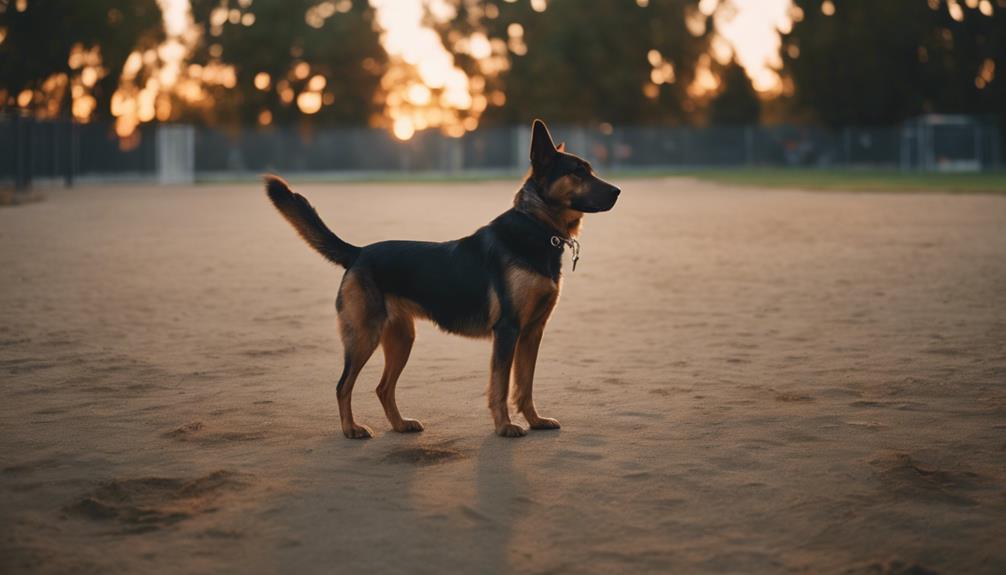
By identifying and addressing the root causes of your dog's fearful behavior, you can take the first steps towards helping them feel more confident and calm in triggering situations.
This requires understanding that fear is a natural emotion for dogs, just like humans, and that it's not something they can simply 'snap out of.' Fearful behavior in dogs can stem from a range of factors, including genetics, past experiences, and socialization.
When you recognize the underlying causes of your dog's fear, you can begin to develop a plan to address it.
This may involve gradual exposure to the feared stimulus, paired with positive reinforcement techniques to help your dog associate the stimulus with positive outcomes.
It's essential to approach this process patiently and compassionately, as rushing or forcing your dog to confront their fears can exacerbate the problem.
Consider the following scenarios, where dogs may exhibit fearful behavior:
- During loud thunderstorms, when the sound of thunder causes them to cower and hide
- At the vet's office, where the unfamiliar sights and smells trigger anxiety
- Around strangers, when their lack of socialization leads to fear and avoidance
Behavior Modification Techniques
To help your dog overcome fear-based behavior, it's necessary to employ specific behavior modification techniques that address the root causes of their fear responses.
Desensitization and counterconditioning are two effective techniques that can be used to overcome fear-based behavior correction in dogs. Desensitization involves gradual exposure to a stimulus that triggers fear responses in a controlled manner, while counterconditioning associates the stimulus with a positive outcome. By using these techniques, you can help your dog replace fear responses with calm, relaxed behaviors.
In addition to desensitization and counterconditioning, other behavior modification techniques such as habituation, extinction, shaping, and conditioning can be used to address fear-based behavior correction in dogs.
These techniques should be used in conjunction with desensitization and counterconditioning for ideal results. Positive reinforcement training methods should always be used in conjunction with behavior modification techniques, as punishment, fear, or intimidation can exacerbate fear-based behavior correction in dogs.
The goal of behavior modification techniques is to teach your dog to associate previously feared stimuli with positive outcomes, such as treats and praise.
By using these techniques, you can help your dog overcome fear-based behavior and lead a happier, healthier life. It's essential to consult with a professional dog trainer or certified animal behaviorist to develop a customized behavior modification plan that's tailored to your dog's specific needs and circumstances.
With the right guidance and support, you can help your dog overcome fear-based behavior and thrive.
- Advertisement -
Guidelines and Precautions

When working to overcome fear-based behavior in your dog, it's essential that you take the right approach.
You'll need to select a qualified trainer who uses positive reinforcement techniques and avoid punishing your dog for fearful behavior.
Selecting a Trainer
You'll need a skilled trainer who understands fear-based behaviors to help your dog overcome them, so it's essential to choose the right one.
A good trainer can make all the difference in your dog's recovery, while a bad one can exacerbate the problem.
When selecting a trainer, keep the following guidelines in mind:
- Look for trainers who use positive reinforcement, certifying your dog feels encouraged and motivated.
- Observe a class without your pet to get a sense of the trainer's teaching style and methods.
- Verify the trainer discloses their exact plan for working with your dog beforehand.
Avoiding Punishment
As you begin working with a trainer to address your dog's fear-based behavior, it's essential to understand the importance of avoiding punishment as a means of correction.
Punishment can have severe consequences, such as increased fear, anxiety, and aggression. It may suppress the fearful behavior in the short term, but it doesn't address the underlying fear or anxiety, and can even make the problem worse in the long run.
Punishing your dog for their fears will only exacerbate the issue, creating a negative association with the stimulus and leading to further anxiety and fear.
Instead, focus on positive reinforcement training methods that encourage desired behaviors and help build confidence and trust in your dog.
This approach will allow you to address the root cause of the fear-based behavior, rather than just masking the symptoms.
Guidelines for Owners
To guarantee successful treatment of your dog's fear-based behavior, it's crucial that you find a qualified trainer who adheres to positive reinforcement methods and follows specific guidelines to prevent aggravating the issue. As a pet parent, you want to help your dog overcome fear, not make it worse.
Some essential guidelines to keep in mind:
Avoid trainers who use punishment or flooding as a means of behavior modification, as these methods can exacerbate fear and even lead to aggression.
Verify your trainer provides you with a clear plan of action before working with your dog, and never allows them to use physical confrontations or dominance techniques.
Remember, petting or consoling your fearful dog won't reinforce their fear, but ignoring them can be harmful. Instead, provide reassurance in a calm and confident manner to help them feel more secure.
Allow your dog to make decisions about approaching or avoiding scary situations, and take steps to prevent situations that trigger reactivity for their safety and well-being.
Understanding Habituation
By repeatedly exposing your dog to a stimulus, you can trigger a process called habituation, where their response to that stimulus gradually decreases or ends, leading to a reduction of fear or anxiety.
Habituation is a simple form of learning that can be an effective tool in overcoming fear-based behavior correction in dogs. As you consistently expose your dog to the stimulus, their response will decrease, allowing them to become desensitized to stimuli that would normally trigger a fearful response.
The rate of habituation can vary depending on factors such as the intensity and duration of the stimulus, your dog's individual temperament, and the presence of reinforcement or punishment.
It's essential to note that habituation is a long-lasting process, but it can be reversed if the stimulus is reintroduced after a long period of time, making consistent exposure vital for effective habituation.
It's also important to recognize that habituation doesn't occur if the stimulus is potentially harmful, as your dog's natural defense mechanisms will override the habituation process.
Additionally, spontaneous recovery can occur after a long period of time, so it's vital to maintain consistent exposure to the stimulus.
Medication and Behavior Modification
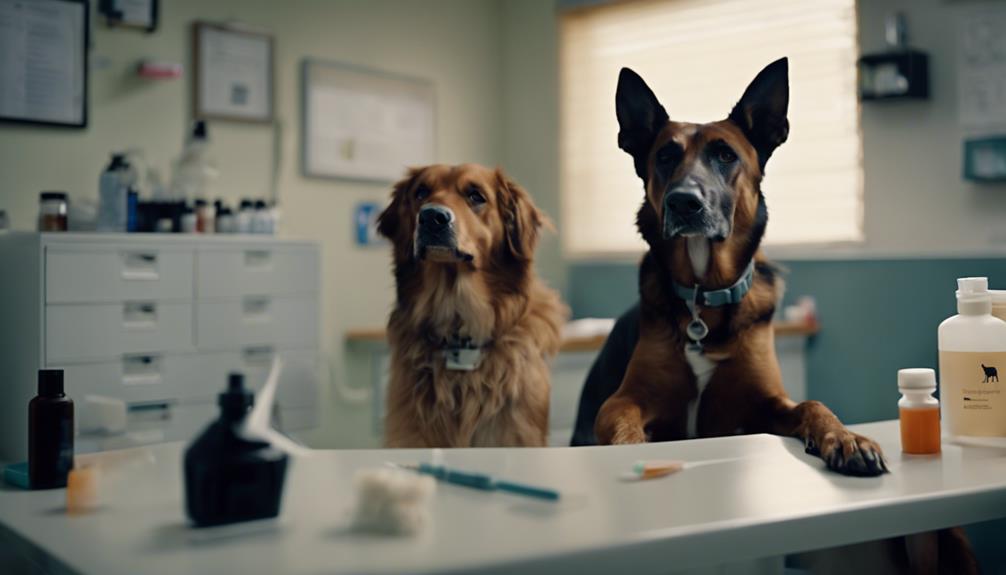
You may need to contemplate medication as part of an exhaustive treatment plan to overcome your dog's fear-based behavior, particularly in cases where behavior modification and environmental changes alone aren't enough.
While medication can be effective in treating fear-based behavior, it's essential to understand its limitations, such as potential side effects, cost, and limited information. Furthermore, medication is most effective when used in conjunction with behavior modification and environmental changes, as it can help normalize your pet's emotions and improve trainability.
Some pivotal points to ponder when exploring medication for your dog's fear-based behavior:
Medication can help treat fear-related aggression, compulsive behaviors, and certain types of anxiety disorders.
Veterinarians play a key role in medication management, monitoring your pet's response to medication and adjusting it as needed.
Medication should always be used in conjunction with behavior modification and environmental changes to guarantee long-term success.
In severe cases, medication may be necessary to manage anxiety and fear, but it's essential to work with a veterinarian to find the right balance.
Managing Fearful Behavior
Recognizing the subtle signs of fear in your dog, such as a tucked tail or avoidance, is essential for intervening early and preventing fearful behavior from escalating into a more entrenched problem.
Fearful dogs often exhibit physiological changes, such as increased heart rate, respiration, or panting, and body postures like crouching, lying down, or freezing can indicate fear.
It's essential to address these signs promptly to prevent the development of fear-based behavior.
Desensitization and counterconditioning are effective techniques in helping dogs overcome specific fears.
With the guidance of a certified animal behaviorist or trainer, you can create a customized plan to address your dog's undesired behavior.
By gradually exposing your dog to the feared stimulus in a controlled environment, you can help them learn to associate the stimulus with positive outcomes, ultimately reducing their fear response.
Providing a stable and predictable environment can also help fearful dogs feel more secure.
Protecting them from frightening situations can prevent the problem from compounding.
It's pivotal to approach your dog with patience and understanding, avoiding punishment or scolding, which can exacerbate the problem.
By doing so, you can help your dog build trust and confidence, paving the way for a more effective fear-based behavior correction.
Frequently Asked Questions
How to Train Fear-Based Aggression in Dogs?
When training a dog with fear-based aggression, you'll need to employ desensitization methods and counterconditioning techniques.
First, identify the fear triggers and develop gradual exposure strategies to help your dog feel more comfortable.
This might involve associating the trigger with a positive outcome, like treats or praise.
Can a Fearful Dog Be Rehabilitated?
You're wondering if a fearful dog can be rehabilitated.
The answer is yes, with the right approach.
Rehabilitation methods focus on building canine confidence through gentle guidance, addressing fearful foundations.
By identifying underlying causes and using positive reinforcement techniques, you can help your dog overcome fears and develop more confident behavior.
It requires patience, consistency, and a commitment to gradual exposure and desensitization, but the results can be truly transformative.
Can You Cure a Fear Reactive Dog?
Can you cure a fear reactive dog? It's a question that lingers like a shadow, haunting those who care for these anxious companions.
Unfortunately, a complete cure is unlikely, as fear triggers are deeply ingrained.
However, with counterconditioning methods and desensitization strategies, you can help your dog manage emotional responses, reducing fear-based behaviors.
Working with a professional, you can develop a customized plan to address specific triggers, fostering a safer, more confident environment for your dog to thrive.
What Are the Behavior Modification Techniques for Dogs With Anxiety?
When addressing canine anxiety, you'll find behavior modification techniques vital.
One approach is fearless exposure, where you gradually introduce the dog to the anxiety trigger.
Calm associations are also key, as you teach the dog to link the stimulus with positive outcomes.
Gradual counterconditioning and gentle desensitization are additional strategies to help the dog overcome anxiety.
Conclusion
As you work to overcome fear-based behavior correction in your dog, remember that patience and consistency are key.
According to a study by the International Association of Animal Behavior Consultants, approximately 40% of dogs exhibit fear-based behaviors, highlighting the importance of addressing these issues.
By understanding and addressing the root causes of fear, you can help your dog lead a happier, healthier life.
With time and effort, your dog can learn to overcome fear-based behaviors, leading to a stronger, more loving bond between you and your pet.
- Advertisement -