

Mastering Puppy Collar and Leash Training
- Advertisement -
To master puppy collar and leash training, begin by gathering essential items, including a puppy-sized collar and leash, and treats. Introduce the collar and leash gradually, using short, positive sessions to build trust and confidence. Use positive reinforcement techniques, such as treats and praise, to associate the leash and collar with positive experiences. Teach your puppy essential leash training commands, like "come," "heel," and "stop," and practice walking in a controlled environment. Consistency and patience are crucial in building trust and confidence. As you progress, you'll learn how to overcome common leash issues, establish a walking routine, and create a positive experience for your puppy.
Key Takeaways
- Use positive reinforcement techniques, such as treats and praise, to associate the collar and leash with positive experiences.
- Introduce the collar and leash gradually, using short, positive sessions to build trust and confidence.
- Teach essential commands like "come," "heel," "stop," "wait," and "leave it" to promote a calm and controlled walking experience.
- Avoid using collars with spikes, prongs, or choke chains, which can cause discomfort and harm, and instead opt for a comfortable, puppy-sized collar.
- Consistency and patience are vital in building trust and confidence, so practice leash training regularly and maintain a calm atmosphere.
Preparing for Leash Training
At six weeks old, your puppy is ready to start learning leash training fundamentals. To prepare, gather a few essential items: a puppy-sized collar, a leash, and some treats.
Choose a collar that fits comfortably, allowing two fingers to slide between the collar and your puppy's neck. Avoid collars with spikes, prongs, or choke chains, as they can cause discomfort and harm. Select a durable, lightweight leash around 4-6 feet long, allowing your puppy to explore while maintaining control.
Before going outside, practice walking your puppy in a controlled environment, such as a quiet room or hallway. Hold the leash gently, letting your puppy get accustomed to the feeling. Reward them with treats and praise for staying by your side. As they become comfortable, introduce short outdoor walks, gradually increasing the distance and duration.
Keep the leash loose, avoiding jerking or pulling, which can create anxiety and undermine training. By following these steps, you'll set the stage for successful leash training and enjoyable walks with your puppy.
Building Trust and Confidence
When leash training your puppy, building trust and confidence is crucial to prevent anxiety and fear-based behaviors. To achieve this, introduce the collar and leash gradually, using short, positive sessions. Consistency and patience are vital, as puppies rely on routine and clear communication to feel secure.
Use positive reinforcement techniques, such as treats and praise, to associate the leash and collar with positive experiences. This builds trust and confidence in your puppy. Start leash training in quiet areas with minimal distractions and gradually increase exposure to new environments and stimuli.
Essential Leash Training Commands
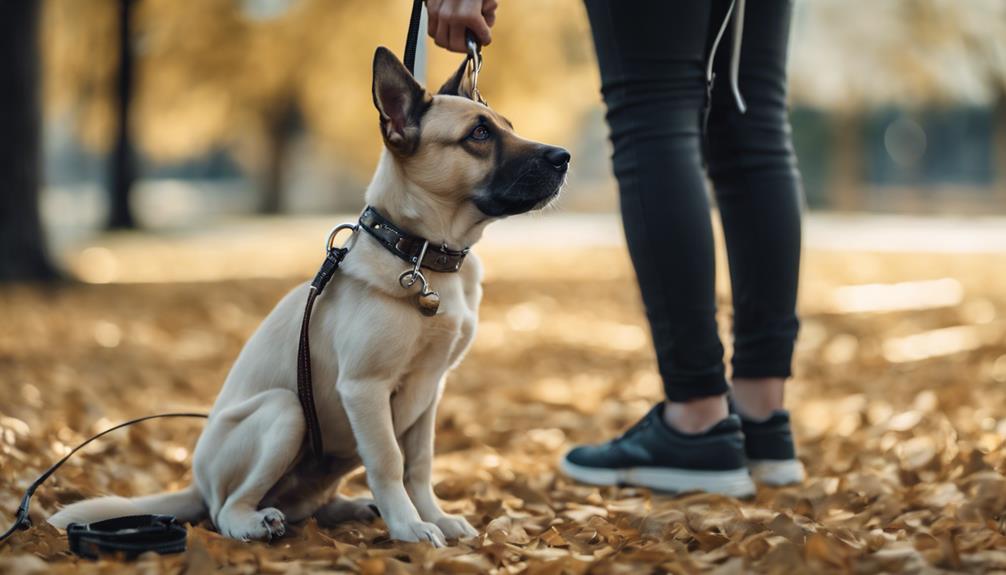
Teaching your puppy to walk on a leash requires mastering essential commands. These commands help establish a strong bond, build trust, and ensure a calm walking experience.
The "come" command is crucial for teaching your puppy to respond to you immediately, even when distracted. This command helps your puppy learn to walk towards you, establishing a strong bond and trust.
The "heel" command is vital for teaching your puppy to walk beside you, promoting a calm and controlled walking experience. This command helps your puppy learn to focus on you and ignore distractions, reducing the likelihood of pulling or lunging on the leash.
In addition to "come" and "heel," other essential leash training commands include "stop," "wait," and "leave it." The "stop" command helps your puppy learn to freeze in place when distracted, allowing you to regain control and prevent unwanted behaviors. The "wait" command teaches your puppy patience and self-control, enabling them to wait calmly before proceeding on a walk. The "leave it" command helps your puppy learn to ignore distractions and focus on you, reducing the likelihood of pulling or lunging on the leash.
Overcoming Common Leash Issues
When training your puppy on a leash, you'll likely encounter two common issues: leash pulling and barking at other dogs. These behaviors can be challenging to manage, but understanding their causes and triggers is key to overcoming them.
Leash pulling and barking at other dogs can be embarrassing and stressful. However, with patience, consistency, and positive reinforcement, you can address these issues and enjoy walks with your puppy.
To overcome these behaviors, it's essential to identify their underlying causes. For instance, leash pulling might be due to excitement, anxiety, or a lack of training. Barking at other dogs could be a result of fear, territorialism, or overstimulation. By recognizing the triggers, you can develop a plan to address them effectively.
Puppy Leash Pulling
Puppy leash pulling is a common obstacle in training. To overcome it, you need to understand why your puppy pulls on the leash. They do it due to excitement or lack of impulse control. Addressing this issue early on is crucial.
To prevent leash pulling, maintain a steady body position and reward good behavior. Front-hook harnesses or head halters can help by redistributing the force of the pull, making it uncomfortable for the puppy. Another strategy is to redirect your puppy's attention with treats before they get distracted. Increasing the distance between your puppy and distractions can also help, as they're less likely to become overstimulated and react impulsively.
Leash pulling can lead to more severe behavioral issues if left unaddressed, such as fear aggression and reactivity. By teaching your puppy to walk nicely on a leash, you can prevent these problems. With the right training tools and techniques, you can overcome leash pulling and develop a well-behaved puppy.
Puppy Barking at Dogs
Puppy barking at other dogs on a leash is a common problem, but it can be addressed with consistent training and positive reinforcement.
To stop your puppy from barking at other dogs, try these strategies:
- Distract with treats: Offer your puppy a treat before they start barking to redirect their attention.
- Increase distance: Gradually increase the distance between your puppy and other dogs to reduce excitement and barking.
- Reward calm behavior: Consistently reward your puppy for staying calm around other dogs, helping them associate positive experiences with these encounters.
- Desensitize to other dogs: Expose your puppy to recorded sounds of dogs or calm, well-behaved dogs to reduce their reactivity and barking.
Stay patient and calm during training, as your puppy looks to you for guidance. With practice, your puppy will learn to respond calmly to other dogs on a leash.
Advanced Leash Training Techniques
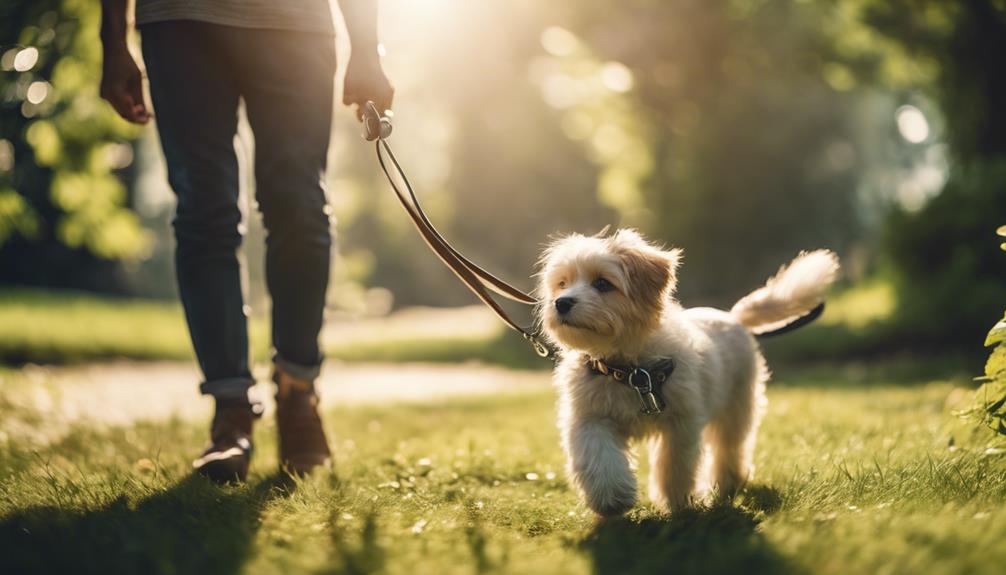
Mastering advanced leash training techniques requires focusing on three key areas: building confidence, staying calm and patient, and walking beside you. To achieve a well-behaved puppy that walks nicely on a leash, follow these guidelines.
Building confidence early on is crucial. This involves gradually introducing your puppy to new sights, sounds, and experiences while on a leash. Start with short sessions and gradually increase the duration as your puppy becomes more comfortable.
Staying calm and patient is essential. Avoid pulling or jerking the leash, as this can create anxiety in your puppy. Instead, use positive reinforcement techniques, such as treats and praise, to encourage good behavior.
Walking beside you is the ultimate goal of leash training. To achieve this, practice walking in different locations and distractions, rewarding your puppy for staying by your side. With time and practice, your puppy will learn to walk nicely on a leash.
Building Confidence Early
Tackling advanced leash training techniques early on can have a significant impact on your puppy's confidence and behavior. Early training sets your puppy up for success and strengthens your bond.
To build confidence in your puppy, focus on these key areas:
- Basic Commands: Teach simple commands like "sit," "stay," and "come." This helps your puppy understand what you want them to do and builds trust in your guidance.
- Collar Fit: Ensure the collar is comfortable and fits properly. A well-fitting collar reduces anxiety and helps your puppy feel secure.
- Walking Practice: Get your puppy accustomed to wearing a collar and leash. Start with short walks and gradually increase the distance and duration.
- Positive Reinforcement: Keep training sessions positive and engaging. Use treats and praise to encourage good behavior and make the experience enjoyable for your puppy.
Staying Calm and Patient
Staying calm and patient is crucial when training your puppy to walk on a leash without pulling. When your puppy pulls, it's natural to feel frustrated, but getting upset won't solve the problem. Instead, take a deep breath, relax, and speak calmly to your puppy. This helps your puppy stay calm and reduces the likelihood of pulling.
Positive reinforcement is key to successful leash training. Reward your puppy with treats and praise when they walk beside you without pulling. This encourages good behavior and teaches your puppy that walking calmly by your side is desirable. Consistency is also important: practice leash training regularly and maintain a calm atmosphere.
- Advertisement -
Walking Beside You
Advanced leash training involves teaching your puppy to walk beside you and change direction smoothly. This training enhances the walking experience and strengthens your bond with your dog. Regular practice and consistent commands are essential to achieve this.
To get your puppy to walk beside you:
- Begin with short sessions: Start with brief training sessions and gradually increase the duration as your puppy becomes more comfortable.
- Use positive reinforcement: Reward your puppy with treats and praise when they walk beside you without pulling on the leash.
- Maintain a loose leash: Avoid holding the leash too tightly, as this creates tension and encourages pulling.
- Practice direction changes: Suddenly change direction while walking to help your puppy adapt and follow you smoothly.
Remember that advanced leash training requires time and practice. Stay calm, patient, and consistent, and you'll enjoy stress-free walks with your puppy.
Creating a Positive Experience
Create a Positive Experience for Your Puppy
The first few months of your puppy's life are crucial for learning and socialization. During this period, it's essential to create a positive experience for your puppy. This lays the foundation for a strong bond between you and your puppy, making future training sessions more effective.
To start, introduce your puppy to the leash in a quiet area with minimal distractions, such as a room or enclosed yard. Use positive reinforcement techniques like treats and praise to encourage good behavior. This will help your puppy associate the leash with positive experiences.
Teach your puppy to walk beside you by holding the leash with a relaxed grip, allowing them to move freely while maintaining control. As your puppy becomes more comfortable, gradually introduce distractions like people, dogs, and noises. Make sure to leash your puppy regularly, even in open areas, to help them understand the concept of walking on a leash.
Consistent exposure to the leash will help your puppy associate it with positive experiences, making future walks more enjoyable. By establishing a positive association with the leash, you'll set your puppy up for success and make the training process smoother.
Establishing a Walking Routine
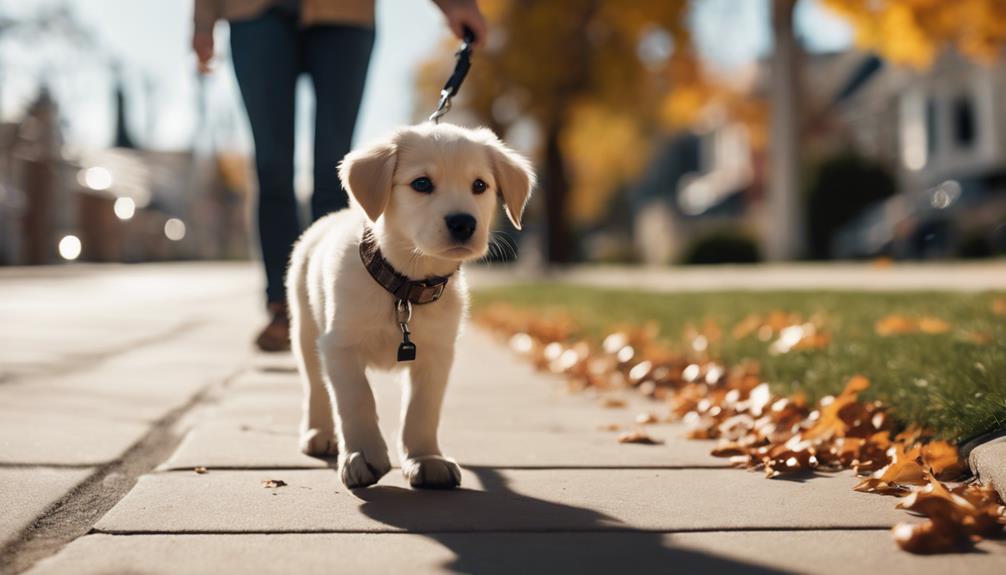
Establishing a Walking Routine
Incorporating daily walks into your puppy's routine provides essential exercise and reinforces positive leash training experiences. Consistency helps your puppy understand that walking on a leash is a normal part of their daily routine.
To establish a successful walking routine:
- Start with short walks: Begin with 10-15 minute walks and gradually increase the duration as your puppy becomes more comfortable and conditioned.
- Schedule a consistent time: Choose a specific time of day that works for you and your puppy, such as immediately after meals or before bedtime.
- Vary the walking environment: Expose your puppy to different sights, sounds, and smells by walking in various locations, like parks, sidewalks, and trails.
- Make it a daily habit: Commit to walking your puppy at the same time every day, including weekends and holidays, to establish a consistent routine.
Troubleshooting Leash Training
When leash training your puppy, you'll likely encounter some common issues. One of these is pulling on the leash. To address this, stand still and refuse to move until your puppy comes back to you. This establishes control and prevents unwanted behavior. You can also use front-hook harnesses or head halters as training tools to help stop pulling.
Another challenge is when your puppy lunges at distractions. To prevent this, try redirecting their attention with treats before they lunge. Increasing the distance between your puppy and the distractions can also promote a more calm and focused walk.
If your puppy barks at other dogs, ensure they get sufficient exercise and mental stimulation. This reduces unwanted behavior and creates a more peaceful walk. By addressing these common issues, you can make the leash training process smoother and more enjoyable for both you and your puppy.
Puppy Socialization and Development

Socialization is a crucial part of puppy development. It helps prevent behavioral issues and creates a strong bond between you and your dog.
To socialize your puppy, expose them to different environments, people, and experiences. This helps them develop good manners and prevents fear aggression, anxiety, and fear-based behaviors. The best time for socialization is between 8 and 11 weeks of age, when puppies are most receptive to new experiences.
Socialization has four key benefits:
- Confidence in new situations: Socialization helps puppies become confident and calm in new situations, reducing anxiety and fear-based behaviors.
- Preventing behavioral issues: Socialization prevents behavioral issues like fear aggression and anxiety, leading to a well-adjusted adult dog.
- Strong bond with owner: Socialization builds a strong bond between the puppy and its owner, based on trust and understanding.
- Better adaptability: Socialization helps puppies adapt to new environments and experiences, making them more resilient and adaptable.
Frequently Asked Questions
How Do I Get My Puppy to Use a Collar and Leash?
Introduce the collar to your puppy gradually to prevent resistance. Start with short sessions, using a comfortable, well-fitting collar. Gradually increase the wear time to help your puppy adjust.
Next, get your puppy accustomed to the leash. Hold the leash and let your puppy get used to the feeling. Practice gentle tugging to simulate walking. This helps your puppy learn to respond to the leash.
Establish a consistent routine when using the collar and leash. Reward your puppy for good behavior, such as walking beside you without pulling. Be patient, as it may take time for your puppy to adjust to this new sensation.
At What Age Should You Leash Train a Puppy?
Leash training should begin when your puppy is between 8-12 weeks old. At this age, they are most receptive to new experiences and learning. This period coincides with the peak puppy socialization stage, during which they absorb important skills and confidence. However, the breed and individual temperament of your puppy can affect the training process, so patience is essential.
Is It Better to Leash Train a Puppy With a Collar or Harness?
When leash training a puppy, choose a harness over a collar for better comfort and safety. Harnesses reduce the risk of choking and promote neck safety. They distribute the force of the leash across the puppy's chest and shoulders, creating a more positive association with the leash. This makes the training process easier and more effective. Select a well-fitting harness to ensure your puppy's comfort and security.
How Do You Leash Train a Difficult Puppy?
Leash training a difficult puppy requires patience, consistency, and positive reinforcement. Break training sessions into short, manageable chunks to prevent overwhelming your puppy. Consistency is key, so establish a routine and stick to it. Reward good behavior with treats and praise to encourage your puppy to walk on a leash without resistance. Avoid scolding or punishing your puppy, as this can create more resistance and make the training process longer.
To overcome leash resistance, start by letting your puppy get used to wearing a collar and leash in a controlled environment, such as a quiet room. Gradually introduce your puppy to outdoor walks, beginning with short distances and gradually increasing the length as they become more comfortable. Keep the leash loose and relaxed, allowing your puppy to set the pace. If your puppy starts to pull, stop moving forward and wait for them to come back to your side before continuing the walk. With time and persistence, your puppy will learn to walk on a leash without resistance, making walks more enjoyable for both you and your puppy.
In summary
Mastering puppy collar and leash training requires ongoing effort. While your puppy has made significant progress, it's essential to continue nurturing and refining their skills. Leash training is not a one-time achievement, but rather a lifelong process.
As your puppy grows, they may encounter new challenges or forget previously learned behaviors. Regular practice and reinforcement are necessary to maintain their proficiency. Focus on building a strong foundation and addressing any emerging issues promptly.
Remember, consistency and positive reinforcement are key to successful leash training. Stay committed to your training routine, and your puppy will continue to thrive.
- Advertisement -